

Did you know that, according to the National Institutes of Health, approximately 2–5% of the general population experiences low potassium levels?
Potassium plays a crucial role in keeping your body functioning properly — from muscle contractions to fluid balance and heart rhythm. When levels drop too low for too long, it can lead to serious health complications, including heart rhythm disturbances and muscle weakness.
So how do you know if your potassium is low? Are there warning signs — or is a blood test the only way to find out?
Let’s break it down.
What Is Potassium Deficiency?
Potassium is an essential electrolyte your body cannot produce on its own. It helps regulate:
- Fluid balance
- Muscle contractions
- Nerve signals
- Heart rhythm
Normally, healthy kidneys maintain potassium balance by removing excess amounts through urine.
Normal Potassium Levels
- Healthy adult range: 3.5 to 5.2 mEq/L (mmol/L)
- Mild hypokalemia: 3.0 to 3.5 mEq/L
- Severe hypokalemia: Below 3.0 mEq/L
Symptoms often depend on how low your levels are and how long they’ve been low. Mild cases may not cause noticeable symptoms at first.
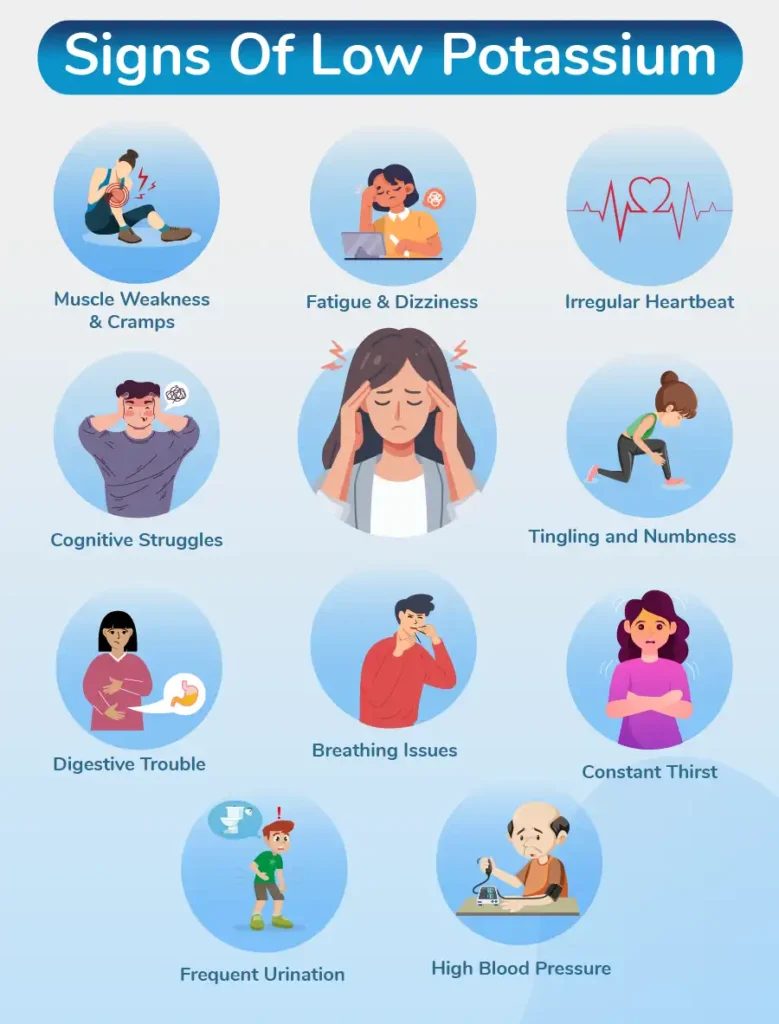
10 Signs Your Potassium May Be Low
Note: These symptoms can have multiple causes. Persistent or multiple symptoms should be evaluated by a healthcare professional.
1. Frequent Muscle Cramps
Potassium regulates electrical impulses that control muscle contractions.
Low levels can:
- Cause painful cramps (especially in legs and feet)
- Lead to twitching or spasms
- Contribute to muscle weakness
Severe deficiency may result in persistent cramping.
2. Ongoing Fatigue and Weakness
Low potassium interferes with normal muscle and nerve function.
You may notice:
- Muscle fatigue
- Low energy
- Difficulty performing everyday tasks
In severe cases, weakness can become significant.
3. Tingling or Numbness
Potassium helps maintain proper nerve signaling.
Deficiency may cause:
- “Pins and needles” sensations
- Tingling in hands or feet
- Occasional numbness
While tingling is more commonly associated with high potassium, it can occur with imbalances in either direction.
4. Digestive Issues
Potassium supports communication between the brain and digestive muscles.
Low levels may:
- Slow bowel movements
- Cause bloating
- Lead to constipation
- Trigger nausea in severe cases
Severe hypokalemia can significantly reduce gut motility.
5. Frequent Urination (Polyuria)
Potassium helps the kidneys maintain fluid balance.
Low potassium may:
- Impair urine concentration
- Cause excessive urination
- Increase fluid loss
6. Increased Thirst (Polydipsia)
Frequent urination can lead to dehydration.
As fluid levels drop, you may:
- Feel unusually thirsty
- Struggle to feel fully hydrated
7. Irregular Heartbeat (Arrhythmia)
One of the most serious complications of low potassium involves heart rhythm.
Potassium regulates electrical activity in heart cells. Severe deficiency may cause:
- Heart palpitations
- Skipped beats
- Fluttering sensations
- Abnormal heart rhythms
An electrocardiogram (ECG) can detect potassium-related rhythm disturbances.
8. High Blood Pressure
Potassium helps counterbalance sodium in the body.
When potassium is low:
- Sodium retention may increase
- Blood pressure may rise
- Blood vessels may constrict
Adequate potassium intake supports healthy blood pressure regulation.
9. Breathing Difficulties (Severe Cases)
In rare and severe hypokalemia:
- Respiratory muscles (including the diaphragm) may weaken
- Shortness of breath can occur
In extreme cases, untreated severe hypokalemia may lead to respiratory failure. This is a medical emergency.
10. Difficulty Concentrating
Emerging research suggests potassium imbalances may affect cognitive function.
Possible symptoms include:
- Brain fog
- Poor concentration
- Confusion
- Reduced mental clarity
However, more research is needed to fully understand this connection.
Why Do Potassium Levels Drop?
Common causes of hypokalemia include:
- Prolonged vomiting or diarrhea
- Excessive sweating
- Intense exercise
- Eating disorders
- Certain medications (diuretics, insulin, some antibiotics, corticosteroids)
- Alcohol misuse
- Chronic kidney or adrenal disorders
When Should You See a Doctor?
Seek medical evaluation if you experience:
- Persistent muscle weakness
- Heart palpitations
- Severe fatigue
- Prolonged diarrhea or vomiting
- A history of kidney or digestive disorders
A simple blood test can confirm potassium levels.
Diagnosis and Treatment
Diagnosis May Include:
- Blood potassium test
- Urinalysis
- Electrocardiogram (ECG)
Treatment Depends on Severity:
Mild cases:
- Oral potassium supplements
- Dietary adjustments
- Addressing underlying causes
Severe cases:
- Intravenous (IV) potassium
- Close heart monitoring
Treatment should always be supervised by a healthcare professional, as excessive potassium replacement can also be dangerous.
Preventing Potassium Deficiency
Most people can maintain healthy potassium levels through diet.
Potassium-Rich Foods Include:
- Leafy green vegetables
- Bananas
- Avocados
- Beans and legumes
- Oranges
- Dairy products
- Fish
- Lean meats
Before taking potassium supplements, consult your doctor — especially if you have kidney issues or take medications that affect potassium levels.
Quick Recap
Low potassium levels may cause:
- Muscle cramps
- Fatigue
- Irregular heartbeat
- Digestive problems
- Increased urination and thirst
Mild deficiency may go unnoticed, but severe hypokalemia can be serious.
If you notice persistent symptoms, seek medical advice. Early detection and treatment make correction straightforward and help prevent complications.
Disclaimer: This content is for informational purposes only and does not replace professional medical advice. Always consult a qualified healthcare provider for diagnosis and personalized treatment
Leave a Reply