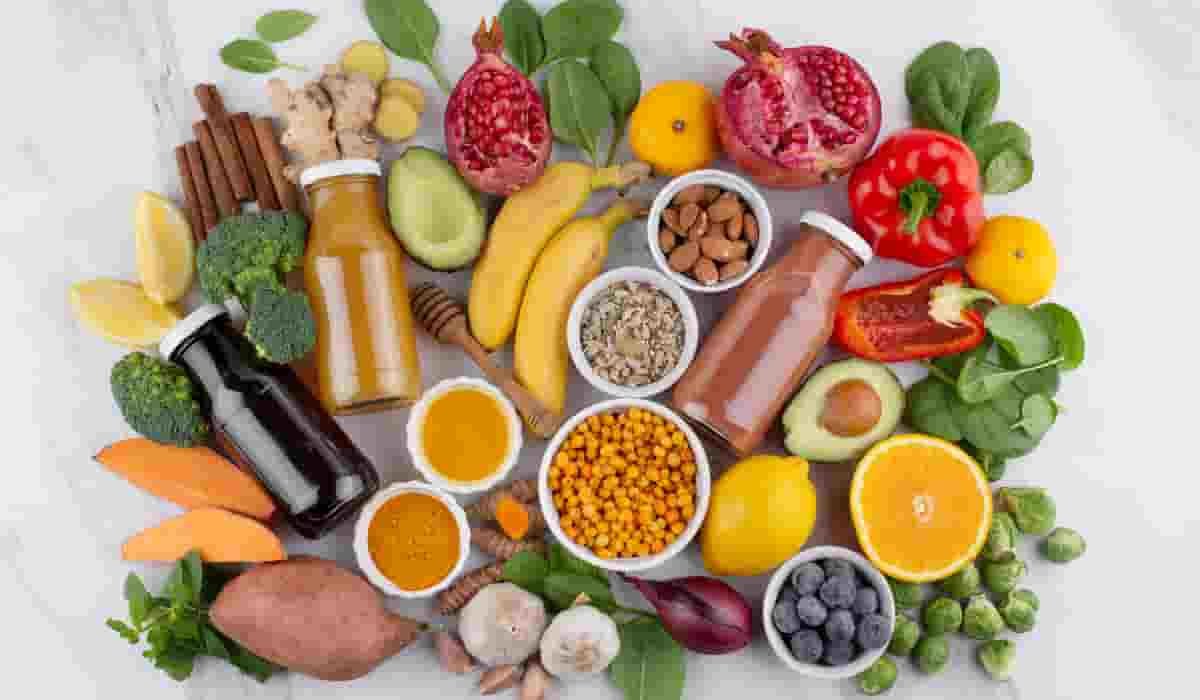
Your body needs 13 essential vitamins to function effectively. The best part? Nature has packed these vitamins into delicious, everyday foods — you just need to choose wisely and eat a balanced diet.
More than one-third of Americans take one or more vitamin supplements to fill nutritional gaps. From vitamin A for sharp vision to vitamin K for strong bones, vitamins play a crucial role in overall well-being. While supplements can help in certain cases, lab-prepared vitamins cannot fully replace the complex mix of biologically active compounds found in whole foods.
So, which foods are the best natural vitamin sources and easily available? Here’s a detailed guide highlighting the best food sources of vitamins A, B, C, D, E, and K — along with their importance and recommended intake.
What Are Vitamins and Why Are They Essential?
Vitamins are organic micronutrients found in plants and animals. They are essential because our bodies either cannot produce them at all or cannot produce them in sufficient quantities. Therefore, we must obtain them from food.
Vitamins fall into two main categories:
1. Water-Soluble Vitamins
These include B-complex vitamins and vitamin C.
- They dissolve in water.
- The body does not store them in large amounts.
- Excess amounts are excreted in urine.
- They require regular replenishment, often daily.
2. Fat-Soluble Vitamins
These include vitamins A, D, E, and K.
- They are stored in the liver and fatty tissues.
- They are eliminated more slowly.
- They do not need daily replacement like water-soluble vitamins.
Food Sources of Vitamins A, B, C, D, E, and K

1. Vitamin A
Vitamin A (retinol) supports:
- Vision
- Immune function
- Reproductive health
- Skin and cell growth
It helps the eyes adjust to light and maintains moisture in tissues like the mouth, nose, and throat.
Recommended Dietary Allowance (RDA)
- 900 mcg/day for adult males
- 700 mcg/day for adult females
Natural Food Sources
- Carrots, spinach, kale – Rich in beta-carotene (converted to vitamin A in the body)
- Sweet potatoes, mangoes – Excellent plant sources
- Liver (beef/lamb) – Extremely rich in retinol
- Cod liver oil – High in vitamin A and omega-3s
- Egg yolks – Provide retinol and lutein
2. Vitamin B Complex
The B-group includes eight water-soluble vitamins essential for:
- Energy production
- Brain function
- Nerve signaling
- Mood regulation
- DNA synthesis
Athletes and highly active individuals may require higher amounts.
RDAs (Selected B Vitamins)
- B6 (Pyridoxine): 1.3 mg/day
- B7 (Biotin): 30 mcg/day
- B9 (Folate): 400 mcg/day
- B12 (Cobalamin): 2.4 mcg/day
Natural Food Sources
- Whole grains – B1, B3
- Legumes – B1, B6, B9
- Fortified cereals – B1, B2, B3, B6, B12
- Nuts and seeds – B1, B2, B6, B7
- Bananas – B6
- Lean meats – B3, B6, B12
- Fish (salmon, tuna, sardines) – B3, B6, B12
- Leafy greens – Folate (B9)
3. Vitamin C
Vitamin C (ascorbic acid) supports:
- Immune function
- Collagen production
- Wound healing
- Antioxidant protection
- Energy metabolism
Recommended Dietary Allowance (RDA)
- 90 mg/day for adult males
- 75 mg/day for adult females
- Higher during pregnancy and lactation
Natural Food Sources
- Citrus fruits (oranges, lemons, grapefruit)
- Strawberries
- Bell peppers
- Broccoli and Brussels sprouts
- Blueberries and raspberries
- Guava and acerola cherries (very high in vitamin C)
4. Vitamin D
Known as the “sunshine vitamin,” vitamin D improves:
- Calcium absorption
- Bone strength
- Tooth health
- Immune support
Recommended Dietary Allowance (RDA)
- 600 IU (15 mcg) for adults (19–70 years)
- 800 IU (20 mcg) for adults above 70
Natural Food Sources
- Fatty fish (salmon, mackerel, sardines, tuna)
- Cod liver oil
- Fortified dairy products and cereals
- Fortified tofu
- Sun-exposed mushrooms (shiitake, maitake, portobello)
Vitamin D2 comes from plant sources, while D3 comes from animal sources or skin synthesis. D3 is generally more effective in maintaining blood levels.
5. Vitamin E
Vitamin E is a powerful antioxidant available as:
- Tocopherols
- Tocotrienols
It supports:
- Skin health
- Immune function
- Cardiovascular health
- Cellular protection
Recommended Dietary Allowance (RDA)
- 15 mg/day (tocopherols) for adults
Natural Food Sources
- Almonds, hazelnuts, peanuts
- Sunflower and pumpkin seeds
- Spinach, kale, broccoli
- Palm oil and rice bran oil
- Annatto seeds (rich in tocotrienols)
- Shrimp and other shellfish
- Kiwi, mango, papaya, blackberries
6. Vitamin K
Vitamin K is essential for:
- Blood clotting
- Bone strength
- Calcium regulation
- Cardiovascular health
It exists in two forms:
- Vitamin K1 (Phylloquinone) – Blood clotting
- Vitamin K2 (Menaquinone) – Moves calcium to bones and prevents vessel buildup
Recommended Dietary Allowance (RDA)
- 120 mcg/day for adult males
- 90 mcg/day for adult females
Natural Food Sources
- Kale, spinach, broccoli, Swiss chard (K1)
- Soybeans and lentils
- Cruciferous vegetables
- Natto, kimchi, sauerkraut, miso (K2)
- Blueberries, avocados, grapes (small amounts)
Quick Recap
Vitamins are essential micronutrients that support everything from vision and immunity to bone strength and metabolism. While supplements may help in specific cases, whole foods remain the best source of vitamins due to their natural nutrient complexity and bioavailability.
From leafy greens and colorful fruits to fish, nuts, seeds, and fermented foods — nature provides abundant options to meet your daily vitamin needs.
Your health truly starts on your plate. Eat balanced, eat colorful, and stay nourished.
Disclaimer: These statements have not been evaluated by the FDA. The information provided is for educational purposes only and is not intended to replace professional medical advice.