
Benzodiazepines are among the most commonly prescribed medications for anxiety, insomnia, seizures, and muscle-related conditions. When used appropriately and for short durations, they can be highly effective. However, these medications also carry a significant risk: physical and psychological dependence.
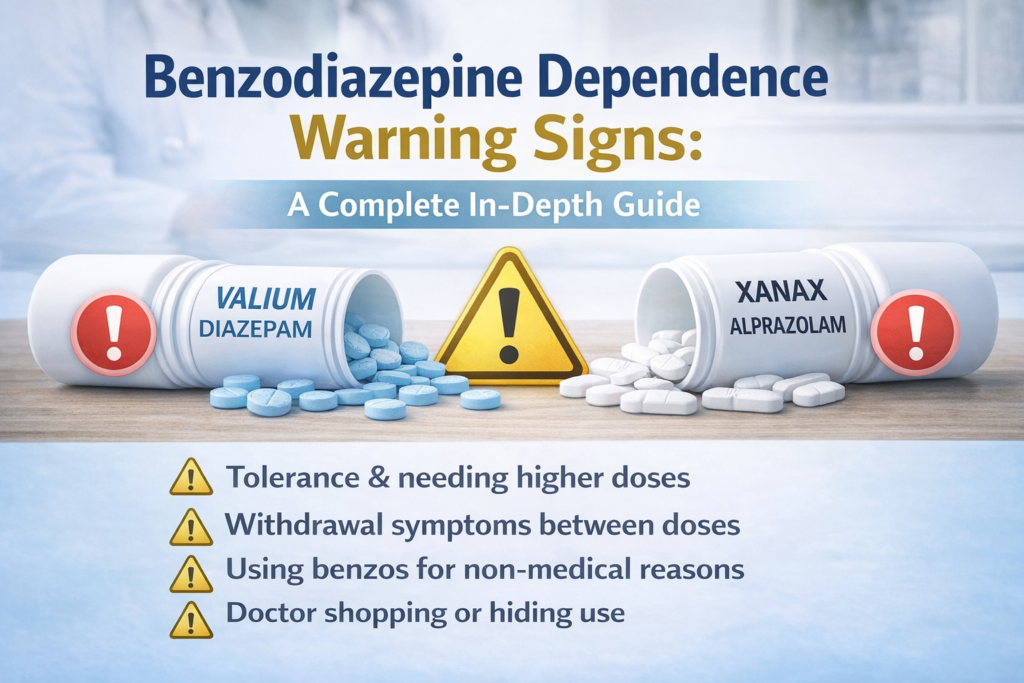
Drugs such as Valium (diazepam) and Xanax (alprazolam) are widely recognized benzodiazepines in the United States. While they are effective in calming the central nervous system (CNS), long-term use or misuse can lead to serious complications.
In this comprehensive guide, we will explore:
- What benzodiazepine dependence really means
- How it develops
- Early and advanced warning signs
- Withdrawal risks
- Who is most vulnerable
- How to safely reduce risk and seek help
If you or someone you know is currently taking benzodiazepines, understanding these warning signs could be life-saving.
What Are Benzodiazepines?
Benzodiazepines are central nervous system depressants that enhance the activity of GABA (gamma-aminobutyric acid), a neurotransmitter responsible for calming brain activity.
They are prescribed for:
- Generalized anxiety disorder (GAD)
- Panic disorder
- Insomnia
- Muscle spasms
- Seizure disorders
- Alcohol withdrawal
- Pre-surgical sedation
Common benzodiazepines include:
In the U.S., benzodiazepines are classified as Schedule IV controlled substances, meaning they have accepted medical use but also potential for abuse and dependence.
What Is Benzodiazepine Dependence?
Dependence occurs when the body adapts to the presence of a medication. Over time, the brain becomes reliant on the drug to function normally.
There are two main types:
1. Physical Dependence
The body experiences withdrawal symptoms if the drug is reduced or stopped.
2. Psychological Dependence
The person feels they cannot function emotionally or mentally without the medication.
Importantly, dependence is not the same as addiction — but it can lead to addiction if misuse continues.
How Does Benzodiazepine Dependence Develop?
Dependence can develop surprisingly quickly.
Research shows that even 2–4 weeks of daily use can begin altering brain chemistry. The risk increases when:
- Taking higher doses than prescribed
- Using the medication long-term
- Combining it with alcohol or opioids
- Having a history of substance misuse
Short-acting benzodiazepines like Xanax may cause more intense rebound symptoms between doses. Long-acting medications like Valium stay in the body longer and can accumulate over time.
As tolerance develops, the brain produces less natural calming neurotransmitters, relying instead on the medication.
Early Warning Signs of Benzodiazepine Dependence
Recognizing early symptoms is critical. Here are the first red flags:
1. Needing Higher Doses
If the same dose no longer produces the same calming effect, tolerance may be developing.
Warning behaviors include:
- Taking an extra pill occasionally
- Increasing dosage without doctor approval
- Feeling frustrated that it “doesn’t work anymore”
Tolerance is often the first step toward dependence.
2. Anxiety Between Doses (Rebound Anxiety)
Short-acting benzodiazepines can wear off quickly, leading to:
- Sudden anxiety spikes
- Irritability
- Restlessness
- Panic symptoms returning stronger than before
This creates a cycle where a person feels compelled to take another dose sooner.
3. Emotional Reliance
You may notice thoughts like:
- “I can’t handle stress without it.”
- “I need this to sleep every night.”
- Fear of running out of medication
This psychological reliance is an early sign of dependence.
4. Preoccupation With the Medication
Constantly checking pill supply, counting doses, or worrying about refills may indicate growing dependence.
Moderate Warning Signs
As dependence progresses, symptoms become more noticeable.
5. Withdrawal Symptoms When Skipping a Dose
Common early withdrawal symptoms include:
- Sweating
- Headaches
- Shakiness
- Insomnia
- Increased heart rate
- Irritability
These symptoms may begin within hours for short-acting drugs.
6. Using the Drug for Unrelated Stress
Taking benzodiazepines for:
- Everyday stress
- Social situations
- Emotional discomfort
- Enhancing relaxation
This behavior increases risk significantly.
7. Mixing With Alcohol
Combining benzodiazepines with alcohol is extremely dangerous. Both depress the central nervous system and can cause:
- Slowed breathing
- Severe sedation
- Blackouts
- Increased overdose risk
This combination dramatically increases the likelihood of dependence.
Advanced Signs of Benzodiazepine Dependence
When dependence becomes severe, the following signs may appear:
8. Cognitive Impairment
Long-term use may cause:
- Memory problems
- Brain fog
- Difficulty concentrating
- Slower thinking
Older adults are particularly vulnerable to falls and confusion.
9. Mood Changes
Some individuals experience:
- Depression
- Emotional numbness
- Irritability
- Mood swings
Ironically, long-term benzodiazepine use can worsen anxiety disorders.
10. Doctor Shopping
Seeking prescriptions from multiple providers or exaggerating symptoms is a serious warning sign of misuse and dependence.
Why Benzodiazepine Withdrawal Is Dangerous
Unlike many medications, benzodiazepines should never be stopped abruptly after long-term use.
Withdrawal can include:
- Severe anxiety
- Panic attacks
- Muscle pain
- Tremors
- Hallucinations
- Seizures
In extreme cases, withdrawal can be life-threatening.
Because of this, doctors recommend gradual tapering under medical supervision.
Who Is Most at Risk?
Certain groups face higher risk:
- Individuals with a history of substance use disorder
- Long-term daily users
- High-dose users
- People combining with opioids
- Older adults
- Individuals with untreated anxiety
Even patients using medication exactly as prescribed may develop dependence if use continues long-term.
The Role of Tolerance
Tolerance occurs when the brain becomes less responsive to the medication. This leads to:
- Escalating doses
- Reduced effectiveness
- Increased withdrawal severity
Tolerance is a major contributor to dependence.
Long-Term Risks of Benzodiazepine Dependence
Chronic dependence can result in:
- Persistent anxiety
- Depression
- Cognitive decline
- Increased fall risk
- Accidental overdose
- Respiratory depression (especially with opioids)
Public health data shows increased overdose risk when benzodiazepines are combined with opioid medications.
How to Prevent Benzodiazepine Dependence
Prevention is possible with responsible use.
Best Practices:
- Use only as prescribed
- Avoid increasing dose without approval
- Limit duration (short-term use when possible)
- Avoid alcohol
- Regularly review medication with your doctor
Doctors often recommend benzodiazepines as short-term support while longer-term treatments take effect.
Safer Long-Term Alternatives
For chronic anxiety and panic disorders, alternatives include:
- Cognitive Behavioral Therapy (CBT)
- SSRIs (Selective Serotonin Reuptake Inhibitors)
- SNRIs
- Lifestyle changes (exercise, sleep hygiene, stress management)
- Mindfulness-based therapies
These options address underlying causes without creating physical dependence.
What to Do If You Suspect Dependence
If you recognize warning signs:
- Do not stop suddenly.
- Schedule a medical appointment.
- Discuss a supervised taper plan.
- Seek mental health counseling.
Gradual tapering allows the brain to adjust safely.
When to Seek Emergency Help
Call emergency services immediately if someone experiences:
- Seizures
- Severe confusion
- Trouble breathing
- Loss of consciousness
- Hallucinations
These may indicate severe withdrawal or overdose.
Breaking the Stigma Around Dependence
Many people feel shame about medication dependence. It’s important to understand:
- Dependence can happen even with prescribed use.
- It is a medical condition, not a moral failure.
- Treatment and recovery are possible.
Seeking help early improves outcomes dramatically.
Final Thoughts
Benzodiazepines like Valium and Xanax play an important role in modern medicine. They can provide real relief when used appropriately. However, they are powerful medications that require careful monitoring.
Recognizing benzodiazepine dependence warning signs early can prevent serious complications, including severe withdrawal and long-term cognitive effects.
If you or someone you love is showing signs of dependence, consult a healthcare professional immediately. With proper support, tapering strategies, and alternative treatments, recovery is achievable.