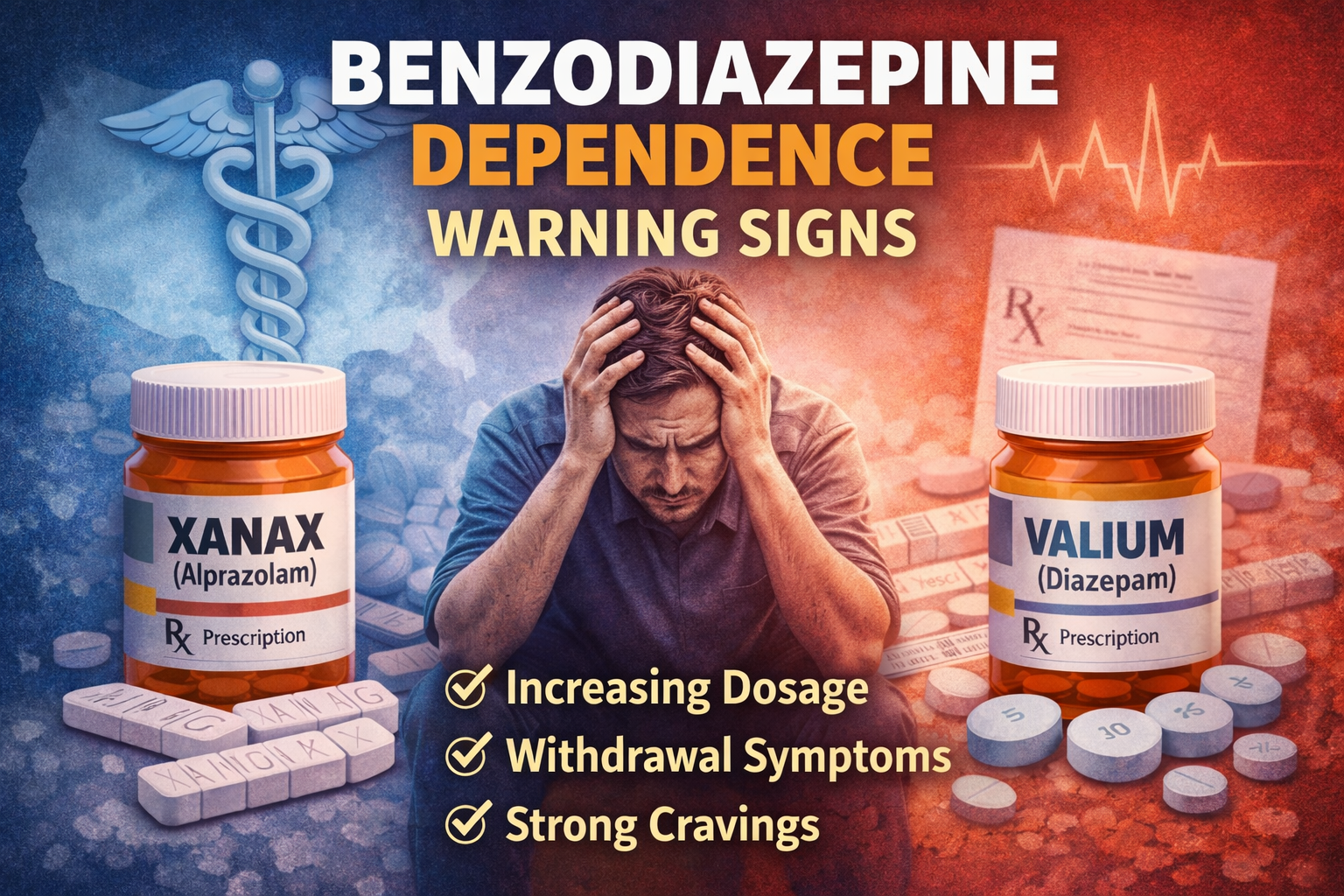
Benzodiazepine dependence has become a growing concern in modern healthcare, especially in countries like the United States where medications for anxiety and insomnia are widely prescribed. Drugs such as Xanax, Valium, Ativan, and Klonopin are commonly used to treat anxiety disorders, panic attacks, sleep issues, and seizures.
While these medications can be effective when used correctly, long-term or improper use may lead to benzodiazepine dependence. Recognizing the warning signs of benzodiazepine dependence early is essential to prevent serious physical and psychological complications.
This detailed guide explains what benzodiazepine dependence is, its warning signs, causes, risks, and safe ways to recover.
What Are Benzodiazepines?
Benzodiazepines are a class of medications that affect the central nervous system. They work by increasing the effect of GABA (gamma-aminobutyric acid), a neurotransmitter that slows down brain activity and produces a calming effect.
Doctors prescribe benzodiazepines for conditions such as:
- Anxiety disorders
- Panic attacks
- Insomnia and sleep disorders
- Seizure disorders
- Muscle spasms
- Alcohol withdrawal symptoms
Some of the most commonly prescribed benzodiazepines include:
- Xanax (Alprazolam)
- Valium (Diazepam)
- Ativan (Lorazepam)
- Klonopin (Clonazepam)
Although these medications are effective, long-term use can lead to tolerance and dependence.
What Is Benzodiazepine Dependence?
Benzodiazepine dependence occurs when the body becomes physically or psychologically reliant on these medications to function normally.
Over time, the brain adapts to the presence of the drug. As a result:
- The same dose becomes less effective.
- Higher doses may be needed.
- Stopping the medication suddenly can cause withdrawal symptoms.
Dependence can develop even when the medication is taken as prescribed, especially if it is used for several weeks or months.
Major Warning Signs of Benzodiazepine Dependence
Recognizing the early warning signs of benzodiazepine dependence can help prevent serious complications.
1. Increasing Dosage Without Medical Advice
One of the first signs of dependence is needing higher doses to achieve the same calming effect.
This occurs because the body develops tolerance to benzodiazepines.
2. Strong Cravings for the Medication
People experiencing dependence may feel an intense urge to take the medication, even when it is not medically necessary.
3. Withdrawal Symptoms When Skipping a Dose
Withdrawal symptoms may occur when the medication is reduced or missed.
Common symptoms include:
- Anxiety rebound
- Insomnia
- Irritability
- Sweating
- Tremors
- Headaches
Severe withdrawal symptoms can include panic attacks or seizures.
4. Using Benzodiazepines for Longer Than Prescribed
Many prescriptions for benzodiazepines are intended for short-term use (2–4 weeks).
Continuing to take the medication for months or years can increase the risk of dependence.
5. Difficulty Stopping the Medication
People with dependence often struggle to stop taking the drug even if they want to.
They may feel anxious, restless, or physically uncomfortable when trying to quit.
6. Cognitive and Memory Problems
Long-term benzodiazepine use may lead to:
- Memory loss
- Confusion
- Difficulty concentrating
- Slower thinking
These symptoms may worsen with prolonged use.
Causes of Benzodiazepine Dependence
Several factors can increase the risk of developing dependence.
1. Long-Term Use
The risk increases significantly when benzodiazepines are used for more than a few weeks.
2. High Dosage
Taking higher doses than prescribed can accelerate dependence.
3. History of Substance Use
Individuals with a history of alcohol or drug addiction may be more vulnerable to benzodiazepine misuse.
4. Mental Health Conditions
People with severe anxiety or panic disorders may rely heavily on benzodiazepines for symptom relief.
Health Risks of Long-Term Benzodiazepine Use
Prolonged use of benzodiazepines can lead to several health complications.
Cognitive Decline
Research suggests long-term use may impair memory and cognitive function.
Increased Risk of Falls
Older adults using benzodiazepines may have a higher risk of falls and fractures.
Drug Interactions
Combining benzodiazepines with other substances, especially opioids or alcohol, can increase the risk of respiratory depression and overdose.
Benzodiazepine Withdrawal Symptoms
Stopping benzodiazepines suddenly can lead to serious withdrawal effects.
Common Withdrawal Symptoms
- Severe anxiety
- Insomnia
- Panic attacks
- Muscle pain
- Nausea
- Tremors
Severe Withdrawal Symptoms
- Hallucinations
- Seizures
- Extreme agitation
Because of these risks, medical supervision is strongly recommended when discontinuing benzodiazepines.
Safe Treatment and Recovery Options
Recovering from benzodiazepine dependence is possible with the right support and medical guidance.
Gradual Tapering
Doctors often reduce the dosage slowly to minimize withdrawal symptoms.
Cognitive Behavioral Therapy (CBT)
Therapy can help individuals manage anxiety without relying on medication.
Alternative Medications
Doctors may prescribe non-benzodiazepine treatments for anxiety and sleep disorders.
Lifestyle Changes
Healthy habits can support recovery, including:
- Regular exercise
- Stress-management techniques
- Improved sleep routines
- Mindfulness practices
Preventing Benzodiazepine Dependence
The best way to avoid dependence is to use these medications only as prescribed.
Key prevention tips include:
- Follow the doctor’s dosage instructions
- Avoid long-term use unless medically necessary
- Do not mix benzodiazepines with alcohol
- Discuss alternative treatments for anxiety
Conclusion
Benzodiazepine dependence is a serious but preventable condition. While medications like Xanax, Valium, and Ativan can be effective for treating anxiety and panic disorders, prolonged use may lead to tolerance, dependence, and withdrawal complications.
Recognizing the warning signs of benzodiazepine dependence early—such as increasing dosage, cravings, and withdrawal symptoms—can help individuals seek help before the problem becomes severe.
With proper medical support, gradual tapering, and healthy coping strategies, recovery is possible and many individuals successfully regain control over their mental health.