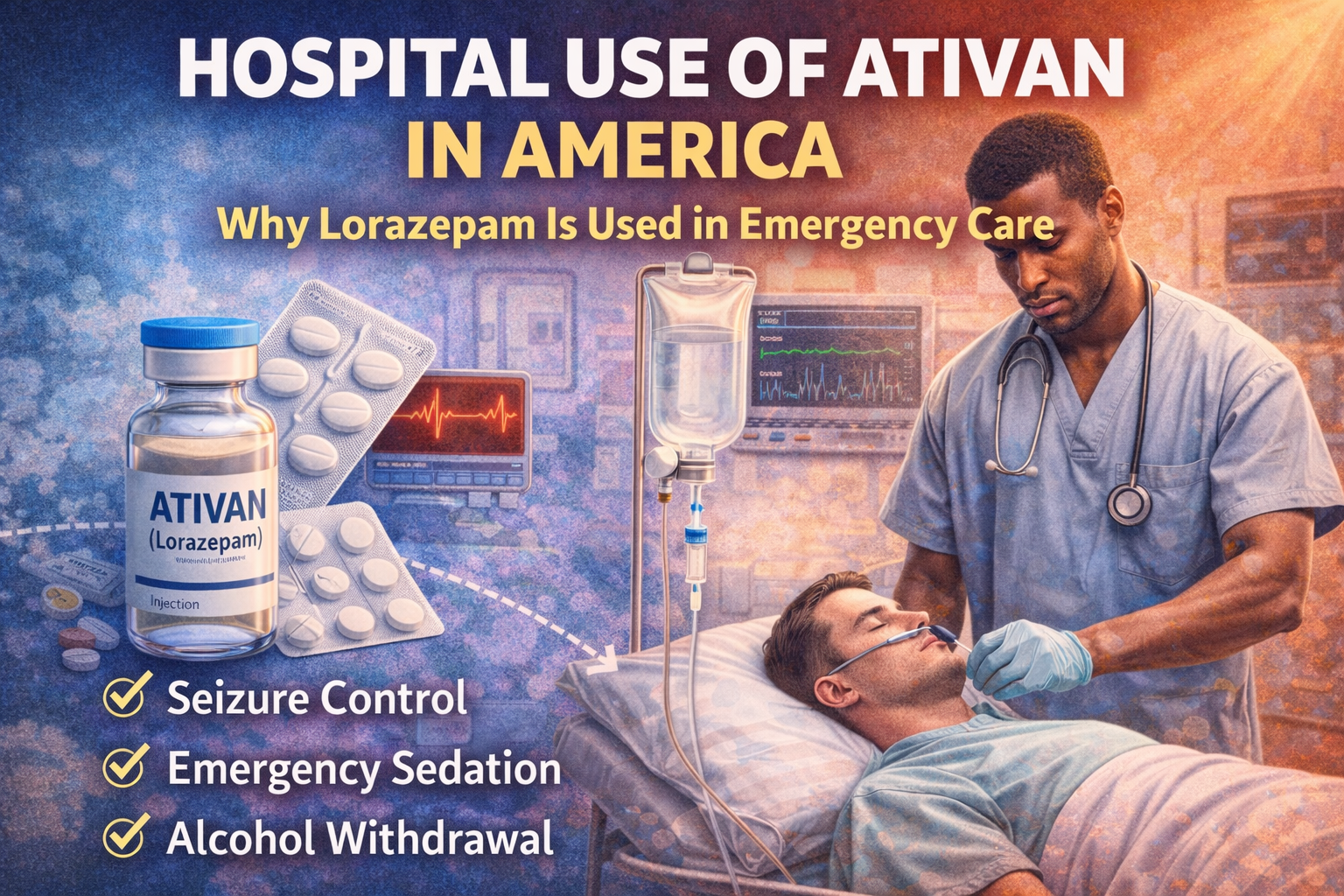
Hospitals across the United States frequently rely on certain medications to stabilize patients experiencing acute medical or psychological emergencies. One of the most commonly used medications in hospitals is Ativan (lorazepam), a benzodiazepine widely prescribed for anxiety, seizures, agitation, and sedation.
The hospital use of Ativan in America has become an important part of emergency medicine, critical care, and psychiatric treatment. Because of its rapid onset and reliable calming effects, healthcare professionals often use this medication to manage serious conditions that require immediate intervention.
This article explores why Ativan is used in hospitals, how it works, common medical uses, safety considerations, and prescribing trends in the United States.
What Is Ativan (Lorazepam)?
Ativan is the brand name for lorazepam, a medication belonging to the benzodiazepine class. Benzodiazepines act on the central nervous system to produce calming and sedative effects.
These medications enhance the activity of GABA (gamma-aminobutyric acid), a neurotransmitter that slows brain activity and reduces excessive nervous system stimulation.
Key Characteristics of Ativan
- Generic name: Lorazepam
- Drug class: Benzodiazepine
- Onset: Rapid (especially when given intravenously)
- Common hospital form: IV or injection
- Primary effect: Sedation, anxiety reduction, seizure control
Because of these properties, Ativan is widely used in hospitals and emergency departments.
Why Hospitals Use Ativan
Hospitals often require medications that act quickly and can stabilize patients safely.
Several factors explain the widespread hospital use of Ativan in the United States.
Rapid Action
Ativan works quickly, especially when given intravenously, making it ideal for emergency situations.
Reliable Sedation
Doctors can control agitation, panic, or severe anxiety rapidly.
Seizure Control
Lorazepam is one of the first-line medications used to stop seizures in emergency rooms.
Flexible Administration
Hospitals can administer Ativan in several ways:
- Intravenous (IV)
- Intramuscular injection
- Oral tablets
This flexibility allows doctors to treat patients with different medical needs.
Common Hospital Uses of Ativan
Hospitals in the United States use Ativan in a variety of medical situations.
1. Emergency Treatment of Seizures
One of the most important uses of Ativan in hospitals is treating status epilepticus, a life-threatening condition where seizures continue for an extended period.
Intravenous lorazepam is often the first medication administered in emergency rooms to stop seizures quickly.
2. Acute Anxiety and Panic Attacks
Severe anxiety or panic attacks may require rapid medical intervention.
In emergency departments, doctors may administer Ativan to calm patients experiencing:
- Severe panic attacks
- Acute stress reactions
- Extreme agitation
This helps stabilize the patient before further evaluation.
3. Alcohol Withdrawal Treatment
Hospitals frequently use Ativan to manage alcohol withdrawal syndrome, which can cause symptoms such as:
- Tremors
- Agitation
- Hallucinations
- Seizures
Lorazepam helps prevent complications and reduce withdrawal severity.
4. Pre-Surgical Sedation
Before certain procedures, doctors may administer Ativan to reduce anxiety and induce relaxation.
This is commonly used in:
- Surgical preparation
- Diagnostic procedures
- Intensive care settings
Patients often feel calmer and more comfortable during medical procedures.
5. Agitation in Psychiatric Emergencies
Patients experiencing severe psychiatric distress may become highly agitated or aggressive.
Emergency departments sometimes use Ativan to quickly calm patients, allowing doctors to assess and treat underlying conditions safely.
How Ativan Works in the Brain
Ativan enhances the activity of GABA, the brain’s primary inhibitory neurotransmitter.
When GABA activity increases:
- Brain activity slows down
- Anxiety decreases
- Muscles relax
- Seizures are suppressed
This explains why Ativan is effective in multiple emergency and hospital settings.
Safety Considerations in Hospitals
Although Ativan is highly effective, hospitals follow strict guidelines to ensure safe use.
Monitoring Patients
Doctors carefully monitor patients for:
- Breathing rate
- Blood pressure
- Sedation levels
Short-Term Use
In most hospital situations, Ativan is used only for short-term stabilization.
Avoiding Drug Interactions
Doctors are cautious when combining Ativan with other medications, especially:
- Opioids
- Sedatives
- Alcohol-related treatments
These combinations can increase the risk of respiratory depression.
Ativan Prescription Trends in the United States
Benzodiazepines remain widely used in American healthcare.
However, prescription practices have evolved in recent years due to concerns about dependence and misuse.
Healthcare providers now emphasize:
- Short-term use
- Careful dosing
- Monitoring for dependency risks
Despite these precautions, Ativan continues to play a critical role in hospital medicine.
Risks and Side Effects
Like other benzodiazepines, Ativan can cause side effects.
Common Side Effects
- Drowsiness
- Dizziness
- Fatigue
- Confusion
Possible Risks
- Dependence with long-term use
- Withdrawal symptoms if stopped abruptly
- Respiratory depression in high doses
For this reason, hospitals use carefully controlled dosing protocols.
Alternatives Used in Hospitals
Although Ativan is common, hospitals may use other medications depending on the condition.
Examples include:
- Diazepam
- Midazolam
- Propofol (in critical care)
The choice depends on the patient’s medical condition and urgency of treatment.
Conclusion
The hospital use of Ativan in America reflects its effectiveness in managing several urgent medical conditions. From stopping seizures to calming severe anxiety or agitation, Ativan remains a critical medication in emergency departments, intensive care units, and psychiatric care settings.
While benzodiazepines carry risks when used long term, controlled hospital use under medical supervision makes Ativan a valuable and life-saving treatment option.
Understanding how hospitals use Ativan helps patients and caregivers appreciate the role of this medication in modern emergency and clinical medicine.