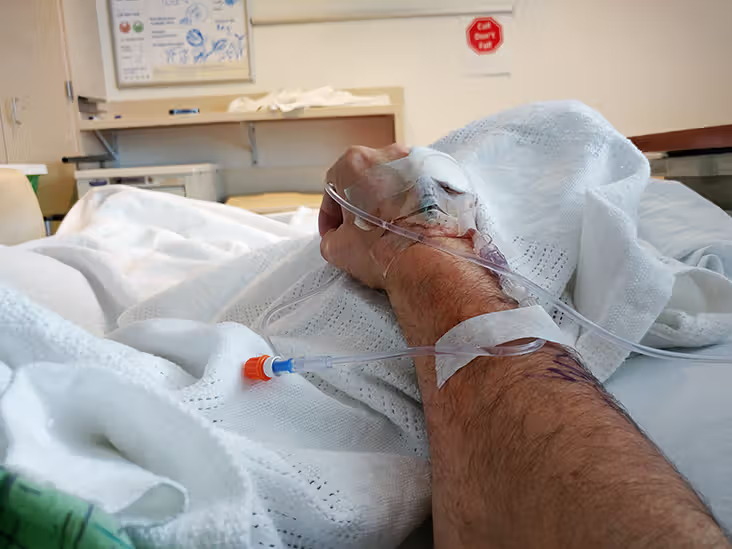
In early 2020, I scheduled a visit with a dermatologist after noticing a small scab on my arm that refused to heal. At first, it didn’t seem like a big deal. But when something on your skin doesn’t go away after several weeks, doctors often recommend having it checked.
During the appointment, the dermatologist decided to perform a biopsy and send the sample to a lab for testing.
A few weeks later, I received the call that changed everything.
“We’ve received your results, and unfortunately, the biopsy shows malignant melanoma. We’re referring you to a specialist right away.”
Hearing the word Malignant melanoma was overwhelming. My mind raced with questions and fears. But what happened next showed me just how important a strong medical team can be.
The Beginning of My Cancer Care Journey
Within a few days, I received a call from a surgical oncologist’s office at my local hospital. They scheduled an appointment quickly so we could discuss the diagnosis and next steps.
Thankfully, my melanoma had been detected relatively early. The tumor was small, but there was still a possibility it had spread to nearby lymph nodes.
The surgeon carefully explained the stages of melanoma and the potential treatment options. If the cancer had spread beyond the skin, the treatment plan would have been far more aggressive.
According to the American Cancer Society, melanoma survival rates are significantly higher when the cancer is caught early and treated before it spreads to lymph nodes or other organs.
Research shows that the 5-year survival rate for localized melanoma is over 99%, but the rate decreases if the cancer spreads.
During that first appointment, I was flooded with medical terms, statistics, and treatment possibilities. But my surgeon was incredibly patient and compassionate, helping me understand every detail of the process.
Surgery and Treatment
Soon after that consultation, I was scheduled for surgery at a nearby cancer hospital.
On the day of the procedure, the medical team carefully prepared me and reviewed the presurgery checklist. Although the melanoma was only a few millimeters wide, surgeons removed a larger area of surrounding skin. This procedure is known as a wide local excision, and it helps ensure that no cancer cells remain.
They also performed a biopsy of the nearest lymph node to determine whether the cancer had spread.
According to the National Cancer Institute, this lymph node procedure—called a sentinel lymph node biopsy—is commonly used to determine whether melanoma has spread beyond the original tumor.
Waiting for those biopsy results was one of the most stressful parts of the experience.
Fortunately, the results showed that the melanoma had not spread to my lymph nodes.
This meant I could avoid more aggressive treatments such as immunotherapy or radiation.
Recovery and Ongoing Monitoring
After surgery, my medical team continued to monitor my recovery closely. They checked the surgical site and made sure the healing process was going smoothly.
Because melanoma can sometimes return, my doctors recommended an ongoing monitoring plan.
Today, I visit my dermatologist or oncological surgeon every four months for a full skin examination.
These checkups allow doctors to look for any suspicious changes that might indicate a recurrence.
If anything unusual appears, they remove it immediately and send it for testing.
I also undergo yearly CT scans and MRI scans to ensure that no new tumors have developed in my chest or brain.
While these tests can be expensive and occasionally uncomfortable, they give me peace of mind knowing that my health is being carefully monitored.
The Centers for Disease Control and Prevention emphasizes that regular skin checks and follow-up care are essential for people who have previously been diagnosed with melanoma.
What I Want Others to Know About Cancer Care
Looking back, I feel incredibly grateful for the expertise and compassion of my healthcare team.
A cancer diagnosis is frightening. It’s easy to feel overwhelmed by the uncertainty and the medical information thrown at you all at once.
What helped me the most was having doctors who took the time to explain everything clearly and check in with me throughout the process.
Cancer treatment isn’t just about surgery or medication—it’s also about communication, trust, and emotional support.
The experience reminded me how important it is to ask questions and stay actively involved in your healthcare decisions.
The Bottom Line
Receiving a cancer diagnosis can feel terrifying, but early detection and strong medical support can make a huge difference.
If you notice any unusual skin changes—such as a mole that changes shape, color, or size—it’s important to schedule a medical evaluation as soon as possible.
If you’ve already been diagnosed with cancer, stay engaged with your care team. They are there to guide you, answer your questions, and help you make informed decisions about your treatment.
Most importantly, remember that early detection saves live