
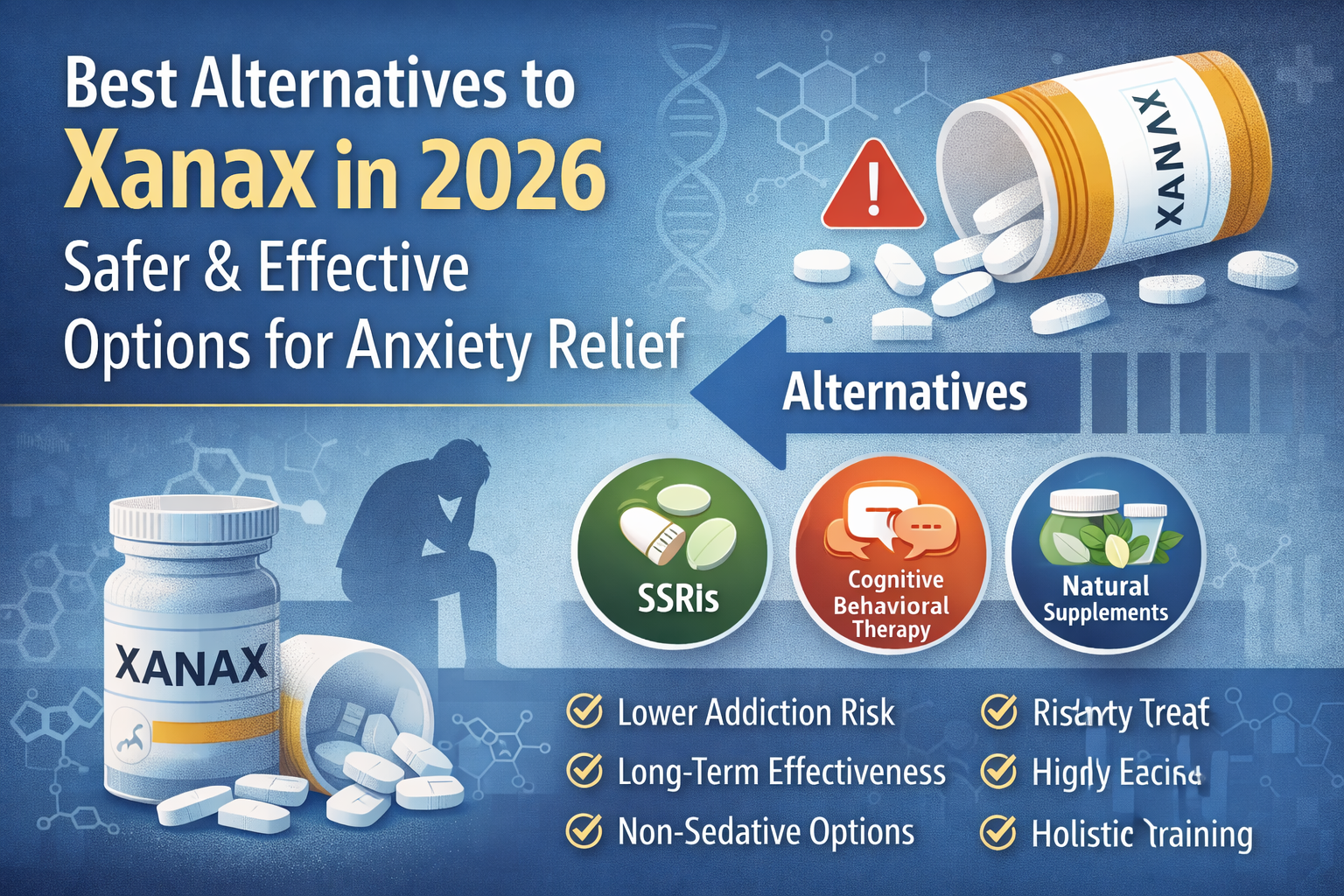
Anxiety disorders continue to affect millions of people worldwide. For years, Xanax (alprazolam) has been one of the most commonly prescribed medications for anxiety and panic disorders. However, due to concerns about dependency, withdrawal symptoms, and long-term side effects, many individuals are now searching for safer and more sustainable options.
In 2026, awareness around mental health and medication safety has grown significantly. Patients and healthcare providers alike are exploring the best alternatives to Xanax that offer effective anxiety relief without high addiction risks.
This guide explores prescription medications, non-benzodiazepine options, natural supplements, and therapy-based alternatives.
Why Look for Alternatives to Xanax?
Xanax belongs to a class of drugs called benzodiazepines. While it works quickly to reduce anxiety symptoms, it may also cause:
- Dependency and tolerance
- Withdrawal symptoms
- Drowsiness and cognitive slowing
- Memory issues
- Increased risk of misuse
Because of these concerns, many doctors recommend exploring alternatives that are safer for long-term use.
1. SSRIs (Selective Serotonin Reuptake Inhibitors)
SSRIs are now considered first-line treatments for anxiety disorders.
Common Options:
- Sertraline (Zoloft)
- Escitalopram (Lexapro)
- Fluoxetine (Prozac)
Why They’re Effective:
SSRIs regulate serotonin levels in the brain, helping reduce anxiety over time. Unlike Xanax, they are not addictive and are safer for long-term management.
Best For:
- Generalized Anxiety Disorder (GAD)
- Social Anxiety Disorder
- Panic Disorder
2. SNRIs (Serotonin-Norepinephrine Reuptake Inhibitors)
SNRIs work similarly to SSRIs but also affect norepinephrine.
Common Options:
- Venlafaxine (Effexor XR)
- Duloxetine (Cymbalta)
These medications are effective for anxiety and may also help with depression and chronic pain.
3. Buspirone (Buspar)
Buspirone is a non-benzodiazepine anti-anxiety medication that does not cause sedation or dependency like Xanax.
Benefits:
- Low addiction risk
- Minimal cognitive impairment
- Suitable for long-term use
It may take a few weeks to show full effects but is considered a safer alternative.
4. Hydroxyzine
Hydroxyzine is an antihistamine sometimes prescribed for short-term anxiety relief.
Advantages:
- Non-addictive
- Works relatively quickly
- Helpful for situational anxiety
It may cause drowsiness but does not carry the dependency risk of benzodiazepines.
5. Beta-Blockers (For Performance Anxiety)
Medications like propranolol are often used for performance anxiety.
They help manage physical symptoms such as:
- Rapid heartbeat
- Sweating
- Tremors
They do not directly treat emotional anxiety but can reduce physical stress responses.
6. Cognitive Behavioral Therapy (CBT)
Medication isn’t the only option. In fact, Cognitive Behavioral Therapy is considered one of the most effective long-term treatments for anxiety.
CBT helps individuals:
- Identify negative thought patterns
- Develop coping strategies
- Reduce panic triggers
- Build long-term resilience
Many mental health professionals recommend combining therapy with medication for optimal results.
7. Natural & Lifestyle-Based Alternatives
In 2026, holistic approaches are increasingly popular.
Evidence-Based Natural Options:
- Magnesium supplements
- L-theanine
- Ashwagandha
- Omega-3 fatty acids
Lifestyle Changes That Help:
- Regular exercise
- Mindfulness meditation
- Proper sleep hygiene
- Reduced caffeine intake
While natural supplements can support anxiety management, they should be used under medical guidance.
Comparing Xanax to Its Alternatives
| Option | Addiction Risk | Onset Speed | Long-Term Use |
|---|---|---|---|
| Xanax | High | Fast | Not Recommended |
| SSRIs | Low | 2–6 Weeks | Safe |
| Buspirone | Very Low | 2–4 Weeks | Safe |
| Hydroxyzine | Low | Fast | Short-Term |
| CBT | None | Gradual | Highly Effective |
Which Alternative Is Right for You?
The best alternative depends on:
- Type of anxiety disorder
- Severity of symptoms
- Medical history
- Risk of substance misuse
- Need for short-term vs long-term relief
A healthcare provider can help determine the most appropriate treatment plan.
Final Thoughts: Moving Beyond Xanax in 2026
While Xanax remains effective for short-term anxiety relief, its risks make it less suitable for long-term management. In 2026, safer prescription medications, therapy-based approaches, and holistic treatments offer promising alternatives.
If you’re considering switching from Xanax or starting anxiety treatment, consult a licensed medical professional. Anxiety is highly treatable — and with today’s options, you don’t have to rely solely on benzodiazepines.
Leave a Reply