

Coffee enemas are trending again in wellness spaces — often promoted for “detox,” gut health, clearer skin, and liver support. While some people swear by them, others question whether they’re safe — especially during menstruation.
If you’re considering trying a coffee enema, it’s important to understand what the research actually says — and what major medical organizations in the U.S. recommend.
Let’s break it down clearly and responsibly.
A Brief History of Enemas
Enemas aren’t new.
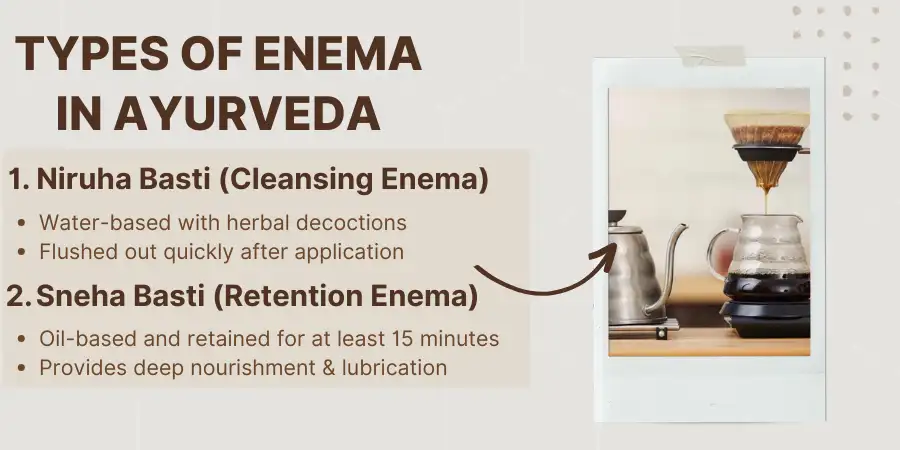
- Ayurveda (India): In traditional Ayurvedic medicine, Basti is part of Panchakarma cleansing therapies. These include oil-based (Sneha Basti) and herbal water-based (Niruha Basti) enemas.
- Ancient Egypt (1550 BCE): The Ebers Papyrus references rectal cleansing for digestive relief.
- Greek & Roman medicine: Enemas were used to treat constipation and illness.
- Europe (Middle Ages): Enemas became widely used for many ailments — often without scientific evidence.
However, it’s important to separate historical use from modern scientific validation. Many ancient practices predate today’s safety standards and clinical testing requirements.
What Is a Coffee Enema?
A coffee enema involves introducing brewed, cooled coffee into the rectum and holding it for several minutes before expelling it.
It became popular in the U.S. in the 1950s through Dr. Max Gerson, who promoted it as part of the Gerson Therapy for detoxification and cancer support.
Today, advocates claim coffee enemas:
- Stimulate bile flow
- Support liver detoxification
- Increase glutathione (an antioxidant)
- Improve digestion
- Clear skin
But what does the science say?
What Research and U.S. Medical Organizations Say
Major U.S. health institutions do not recommend coffee enemas for detox.
1. The Body Already Detoxifies Itself
According to the National Institutes of Health, the liver and kidneys naturally remove toxins from the body. There is no strong clinical evidence that coffee enemas improve this process.
Similarly, the Cleveland Clinic states that “detox” cleanses and enemas are not medically necessary for healthy individuals and may carry risks.
2. No Strong Evidence for Cancer or Detox Benefits
The National Cancer Institute reviewed Gerson Therapy and reports no reliable scientific evidence that coffee enemas treat cancer or detoxify the body.
Published case reports in medical journals have documented complications such as:
- Rectal burns
- Infections
- Electrolyte imbalances
- Colitis (colon inflammation)
(Source: Case reports in American Journal of Gastroenterology and related clinical literature.)
3. Glutathione Claims
Some alternative health sources claim coffee enemas increase glutathione production.
However, controlled human clinical trials confirming this effect are lacking. The NIH Office of Dietary Supplements notes that glutathione regulation is complex and not easily boosted through detox procedures.
Potential Risks of Coffee Enemas
While some people tolerate enemas without immediate issues, documented risks include:
- Dehydration
- Electrolyte imbalance
- Rectal irritation or injury
- Increased infection risk
- Caffeine overstimulation (heart palpitations, anxiety)
In rare but serious cases, infections and sepsis have been reported in medical literature.
Should You Do a Coffee Enema During Your Period?
For women, this is an especially important question.
During menstruation:
- The pelvic region may feel more sensitive
- Hormones fluctuate
- Fatigue and cramps are common
- Fluid shifts are already occurring
Adding a coffee enema during this time may increase discomfort or risk.
Specific Concerns
1. Infection Risk
The vaginal and rectal areas are anatomically close. During menstruation, changes in pH and moisture can make the area more sensitive. Any invasive procedure increases potential infection risk.
2. Electrolyte & Fluid Balance
Menstruation already affects hydration and energy levels. Enemas can further disrupt electrolytes, which may increase fatigue or dizziness.
3. Caffeine Sensitivity
Caffeine absorbed rectally can stimulate the nervous system. For women already experiencing PMS-related anxiety or irritability, this could worsen symptoms.
There are currently no strong clinical studies specifically evaluating coffee enema safety during menstruation — which means caution is advised.
So… Are Coffee Enemas “Good” for You?
Based on current scientific evidence in the U.S.:
- There is no strong clinical proof that coffee enemas detox the liver.
- There is documented evidence of potential risks.
- Major medical institutions do not recommend them for cleansing or disease treatment.
If someone is struggling with:
- Constipation
- Digestive issues
- Hormonal symptoms
- Skin concerns
It’s safer to consult a licensed healthcare provider who can recommend evidence-based options.
A Safer Alternative Approach to “Detox”
Instead of invasive cleansing, U.S. medical experts recommend:
- Drinking adequate water
- Eating fiber-rich foods
- Supporting liver health through balanced nutrition
- Regular physical activity
- Limiting alcohol
- Sleeping 7–9 hours nightly
These methods are supported by the Centers for Disease Control and Prevention and National Institutes of Health.
Your body already has a built-in detox system — it just needs healthy habits to function optimally.
The Bottom Line
Coffee enemas have historical roots and modern popularity — but popularity doesn’t equal proven benefit.
If you’re considering one:
- Avoid scheduling it during your period.
- Understand the documented risks.
- Speak with a licensed healthcare professional first.
- Be cautious of wellness claims not supported by peer-reviewed research.
Your health decisions deserve evidence, not just trends.
Disclaimer
This article is for educational purposes only and is not medical advice. The statements discussed have not been approved by the FDA. Always consult a qualified healthcare provider before beginning any new health practice
Leave a Reply