
Many of you have heard the word estrogen — maybe in biology class or while scrolling through Instagram. But what exactly is it?
Estrogen is a vital hormone found in both men and women. However, in women, its role is far more extensive. It is the primary hormone responsible for developing and maintaining feminine characteristics.
Most people associate estrogen only with fertility and periods. But its impact goes far beyond reproduction. Estrogen also:
- Strengthens bones
- Regulates mood
- Supports heart health
- Maintains skin and hair health
- Contributes to overall well-being
Understanding how estrogen functions — and how it changes throughout life — can help you take control of your health with confidence.
In this article, we’ll explore:
- What estrogen is
- How it affects the female body
- What happens when levels are too high or too low
- Practical ways to maintain hormonal balance
What Is Estrogen?
Estrogen is a hormone produced mainly by the ovaries. Smaller amounts are also made by fat cells and the adrenal glands.
It regulates menstruation, supports pregnancy, and keeps several essential systems in the body functioning properly.
There are three main types of estrogen:
Estradiol (E2)
The most common and potent form during reproductive years (premenopausal women).
Estrone (E1)
The primary form after menopause.
Estriol (E3)
Present mainly during pregnancy.
How Does Estrogen Affect the Female Body?
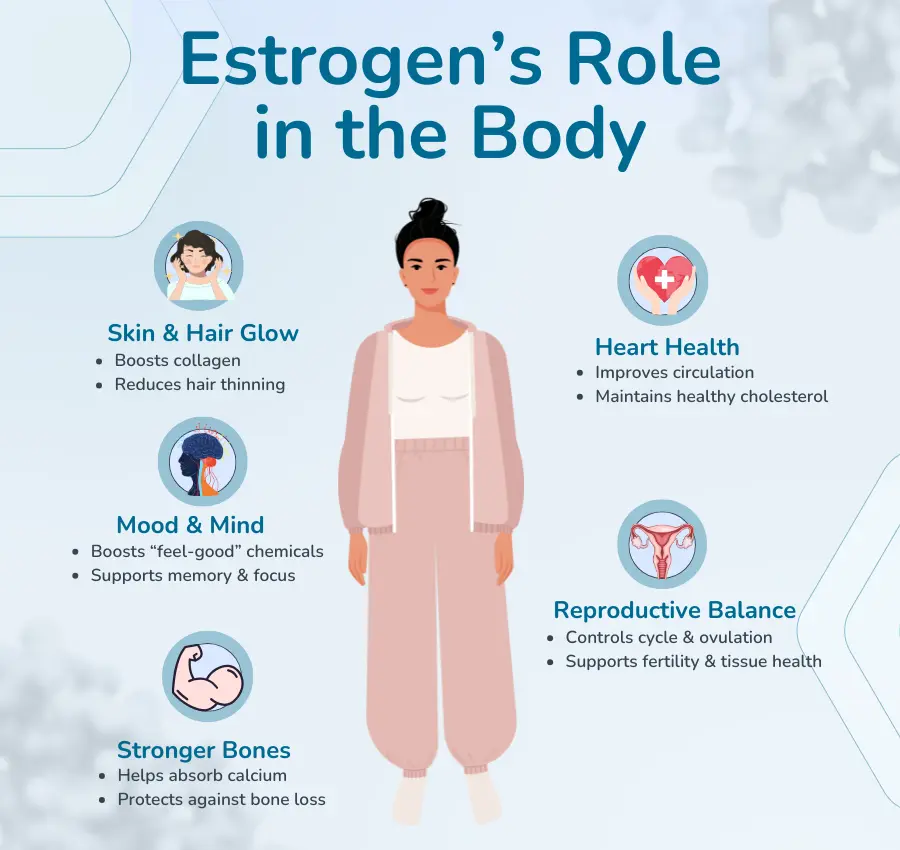
Estrogen influences multiple systems in the body.
1. Reproductive System
- Regulates the menstrual cycle
- Supports ovulation and fertility
- Maintains vaginal and uterine tissue elasticity and lubrication
2. Bone Health
- Helps the body absorb calcium
- Maintains bone density
- Low levels increase the risk of osteoporosis and fractures
3. Mood & Brain Function
- Supports serotonin production (the “feel-good” neurotransmitter)
- Influences mood stability
- Affects memory, focus, and cognitive function
Fluctuations in estrogen can directly impact emotional well-being.
4. Heart & Blood Vessels
- Helps relax and widen blood vessels
- Supports healthy cholesterol levels
- Reduces risk of cardiovascular disease before menopause
5. Skin & Hair
- Boosts collagen production
- Maintains skin firmness and hydration
- Helps prevent hair thinning
How Estrogen Changes with Age
Estrogen levels naturally fluctuate throughout life.
Puberty
Levels rise, leading to:
- Breast development
- Menstruation
- Body fat redistribution
Reproductive Years
Estrogen rises and falls with each menstrual cycle and increases significantly during pregnancy.
Perimenopause (Typically 40–50 years)
Estrogen production begins to decline and fluctuate unpredictably, which may cause:
- Hot flashes
- Mood swings
- Irregular periods
Menopause (50+)
Estrogen levels drop significantly, increasing the risk of:
- Osteoporosis
- Heart disease
- Vaginal dryness
Because estrogen shifts over time, maintaining balance becomes especially important.
How Much Estrogen Is Normal?
Estrogen levels vary depending on age and life stage.
Approximate estradiol (E2) ranges:
- Adolescents (13–15): 8–77 pg/mL
- Late teens (16–18): 22–88 pg/mL
- Adults (36–45): 29–106 pg/mL
- Perimenopause (46–55): 14–84 pg/mL
A significant deviation from normal ranges may trigger symptoms.
Too Much Estrogen (Estrogen Dominance)
High estrogen relative to progesterone can cause imbalance.
Symptoms
- Weight gain (hips, thighs, abdomen)
- Heavy or irregular periods
- Mood swings, anxiety, depression
- Breast tenderness
- Bloating
- Fatigue
- Low libido
It may also increase the risk of conditions like:
- PCOS
- Endometriosis
- Fibroids
Causes
- Hormonal contraception or hormone replacement therapy (HRT)
- Obesity (fat tissue produces estrogen)
- Chronic stress
- Liver dysfunction
- Exposure to endocrine-disrupting chemicals (plastics, pesticides, cosmetics)
Low Estrogen
Low estrogen is common during menopause but can also occur earlier.
Symptoms
- Hot flashes and night sweats
- Vaginal dryness and discomfort
- Sleep disturbances
- Brain fog and poor concentration
- Brittle bones
- Increased cardiovascular risk
Causes
- Natural aging
- Excessive exercise or very low body fat
- Nutritional deficiencies
- Premature ovarian insufficiency
- Autoimmune disorders
- Ovarian removal surgery or chemotherapy
6 Ways to Support Healthy Estrogen Levels
While hormonal shifts are natural, lifestyle choices can support balance.
1. Eat a Hormone-Friendly Diet
- Phytoestrogens (soy, flaxseeds, legumes) may gently support estrogen activity.
- Healthy fats (avocados, nuts, olive oil) are essential for hormone production.
- Fiber-rich foods help remove excess estrogen from the body.
2. Exercise Regularly
- Strength training supports bone health and metabolism.
- Moderate exercise helps regulate hormones and reduce stress.
Avoid excessive overtraining, which may suppress estrogen.
3. Manage Stress
Chronic stress raises cortisol, which can interfere with hormonal balance.
Helpful practices include:
- Meditation
- Yoga
- Deep breathing
- Adequate sleep
4. Reduce Exposure to Endocrine Disruptors
Limit contact with:
- Plastic containers (especially when heated)
- Harsh chemical cosmetics
- Pesticides
5. Consider Hormone Therapy (If Recommended)
Hormone Replacement Therapy (HRT) may help relieve severe menopause symptoms — but should only be considered under medical supervision.
6. Natural Support Options
Some supplements that may provide support include:
- Black cohosh
- Evening primrose oil
- Tocotrienol (Vitamin E form)
Always consult a healthcare professional before starting supplements.
Final Thoughts
Estrogen is far more than a reproductive hormone. It plays a powerful role in:
- Bone strength
- Heart health
- Mood regulation
- Skin and hair vitality
- Cognitive function
Understanding how estrogen rises and falls across life stages empowers you to make informed choices.
If you notice symptoms of hormonal imbalance, consult a qualified healthcare provider. Personalized evaluation is essential — hormone levels are highly individual.
With balanced nutrition, regular movement, stress management, and proper medical guidance, you can support healthy estrogen levels at every stage of life.
Disclaimer: This article is for educational and informational purposes only and is not a substitute for professional medical advice, diagnosis, or treatment. Always consult your healthcare provider regarding any medical concerns or before making health-related decisions.
Leave a Reply