Did you know that iron deficiency anemia affects nearly 20% of pregnant women worldwide? Iron plays a critical role during pregnancy because the body must produce extra blood to support both the mother and the developing baby.
Including foods high in iron during pregnancy helps prevent anemia, supports fetal growth, and promotes overall maternal health.
In this guide, we’ll explore:
- why iron is essential during pregnancy
- the best iron-rich foods for expectant mothers
- heme vs non-heme iron sources
- tips to improve iron absorption
- when supplements may be necessary
Key Takeaways
- Pregnant women need about 27 mg of iron daily
- Both heme and non-heme iron sources are important
- Vitamin C improves iron absorption
- Calcium can reduce iron absorption if taken together
- Supplements may be recommended if anemia develops
- Always consult a healthcare provider before supplementation
Why Iron Is Important During Pregnancy
Iron supports the production of hemoglobin, the protein in red blood cells that carries oxygen throughout the body.
During pregnancy:
- blood volume increases significantly
- oxygen demand rises
- fetal organs begin developing rapidly
Without enough iron, the mother may develop iron deficiency anemia, which can affect both maternal and baby health.
Low iron levels during pregnancy may increase risk of:
- fatigue and weakness
- preterm birth
- low birth weight
- delayed fetal development
Meeting daily iron requirements helps support a healthier pregnancy journey.
Recommended Iron Intake During Pregnancy
Pregnant women require approximately:
27 mg of iron per day
This can be achieved through a combination of:
- animal-based iron sources
- plant-based iron sources
- prenatal vitamins (if prescribed)
A balanced diet usually provides most of the required iron.
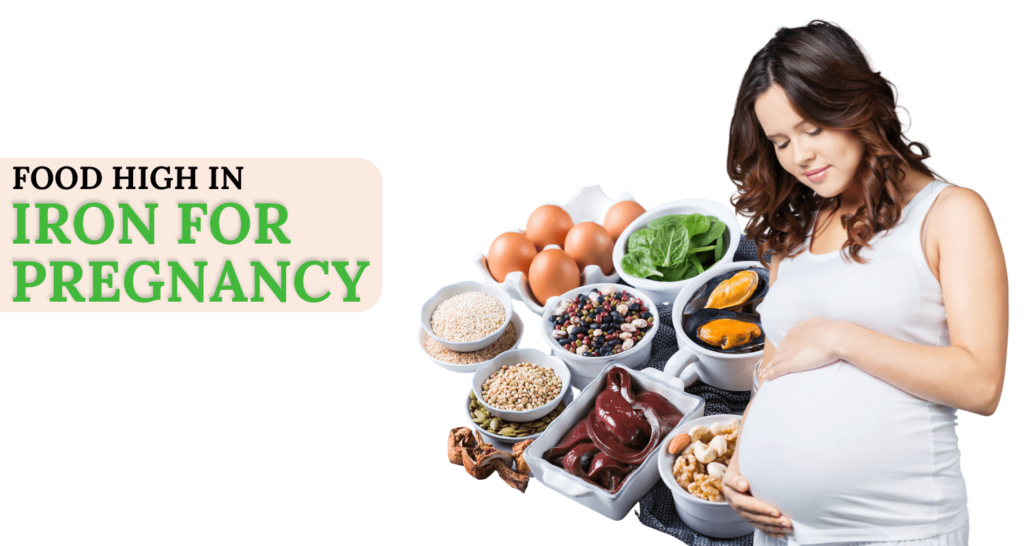
Heme vs Non-Heme Iron Sources
Iron is available in two forms.
Heme Iron (Best Absorbed)
Found in animal-based foods and absorbed more efficiently by the body.
Top sources include:
- lean beef
- chicken
- fish
- salmon
- clams
- oysters
These foods help meet iron needs quickly and effectively.
Non-Heme Iron (Plant-Based Sources)
Found in plant foods and still very valuable during pregnancy.
Common sources include:
- beans
- lentils
- spinach
- kale
- broccoli
- pumpkin seeds
- fortified cereals
Combining these foods with vitamin C improves absorption significantly.
Best Iron-Rich Foods for Pregnancy
Including a variety of foods ensures better nutrient balance.
Animal-Based Iron Sources
Rich in highly absorbable iron:
- lean beef
- chicken
- fish
- salmon
- shellfish (when properly cooked)
These help increase hemoglobin levels efficiently.
Plant-Based Iron Sources
Ideal for vegetarian or mixed diets:
- lentils
- chickpeas
- kidney beans
- spinach
- kale
- pumpkin seeds
- fortified grains
They also provide fiber and antioxidants that support pregnancy health.
Foods That Improve Iron Absorption
Some nutrients help the body absorb iron more efficiently.
Vitamin C is especially powerful for boosting absorption.
Examples include:
- oranges 🍊
- lemons
- strawberries
- bell peppers
- broccoli
Adding vitamin C-rich foods to meals can significantly improve iron uptake.
Foods That Reduce Iron Absorption
Some foods may interfere with iron absorption when eaten together with iron-rich meals.
These include:
- milk
- cheese
- yogurt
- calcium supplements
It’s best to consume calcium-rich foods at a different time from iron-rich meals.
Effects of Iron Deficiency During Pregnancy
Untreated iron deficiency may affect both mother and baby.
Possible risks include:
- fatigue
- dizziness
- reduced immunity
- premature delivery
- low birth weight
Maintaining proper iron intake helps support healthy fetal growth and maternal wellbeing.
When Iron Supplements Are Needed
Sometimes diet alone is not enough.
Healthcare providers may recommend supplements if:
- blood tests show anemia
- pregnancy iron needs are higher than average
- there is a history of iron deficiency
Common supplement types include:
- ferrous sulfate
- ferrous gluconate
- ferrous fumarate
Supplements should only be taken under medical supervision.
Tips to Increase Iron Levels Naturally During Pregnancy
Simple daily habits can improve iron intake:
Eat iron-rich foods regularly
Pair meals with vitamin C foods
Avoid tea or coffee near meals
Separate calcium and iron intake
Follow prenatal vitamin guidance
These steps help improve iron absorption safely.
Final Thoughts
Iron is one of the most important nutrients during pregnancy. Meeting daily iron needs supports:
- healthy blood production
- fetal organ development
- oxygen supply to the baby
- maternal energy levels
Including iron-rich foods like lean meats, legumes, leafy greens, and fortified grains, along with vitamin C-rich foods, can help prevent anemia and support a healthier pregnancy.
If needed, supplements may be recommended by a healthcare provider for additional support.