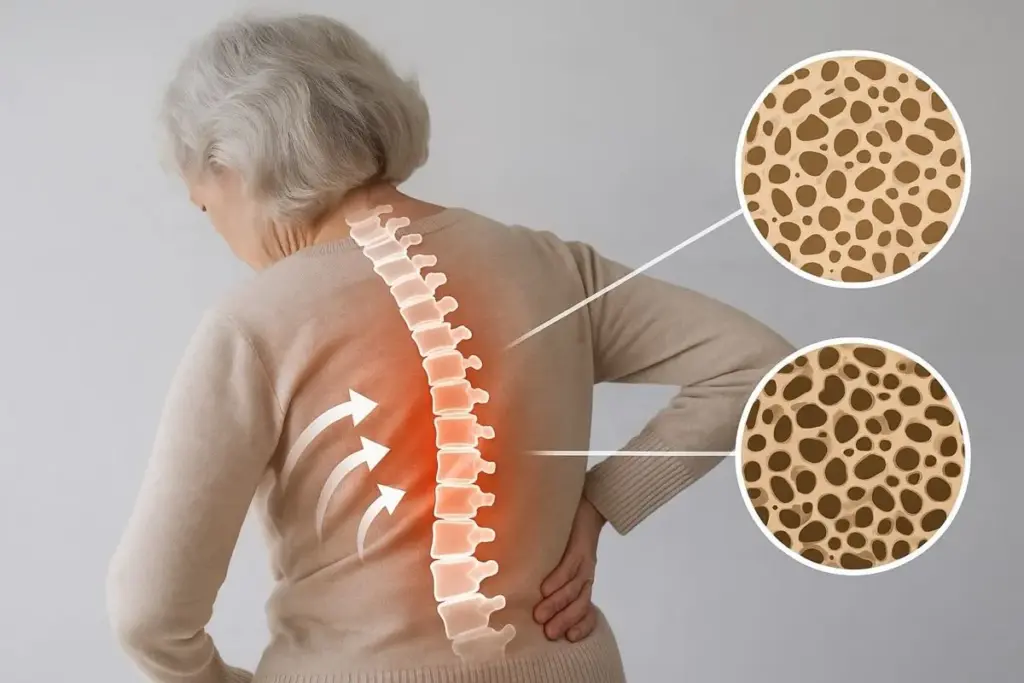
Osteopenia and Osteoporosis both involve loss of bone density, but they are not the same thing. Osteopenia is considered an early stage of bone loss, while osteoporosis is more advanced and significantly increases fracture risk.
Because bone loss often develops silently over many years, millions of Americans don’t realize their bones are weakening until they experience a fracture.
The good news is that early action can slow bone loss and help protect long-term mobility and independence.
What Happens to Bones as You Age?
Bone is living tissue that constantly rebuilds itself.
When you’re younger:
- Bone is replaced quickly
- Bone strength stays high
As you age:
- Bone breakdown starts happening faster than rebuilding
- Bones gradually become thinner and weaker
This process accelerates after midlife, especially in women after menopause.
What Is Osteopenia?
Osteopenia means bone density is lower than normal, but not yet low enough to qualify as osteoporosis.
Think of it as a warning sign:
- Bones are weakening
- Fracture risk is increasing
- Progression may still be preventable
Many adults with osteopenia feel completely normal and have no symptoms.
What Is Osteoporosis?
Osteoporosis is a more severe loss of bone density that makes bones fragile and easier to break.
Common fracture locations include:
- Hips
- Spine
- Wrists
The National Institute on Aging notes that osteoporosis increases the risk of serious fractures that can affect mobility and quality of life.
The Main Difference Between Osteopenia and Osteoporosis
Osteopenia
- Mild to moderate bone loss
- Lower fracture risk
- Often reversible or manageable with lifestyle changes
Osteoporosis
- Severe bone weakening
- Much higher fracture risk
- May require medication plus lifestyle treatment
The difference is usually measured through a bone density scan.
How Doctors Diagnose Bone Loss
A bone density test called a DEXA scan measures bone strength.
Results are reported as a T-score.
General T-Score Ranges
Normal Bone Density
- Above -1.0
Osteopenia
- Between -1.0 and -2.5
Osteoporosis
- Below -2.5
Symptoms: Why Bone Loss Is Called a “Silent Disease”
Most people have no symptoms early on.
Sometimes the first sign is:
- A broken bone after a minor fall
- Loss of height
- Stooped posture
- Back pain from spinal fractures
This is why screening becomes important with age.
Who Is Most at Risk?
Risk factors include:
- Aging
- Menopause
- Family history
- Smoking
- Low physical activity
- Low calcium or vitamin D intake
- Excess alcohol use
- Long-term steroid medication use
Women are affected more often, but men can develop osteoporosis too.
What Actually Helps Prevent Bone Loss
The earlier you start, the more effective prevention tends to be.
1. Strength Training and Weight-Bearing Exercise
Exercise helps stimulate bone maintenance.
Helpful activities include:
- Walking
- Resistance training
- Hiking
- Stair climbing
- Strength exercises
Weight-bearing movement is especially important after 40.
2. Get Enough Calcium
Calcium is essential for bone structure.
Good sources include:
- Dairy products
- Sardines
- Tofu
- Leafy greens
- Fortified foods
Most adults over 50 need increased calcium intake.
3. Don’t Ignore Vitamin D
Vitamin D Deficiency is extremely common and can worsen bone loss because vitamin D helps absorb calcium.
Sources include:
- Sunlight
- Fatty fish
- Fortified foods
- Supplements when needed
4. Increase Protein Intake
Protein supports:
- Muscle strength
- Bone structure
- Fall prevention
Older adults often don’t consume enough protein.
5. Prevent Falls
Falls become more dangerous as bones weaken.
Helpful strategies:
- Balance exercises
- Better home lighting
- Supportive footwear
- Vision checks
6. Avoid Smoking and Excess Alcohol
Smoking and heavy alcohol intake both accelerate bone loss.
When Medication May Be Needed
For osteoporosis—or high fracture risk—doctors may recommend medications to:
- Slow bone breakdown
- Improve bone density
- Reduce fracture risk
Treatment depends on:
- Bone density scores
- Age
- Fracture history
- Overall health risk
Can Osteopenia Be Reversed?
In some cases, bone density can improve with:
- Strength training
- Better nutrition
- Vitamin D correction
- Lifestyle changes
Even when full reversal isn’t possible, progression can often be slowed significantly.
When to Get Screened
Talk with a healthcare provider about bone density testing if you:
- Are over 65
- Are postmenopausal
- Have broken a bone easily
- Take long-term steroids
- Have a family history of osteoporosis
Earlier screening may be appropriate for some higher-risk adults.
Bottom Line
Osteopenia and osteoporosis both involve bone loss, but osteoporosis is the more advanced and dangerous stage. Osteopenia is often an early warning sign that bones are weakening before major fractures occur.
The good news is that bone health can often be protected through strength training, proper nutrition, vitamin D, calcium intake, and healthy lifestyle habits. Taking action early can make a major difference in maintaining mobility and independence as you age.