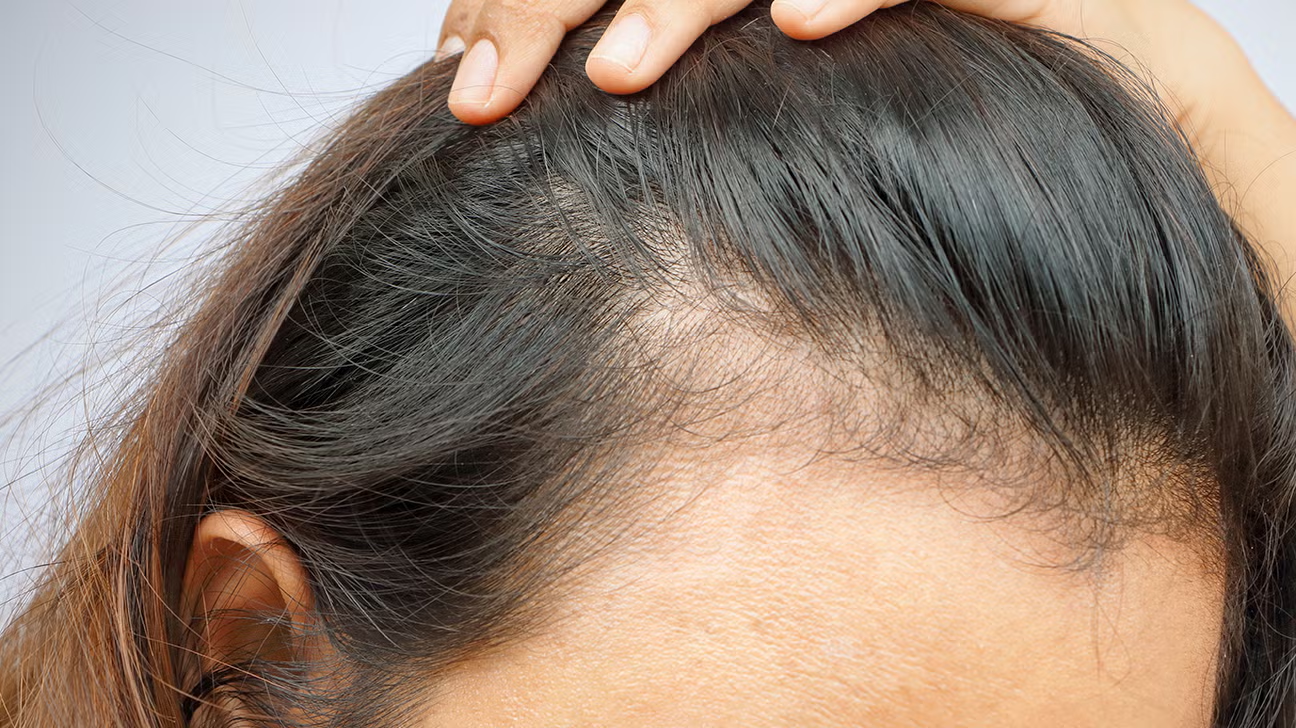
Hair loss can be emotionally challenging, especially when you’re unsure why it’s happening. Two of the most common causes of hair loss in women are alopecia areata and female pattern baldness, also known as female pattern hair loss (FPHL). While both conditions can lead to noticeable hair thinning, they are very different in terms of causes, appearance, progression, and treatment.
Understanding the alopecia areata vs female pattern baldness difference can help you recognize potential symptoms and know when it’s time to seek professional evaluation.
Quick Answer: What’s the Difference Between Alopecia Areata and Female Pattern Baldness?
Alopecia areata is an autoimmune condition that causes sudden, patchy hair loss, while female pattern baldness is a genetic and hormone-related condition that causes gradual thinning, usually along the top of the scalp and hair part.
The biggest clue is often the pattern of hair loss:
- Alopecia areata: Round or oval bald patches that may appear suddenly.
- Female pattern baldness: Progressive thinning and widening of the hair part over time.
Understanding Hair Loss in Women
Hair loss affects millions of women worldwide and can occur at almost any age.
Hair loss may result from:
- Genetics.
- Hormonal changes.
- Autoimmune diseases.
- Nutritional deficiencies.
- Stress.
- Medical conditions.
- Aging.
Because treatment depends on the cause, identifying the correct type of hair loss is essential.
What Is Alopecia Areata?
Alopecia areata is an autoimmune disorder in which the immune system mistakenly attacks healthy hair follicles.
This attack disrupts normal hair growth and causes hair to fall out.
Key Characteristics of Alopecia Areata
- Sudden onset.
- Round or oval bald patches.
- Smooth scalp skin in affected areas.
- May affect eyebrows, eyelashes, beard, or body hair.
- Can occur at any age.
- Hair may regrow and later fall out again.
The severity varies widely. Some individuals develop only one small patch, while others experience more extensive hair loss.
What Causes Alopecia Areata?
The exact cause is not fully understood, but researchers believe it involves a combination of:
Autoimmune Activity
The immune system targets hair follicles, interrupting normal growth.
Genetic Predisposition
People with a family history of autoimmune conditions may have a higher risk.
Associated Conditions
Alopecia areata may occur alongside:
- Thyroid disorders.
- Vitiligo.
- Type 1 diabetes.
- Rheumatoid arthritis.
- Other autoimmune diseases.
Stress does not directly cause alopecia areata, but it may contribute to flare-ups in some individuals.
What Is Female Pattern Baldness?
Female pattern baldness, also called female pattern hair loss (FPHL), is the most common cause of chronic hair thinning in women.
Unlike alopecia areata, it usually develops gradually over months or years.
Key Characteristics of Female Pattern Baldness
- Gradual thinning.
- Widening hair part.
- Reduced hair density at the crown.
- Diffuse thinning across the top of the scalp.
- Rarely causes complete baldness.
- Often becomes more noticeable with age.
Hair follicles become progressively smaller, resulting in finer, shorter hairs.
What Causes Female Pattern Baldness?
Several factors contribute to female pattern hair loss.
Genetics
Family history is one of the strongest risk factors.
Women with relatives who experienced hair thinning are more likely to develop the condition.
Hormonal Influences
Changes involving:
- Estrogen.
- Progesterone.
- Androgens.
may affect hair growth patterns.
Aging
The risk increases during:
- Perimenopause.
- Menopause.
- Postmenopausal years.
Hair follicles naturally become less productive with age.
Alopecia Areata vs Female Pattern Baldness Difference: Side-by-Side Comparison
1. Pattern of Hair Loss
Alopecia Areata
- Distinct round or oval patches.
- Clearly defined bald spots.
- Sudden appearance.
Female Pattern Baldness
- Gradual thinning.
- Widened hair part.
- Diffuse hair loss at the crown.
This is often the easiest way to distinguish the two conditions.
2. Speed of Hair Loss
Alopecia Areata
Hair may fall out rapidly over days or weeks.
Female Pattern Baldness
Hair loss usually develops slowly over months or years.
3. Cause
Alopecia Areata
- Autoimmune condition.
Female Pattern Baldness
- Genetics.
- Hormonal influences.
- Aging-related follicle changes.
4. Scalp Appearance
Alopecia Areata
The affected area often appears:
- Smooth.
- Bald.
- Free of inflammation.
Female Pattern Baldness
The scalp remains covered with hair but appears:
- Less dense.
- More visible through thinning areas.
5. Other Hair Loss Areas
Alopecia Areata
May affect:
- Eyebrows.
- Eyelashes.
- Beard area.
- Body hair.
Female Pattern Baldness
Primarily affects scalp hair.
6. Nail Changes
Some people with alopecia areata develop:
- Nail pitting.
- Small dents in fingernails.
- Brittle nails.
These findings are not typically associated with female pattern baldness.
Can Both Conditions Occur Together?
Although uncommon, it is possible for a person to have more than one type of hair loss at the same time.
For example:
- Female pattern baldness may develop gradually.
- Alopecia areata may later cause sudden patchy hair loss.
This is one reason professional diagnosis is important.
How Doctors Diagnose Hair Loss
A healthcare professional or dermatologist may evaluate:
Medical History
Including:
- Family history.
- Recent illnesses.
- Medications.
- Hormonal changes.
Scalp Examination
Doctors look for:
- Hair loss pattern.
- Hair density.
- Signs of inflammation.
- Patchy bald spots.
Additional Testing
Depending on symptoms, tests may include:
- Thyroid function tests.
- Iron studies.
- Hormone evaluation.
- Autoimmune screening.
In some cases, a scalp biopsy may be recommended.
Treatment Options for Alopecia Areata
Treatment depends on severity and extent of hair loss.
Possible approaches include:
- Corticosteroid treatments.
- Topical medications.
- Immune-modulating therapies.
- Observation for spontaneous regrowth.
Many people experience at least partial hair regrowth, although recurrence is possible.
Treatment Options for Female Pattern Baldness
Because female pattern baldness is typically progressive, early treatment often provides the best results.
Common approaches may include:
- FDA-approved hair growth treatments.
- Addressing hormonal contributors.
- Managing nutritional deficiencies.
- Scalp health optimization.
- Medical therapies recommended by a dermatologist.
Treatment plans should always be individualized.
When Should You See a Healthcare Professional?
Seek medical evaluation if you notice:
- Sudden hair loss.
- Round bald patches.
- Rapidly worsening thinning.
- Hair loss with scalp irritation.
- Eyebrow or eyelash loss.
- Hair loss accompanied by fatigue, weight changes, or other symptoms.
Early diagnosis may improve treatment outcomes and help identify underlying health conditions.
Frequently Asked Questions (FAQ)
What is the main alopecia areata vs female pattern baldness difference?
Alopecia areata causes sudden patchy hair loss due to autoimmune activity, while female pattern baldness causes gradual thinning related to genetics and hormones.
Does alopecia areata cause complete baldness?
Usually not, but severe forms can lead to extensive scalp or body hair loss in some individuals.
Can female pattern baldness start in your 20s or 30s?
Yes. Although more common with age, female pattern hair loss can begin in younger adults.
Is alopecia areata permanent?
Not always. Many people experience regrowth, though recurrences may occur.
Does female pattern baldness cause bald patches?
Typically no. It usually causes diffuse thinning and widening of the hair part rather than smooth, circular bald spots.
Can stress cause alopecia areata?
Stress is not considered the direct cause, but it may contribute to flare-ups in some individuals.
Final Thoughts
Understanding the alopecia areata vs female pattern baldness difference is one of the most important steps toward finding the right treatment.
If hair loss appears suddenly in smooth, round patches, alopecia areata may be the cause. If thinning develops gradually over time, especially around the hair part and crown, female pattern baldness becomes more likely.
Because many other conditions can also cause hair loss—including thyroid disorders, iron deficiency, hormonal imbalances, and chronic illness—professional evaluation is often the best way to obtain an accurate diagnosis.
The earlier the cause is identified, the sooner an effective treatment plan can begin, helping preserve hair health and confidence.