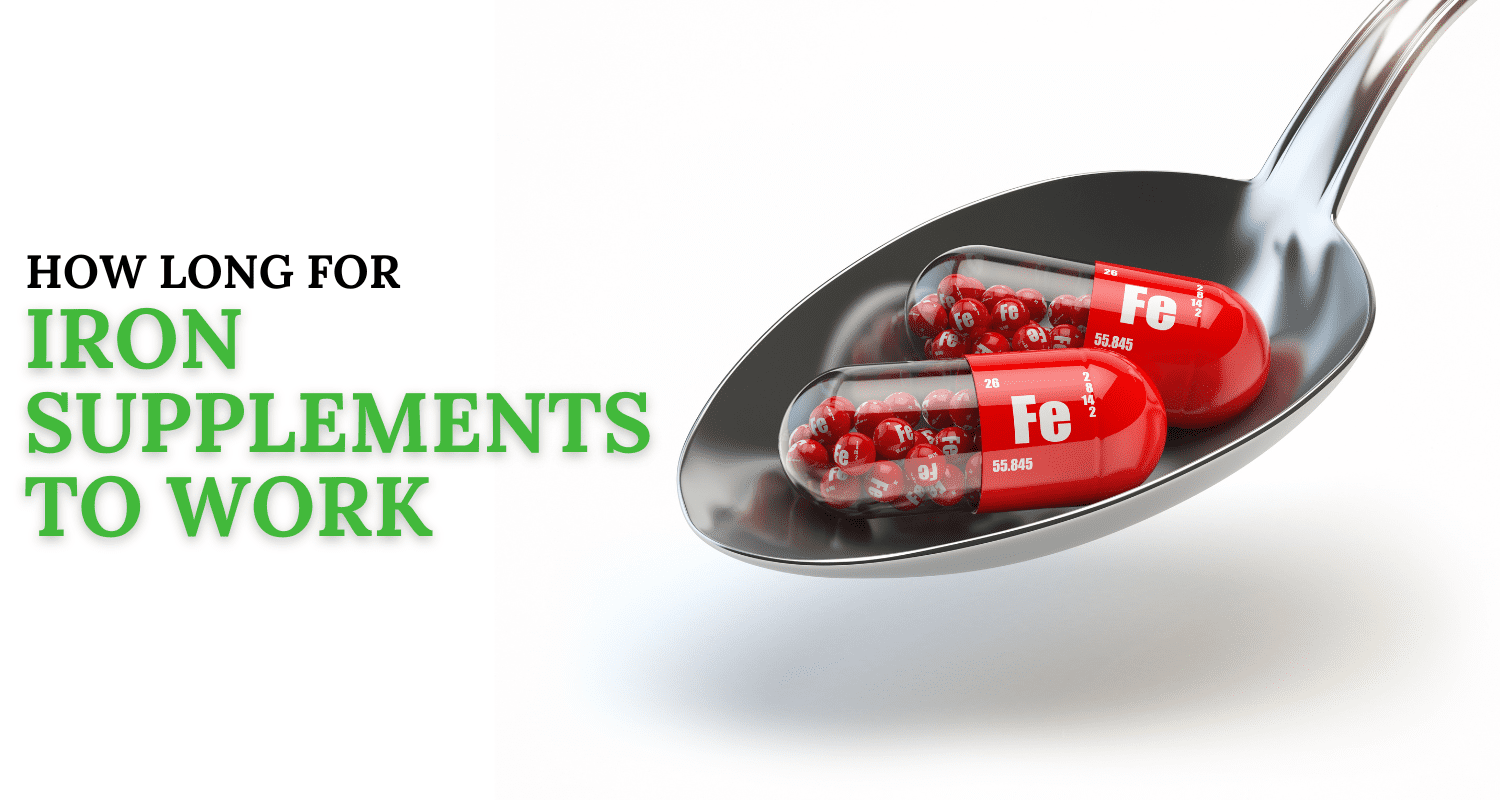
If you’ve recently been told you have low iron levels, your doctor may recommend taking iron supplements. One of the most common questions people ask is: How long does it take for iron supplements to work?
The answer depends on several factors, including the severity of your iron deficiency, how consistently you take the supplement, and how well your body absorbs iron.
Most people begin to see early improvements within a few weeks, but fully restoring iron levels can take longer. In this article, we’ll explain the typical timeline for iron supplements to work, what signs to watch for, and how to improve absorption for better results.
Key Takeaways
- Oral iron supplements may start increasing iron levels within 3–7 days.
- Symptoms such as fatigue often improve within 2–4 weeks.
- Hemoglobin levels usually return to normal within 6–8 weeks.
- Doctors often recommend continuing iron supplements for 3–6 months to rebuild iron stores.
- Proper timing, diet, and dosage can significantly improve iron absorption.
Research from the National Institutes of Health confirms that iron supplementation is the most common treatment for iron deficiency and iron-deficiency anemia.
Iron Supplement Overview
Iron supplements are commonly used to prevent and treat Iron-deficiency anemia, a condition that occurs when the body doesn’t have enough iron to produce healthy red blood cells.
Iron supplements are available in several forms, including:
- Capsules
- Tablets
- Liquid formulations
Common Types of Iron Supplements
Ferrous Sulfate
One of the most widely prescribed forms because it is affordable and effective.
Ferrous Fumarate
Contains a higher amount of elemental iron per dose.
Ferrous Gluconate
Often recommended for people who experience digestive discomfort with other forms.
According to the Harvard Medical School, the main difference between these supplements is the amount of elemental iron, which determines how much iron your body actually absorbs.
Tips for Taking Iron Supplements Correctly
Taking iron supplements the right way can significantly improve how well they work.
1. Pair Iron With Vitamin C
Vitamin C helps the body absorb iron more efficiently. Good sources include:
- Oranges
- Strawberries
- Bell peppers
- Lemon juice
A study published in the American Journal of Clinical Nutrition found that vitamin C can significantly increase iron absorption.
2. Avoid Dairy When Taking Iron
Calcium can interfere with iron absorption. Try to avoid:
- Milk
- Cheese
- Yogurt
Take iron supplements at least 2 hours apart from calcium-rich foods or supplements.
3. Separate Iron From Certain Medications
Some medications reduce iron absorption, including:
- Antacids
- Proton pump inhibitors
- Certain antibiotics
If you take these medications, ask your healthcare provider about the best timing.
4. Manage Common Side Effects
Iron supplements can sometimes cause:
- Constipation
- Nausea
- Stomach discomfort
Drinking plenty of water and increasing dietary fiber can help reduce these effects.
Signs Your Iron Supplements Are Working
As your iron levels improve, you may start to notice several positive changes.
Increased Energy
Fatigue is one of the most common symptoms of iron deficiency. As iron levels rise, many people begin to feel less tired and more alert.
Reduced Shortness of Breath
Iron helps red blood cells carry oxygen throughout the body, which can improve breathing during physical activity.
Improved Skin Tone
Iron deficiency can cause pale skin. As iron levels normalize, natural color often returns.
Better Focus and Mental Clarity
Iron plays a key role in brain function, and improving levels may enhance concentration and memory.
The American Society of Hematology notes that hemoglobin levels often begin improving within two to three weeks of treatment.
How to Improve Iron Absorption
Certain foods and habits can either improve or reduce iron absorption.
Foods That Help Iron Absorption
- Citrus fruits
- Strawberries
- Bell peppers
- Lean meats
- Fish and poultry
- Lentils and beans
- Spinach and kale
These foods either contain iron or help the body absorb it more effectively.
Foods That Can Reduce Iron Absorption
Some foods and beverages can limit iron absorption if consumed at the same time.
These include:
- Coffee
- Tea
- Dairy products
- High-fiber grains
- Calcium supplements
Experts at the Centers for Disease Control and Prevention recommend spacing these foods a few hours apart from iron supplements.
Factors That Affect How Long Iron Supplements Take to Work
Not everyone responds to iron supplements at the same speed.
Several factors influence recovery time.
Severity of Iron Deficiency
People with very low iron levels may require longer treatment.
Age and Gender
Women of reproductive age often need more iron due to menstrual blood loss.
Pregnancy
Pregnancy increases the body’s iron requirements significantly.
Underlying Health Conditions
Conditions affecting digestion—such as celiac disease or inflammatory bowel disease—can reduce iron absorption.
Health Benefits of Maintaining Healthy Iron Levels
Maintaining adequate iron levels supports many essential body functions.
Higher Energy Levels
Iron helps deliver oxygen to muscles and organs.
Improved Brain Function
Iron plays a role in learning, memory, and concentration.
Stronger Immune System
Iron supports the production of immune cells that help fight infections.
Healthier Hair, Skin, and Nails
Iron contributes to tissue growth and repair.
Research published in The Lancet Hematology shows that treating iron deficiency can significantly improve fatigue and overall quality of life.
Conclusion
Iron supplements are an effective way to restore low iron levels and treat iron-deficiency anemia.
Most people begin noticing improvements within 2 to 4 weeks, while blood levels typically normalize within 6 to 8 weeks. However, doctors often recommend continuing supplementation for several months to fully replenish iron stores.
Taking supplements correctly, eating iron-rich foods, and working with a healthcare professional can help ensure the best results.
With the right approach, maintaining healthy iron levels can improve energy, support brain function, and contribute to overall well-being.