
Have you ever noticed your energy levels dropping as you get older? One reason could be declining levels of Coenzyme Q10 (CoQ10) — a powerful compound your body naturally produces to generate energy and protect cells.
As we age, CoQ10 production decreases. This decline may impact energy levels, heart health, and overall vitality. The good news? CoQ10 can also be obtained from food and supplements.
In this article, we’ll explore what Coenzyme Q10 is used for, how it works, its benefits, food sources, and what research says.
Key Takeaways
- CoQ10 levels naturally decline with age.
- It plays a crucial role in energy production and antioxidant protection.
- Found in meat, fish, and nuts — but food sources may not provide therapeutic amounts.
- Commonly used to support heart health and energy levels.
- Available in supplement form as ubiquinone or ubiquinol.
- Always consult a healthcare provider before starting supplementation.
What Is Coenzyme Q10?
Coenzyme Q10 is a fat-soluble antioxidant found in nearly every cell of your body. It plays a key role inside mitochondria — the “power plants” of your cells — where it helps produce ATP (adenosine triphosphate), your body’s main energy source.
There are two main forms:
- Ubiquinone – the oxidized form
- Ubiquinol – the active antioxidant form (more easily absorbed)
What Is Coenzyme Q10 Used For?
1. Coenzyme Q10 for Heart Health
CoQ10 is one of the most researched supplements for cardiovascular support.
Potential Heart Benefits:
- May improve symptoms of congestive heart failure
- May help lower blood pressure
- Supports healthy cholesterol levels
- Assists recovery after heart surgery
- Helps counteract CoQ10 depletion caused by statins
People with heart disease often have lower CoQ10 levels. Statin medications may also reduce CoQ10 production, which is why supplementation is sometimes considered.
Some studies suggest CoQ10 may improve heart pumping efficiency and reduce oxidative stress in heart tissues.
However, medical supervision is important — especially if you take blood thinners like warfarin.
2. Coenzyme Q10 for Energy Production
One of the main answers to “What is Coenzyme Q10 used for?” is energy support.
Because CoQ10 is essential for ATP production, lower levels may contribute to:
- Fatigue
- Reduced stamina
- Age-related energy decline
Supplementation may:
- Improve mitochondrial efficiency
- Support exercise performance
- Reduce fatigue in some individuals
Research results are mixed, but many users report improved vitality and endurance, particularly older adults.
3. CoQ10 for Mitochondrial Disorders
Mitochondrial disorders affect the body’s ability to produce energy efficiently.
CoQ10:
- Helps transport electrons in the mitochondrial respiratory chain
- Acts as a powerful antioxidant inside mitochondria
- May improve symptoms in individuals with primary CoQ10 deficiency
In some genetic conditions where CoQ10 production is impaired, supplementation can significantly improve muscle-related symptoms.
Research is ongoing in this area.
4. Coenzyme Q10 for Hearing Loss
Some studies suggest CoQ10 may support treatment for sudden sensorineural hearing loss when combined with steroid therapy.
Its antioxidant properties may:
- Reduce oxidative stress in the inner ear
- Support auditory nerve health
Higher doses (over 160 mg/day in some studies) have shown potential benefit, but more research is needed.
5. Coenzyme Q10 as an Antioxidant
CoQ10 helps neutralize free radicals that damage cells.
Oxidative stress is linked to:
- Heart disease
- Neurodegenerative disorders
- Diabetes
- Aging
Since natural CoQ10 production decreases with age, supplementation may help maintain antioxidant protection.
6. Coenzyme Q10 for Diabetes
Research suggests CoQ10 may support metabolic health in people with type 2 diabetes.
Potential benefits include:
- Improved insulin sensitivity
- Reduced oxidative stress
- Lower blood pressure
- Improved cholesterol levels
Some studies also suggest improved blood sugar regulation, though results vary.
If you have diabetes, consult your doctor before starting CoQ10.
7. CoQ10 and Statin-Induced Muscle Pain
Statins lower cholesterol but may cause muscle pain (statin-induced myopathy).
Since statins reduce natural CoQ10 production, researchers have studied whether supplementation helps.
Findings are mixed:
- Some studies show reduced muscle pain
- Others show minimal effect
Individual response appears to vary.
8. Coenzyme Q10 for Parkinson’s Disease
CoQ10 has been studied in Parkinson’s disease due to its role in mitochondrial function and oxidative stress reduction.
However:
- Large clinical trials have not shown strong evidence of symptom improvement
- It appears safe at high doses (up to 1200 mg in studies)
Research continues to explore its potential neuroprotective role.
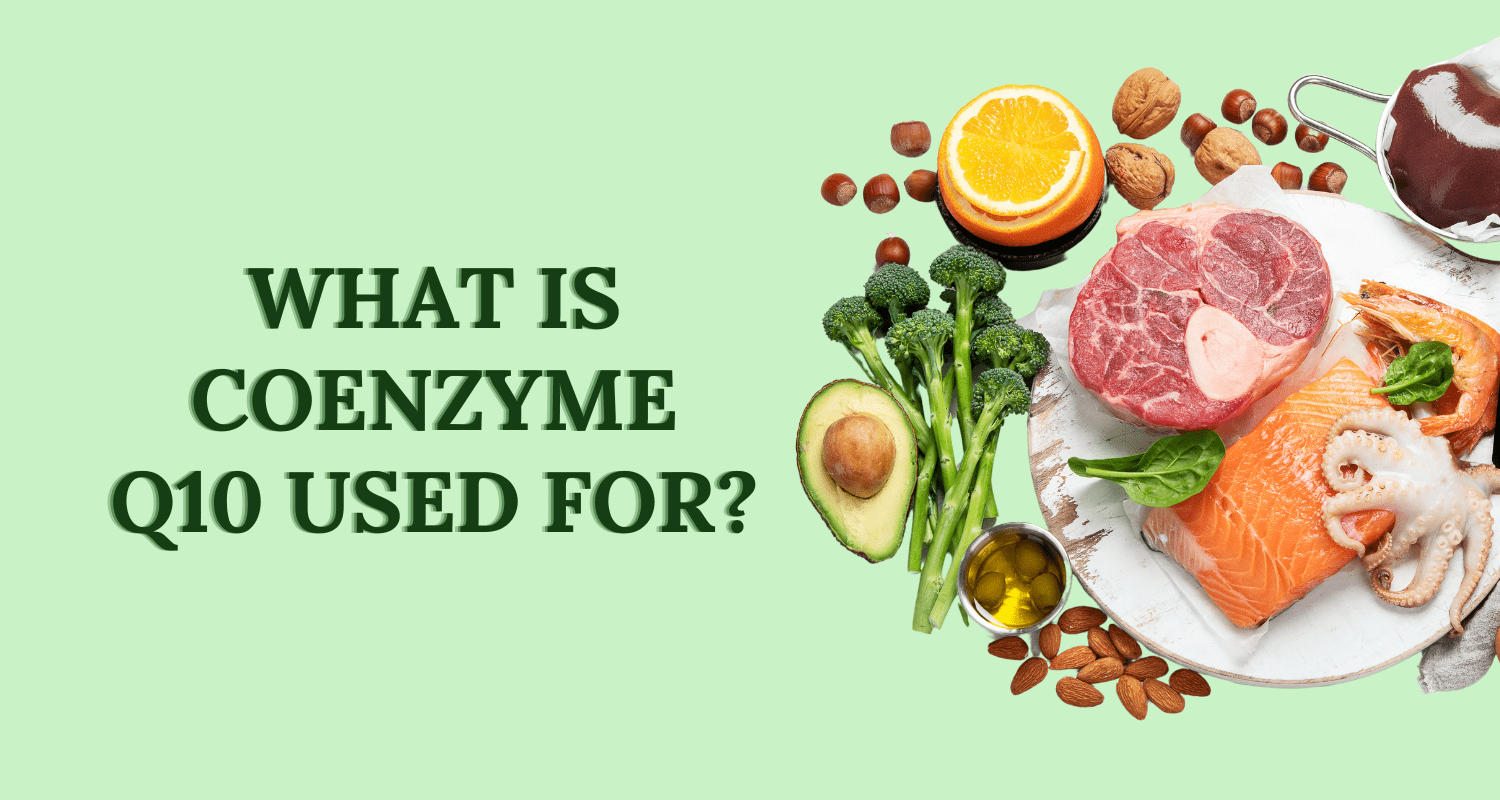
Food Sources of Coenzyme Q10
You can find CoQ10 naturally in:
- Organ meats (liver, heart)
- Fatty fish (salmon, tuna, sardines)
- Beef and poultry
- Nuts and seeds
- Spinach and broccoli
However, food sources provide relatively small amounts compared to supplement doses used in research.
CoQ10 Supplement Forms & Dosage
Forms:
- Capsules
- Softgels
- Chewable tablets
- Liquid formulas
Typical Dosage:
- 30–200 mg daily for general support
- Up to 600 mg or higher in clinical settings
Ubiquinol is generally better absorbed than ubiquinone.
Always consult a healthcare professional before starting.
Safety and Side Effects
CoQ10 is generally well tolerated.
Possible mild side effects:
- Stomach upset
- Nausea
- Insomnia
- Headache
Important considerations:
- May interact with blood thinners
- Safety during pregnancy and breastfeeding is unclear
- Consult your doctor if you have medical conditions
Final Thoughts
So, what is Coenzyme Q10 used for?
CoQ10 plays a vital role in:
- Energy production
- Heart health support
- Antioxidant protection
- Mitochondrial function
- Potential metabolic and neurological support
While research is promising, it’s not a cure-all. CoQ10 works best as part of a healthy lifestyle that includes balanced nutrition, regular exercise, and medical guidance.
If you’re experiencing low energy, heart concerns, or age-related vitality decline, discussing CoQ10 with your healthcare provider may be worthwhile.
Leave a Reply