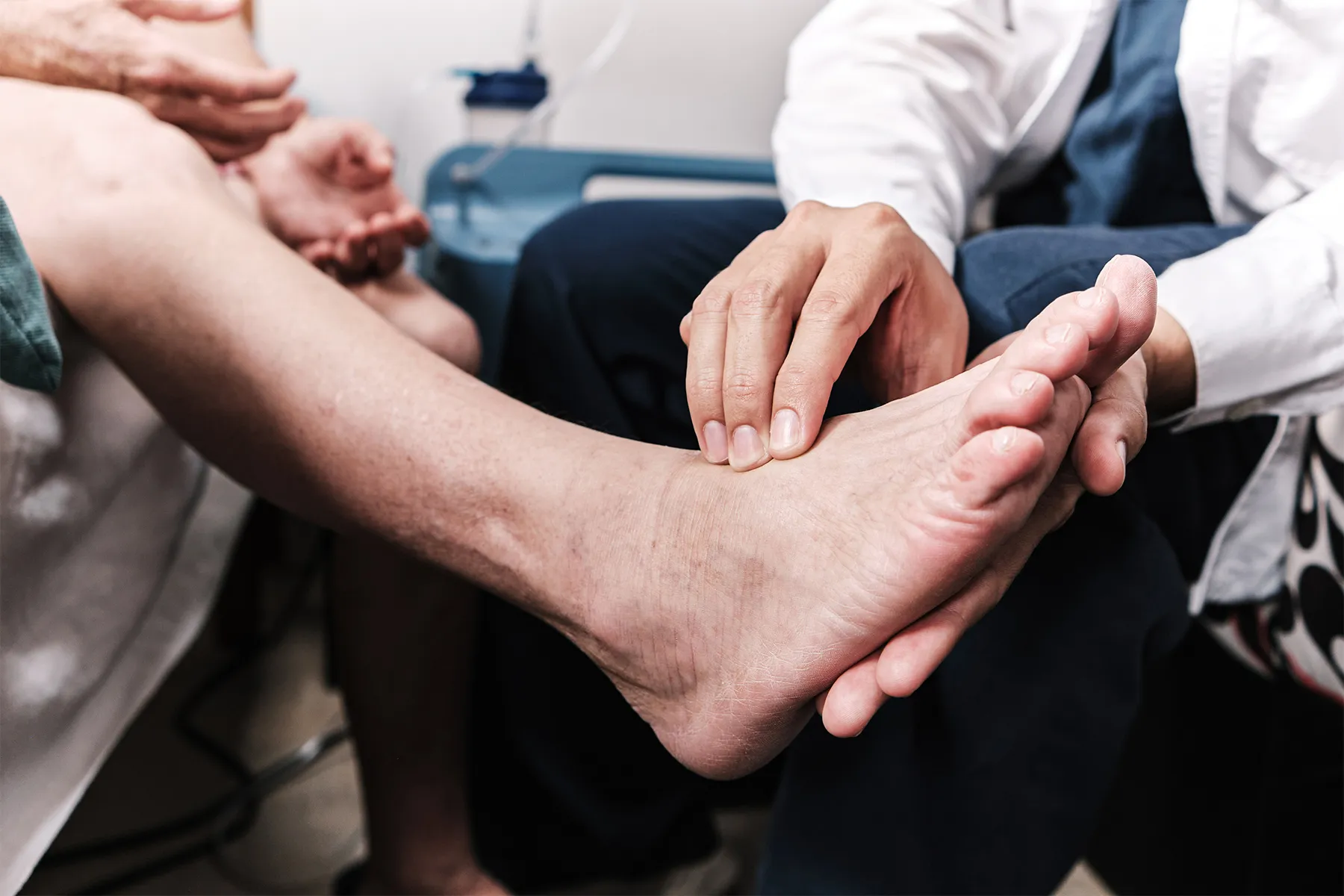
If you’ve ever felt tingling, numbness, or a burning sensation in your hands or feet, it might not just be “poor circulation.”
For many Americans, these symptoms are signs of nerve damage, commonly known as Peripheral neuropathy.
It can start subtly—but if ignored, it may affect balance, strength, and daily life.
What Is Neuropathy?
Peripheral neuropathy happens when nerves outside the brain and spinal cord are damaged. These nerves control:
- Sensation (touch, pain, temperature)
- Movement (muscle control)
- Automatic functions (like blood flow)
When they don’t work properly, signals between your brain and body get disrupted.
Common Symptoms You Shouldn’t Ignore
Symptoms often begin in the toes or fingers and gradually spread.
- Tingling or “pins and needles”
- Numbness (especially in feet)
- Burning or sharp pain
- Sensitivity to touch
- Muscle weakness
- Loss of balance or coordination
Many people describe it as wearing “invisible gloves or socks.”
What Causes Neuropathy?
There isn’t just one cause—several conditions can damage nerves.
1. Diabetes (Most Common Cause)
High blood sugar over time can damage nerves, leading to Diabetic neuropathy.
In the U.S., this is the leading cause of neuropathy.
2. Vitamin Deficiencies
Low levels of vitamin B12, B6, or folate can affect nerve health.
3. Alcohol Use
Long-term alcohol use can damage nerves and lead to nutritional deficiencies.
4. Autoimmune Conditions
Diseases where the immune system attacks nerves, such as:
- Rheumatoid arthritis
- Lupus
5. Certain Medications
Some chemotherapy drugs and medications can cause nerve damage as a side effect.
6. Injuries or Compression
Nerve pressure from conditions like:
- Carpal tunnel syndrome
- Herniated discs
7. Infections
Certain infections can affect nerves, including shingles and Lyme disease.
What Makes Neuropathy Worse?
Understanding triggers is just as important as knowing the causes.
1. Poor Blood Sugar Control
For people with diabetes, uncontrolled glucose levels can rapidly worsen nerve damage.
2. Lack of Movement
Sitting or staying inactive reduces circulation, which nerves need to function properly.
3. Alcohol Consumption
Even moderate drinking can aggravate symptoms in some people.
4. Tight Shoes or Repetitive Pressure
Footwear that compresses nerves can increase pain and numbness.
5. Smoking
Smoking reduces blood flow to nerves, slowing healing and worsening damage.
6. Nutritional Gaps
Not getting enough essential vitamins—especially B vitamins—can accelerate symptoms.
7. Ignoring Early Symptoms
Delaying treatment allows nerve damage to progress, sometimes permanently.
What Actually Helps
While nerve damage can’t always be fully reversed, symptoms can often be managed—and progression slowed.
1. Treat the Underlying Cause
- Control blood sugar
- Address vitamin deficiencies
- Adjust medications if needed
2. Improve Circulation
- Regular walking or light exercise
- Stretching
- Staying active throughout the day
3. Balanced Nutrition
Focus on:
- B vitamins (B12, B6)
- Antioxidant-rich foods
- Adequate hydration
4. Protect Your Hands and Feet
- Wear comfortable, supportive shoes
- Check feet regularly for injuries (especially with diabetes)
5. Pain Management
Doctors may recommend:
- Medications for nerve pain
- Topical treatments
- Physical therapy
When to See a Doctor
Don’t wait if you notice:
- Persistent numbness or tingling
- Burning pain that worsens
- Weakness or loss of coordination
- Foot injuries you can’t feel
Early diagnosis can prevent long-term complications.
The Bottom Line
Neuropathy in the hands and feet isn’t something to ignore—it’s your body’s warning sign that nerves are under stress.
The key isn’t just treating symptoms—it’s addressing the root cause and avoiding triggers that make it worse.
Small changes—like better blood sugar control, improved nutrition, and staying active—can make a meaningful difference over time.