
If you’ve ever held an iodine supplement and wondered, “Does it actually matter when I take this?” — you’re not alone.
Iodine is essential for thyroid health, metabolism, energy, and brain function. But when it comes to timing — morning or night — the answer isn’t as dramatic as supplement marketing might suggest.
Let’s break it down clearly and practically.
Why Iodine Is So Important
Iodine is a trace mineral your body needs to make thyroid hormones (T3 and T4). These hormones regulate:
- Metabolism
- Energy levels
- Body temperature
- Heart rate
- Hormonal balance
- Brain development (especially during pregnancy)
The average adult body contains about 15–20 mg of iodine, and most of it is stored in the thyroid gland.
The Recommended Dietary Allowance (RDA) in the U.S. is:
- 150 mcg per day for adults
- 220–290 mcg per day for pregnant or breastfeeding women
Contrary to some online claims, the body does not store hundreds of milligrams of iodine in fat or muscle tissue. Those numbers are not supported by mainstream endocrinology research.
Morning vs. Night: Does Timing Matter?
Here’s the straightforward answer:
👉 There is no strong clinical evidence proving iodine works better in the morning or at night.
However, timing may affect how you personally feel.
Taking Iodine in the Morning
Many healthcare providers suggest morning intake because:
- Thyroid hormone activity follows a daily (circadian) rhythm.
- Metabolism is naturally more active earlier in the day.
- Some people feel slightly more alert after taking iodine.
If you’re supporting low thyroid function or want steady daytime energy, morning supplementation may feel more natural.
If you take prescription thyroid medication, consult your doctor about spacing supplements properly.
Taking Iodine at Night
Nighttime can work well if:
- It fits better into your routine.
- You don’t notice any stimulating effect.
- You prefer taking supplements after dinner.
There’s no evidence iodine improves sleep — but there’s also no strong evidence it disrupts it unless it makes you feel energized.
If you notice it boosts your alertness, avoid taking it too late.
What Matters More Than Timing
Instead of focusing heavily on morning vs. night, consider these factors:
1. Your Iodine Status
Most Americans get iodine from:
- Iodized salt
- Dairy products
- Seafood
- Eggs
However, deficiency can occur in:
- People avoiding dairy
- Vegans
- Those not using iodized salt
- Pregnant women
- Individuals with restrictive diets
If you suspect deficiency, testing is more helpful than guessing.
2. Your Thyroid Condition
If you have:
Hypothyroidism (underactive thyroid):
Too little iodine can worsen symptoms — but too much can also disrupt thyroid balance.
Hyperthyroidism (overactive thyroid):
Excess iodine can aggravate symptoms or trigger flare-ups.
In either case, supplementation should be guided by a healthcare provider.
3. Dosage Is Critical
For adults:
- Recommended daily intake: 150 mcg
- Upper safe limit: 1,100 mcg (1.1 mg) per day
Many high-dose iodine supplements (12.5 mg, 25 mg, or more) far exceed daily requirements and should not be used casually.
More iodine does not mean better thyroid health. In fact, excessive iodine can cause:
- Thyroid dysfunction
- Irregular heartbeat
- Digestive upset
- Worsening autoimmune thyroid conditions
Always prioritize safe dosing.
What About Lugol’s Iodine or Iodoral?
These products contain iodine in milligram amounts — significantly higher than the daily recommended intake.
Historically, higher doses were used for specific medical conditions under supervision. They are not generally recommended for routine daily supplementation without medical guidance.
If you are considering high-dose iodine, consult a qualified healthcare professional first.
Does Iodine Affect Sleep?
There is limited research connecting iodine timing directly to sleep quality.
However:
- Thyroid hormones influence metabolism and alertness.
- Overactive thyroid function can disturb sleep.
- If iodine makes you feel energized, morning is better.
- If it has no noticeable effect, timing likely doesn’t matter.
Consistency matters more than clock time.
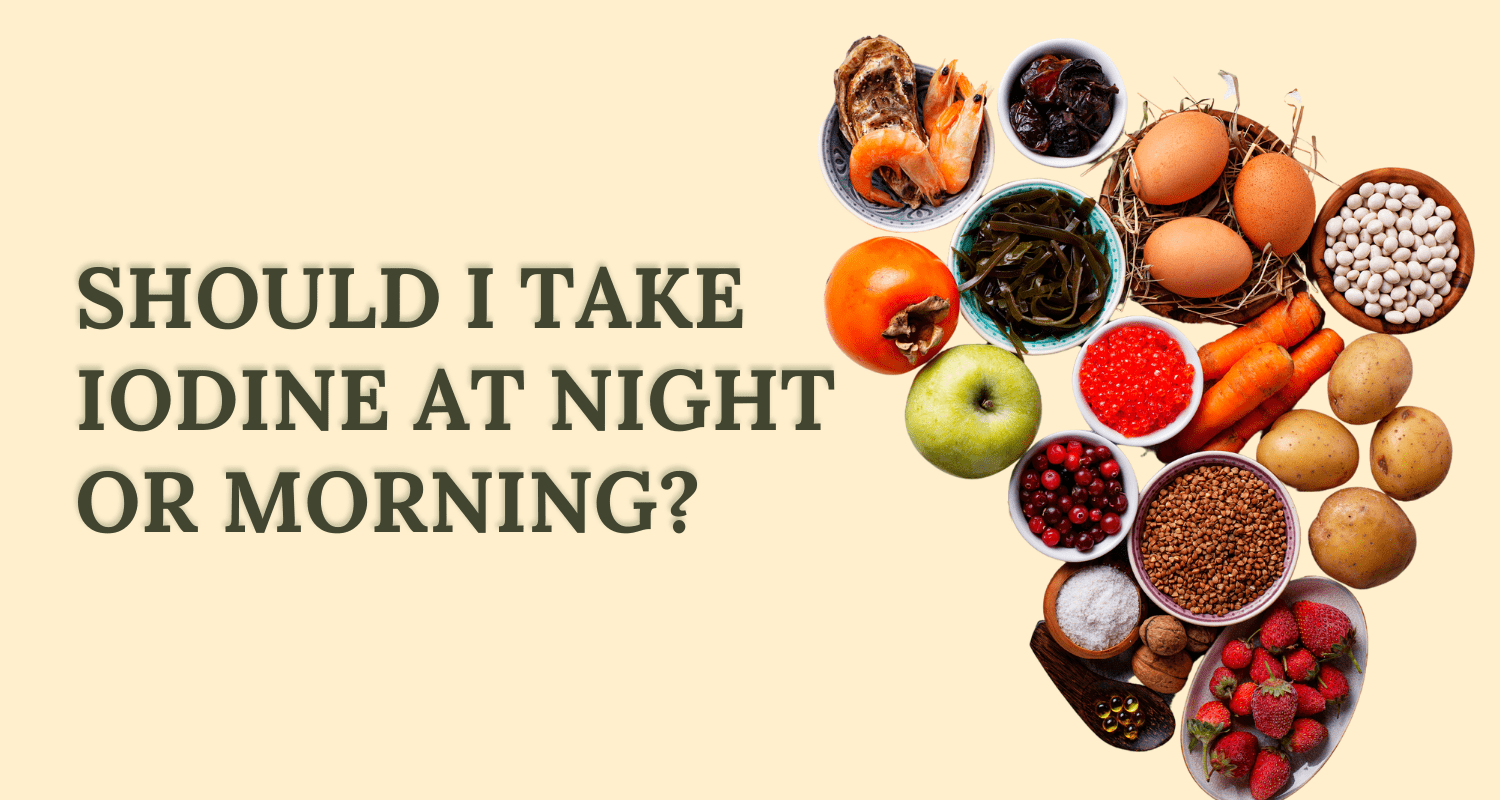
Best Natural Sources of Iodine
Before turning to supplements, consider dietary sources:
- Cod
- Shrimp
- Dairy products
- Eggs
- Iodized salt
Seaweed is extremely high in iodine — sometimes excessively so. Intake should be moderate to avoid overconsumption.
For many people, diet alone provides adequate iodine.
Special Considerations
Pregnancy
Adequate iodine is essential for fetal brain development. Women who are pregnant or planning pregnancy should ensure they meet recommended intake levels under medical supervision.
Thyroid Disorders
Anyone with diagnosed thyroid disease should consult a healthcare provider before supplementing.
Sensitive Individuals
If you experience symptoms like rash, palpitations, digestive upset, or mood changes after starting iodine, discontinue and seek medical advice.
So… Morning or Night?
Here’s the simple takeaway:
✔ If iodine makes you feel energized → take it in the morning
✔ If it doesn’t affect you → take it whenever you’ll remember consistently
✔ If you have thyroid issues → consult your doctor
✔ Focus more on proper dosage than timing
There is no universally “best” time — only what works best for your body and health needs.
Final Thoughts
Iodine is essential — but balance is everything.
Too little can impair thyroid function. Too much can disrupt it.
Instead of obsessing over the clock, prioritize:
- Proper dosage
- Dietary intake
- Regular health monitoring
- Professional guidance
That approach matters far more than morning vs. night.
Disclaimer:
This article is for informational purposes only and does not provide medical advice. Always consult a qualified healthcare professional before starting or adjusting supplements.
Leave a Reply