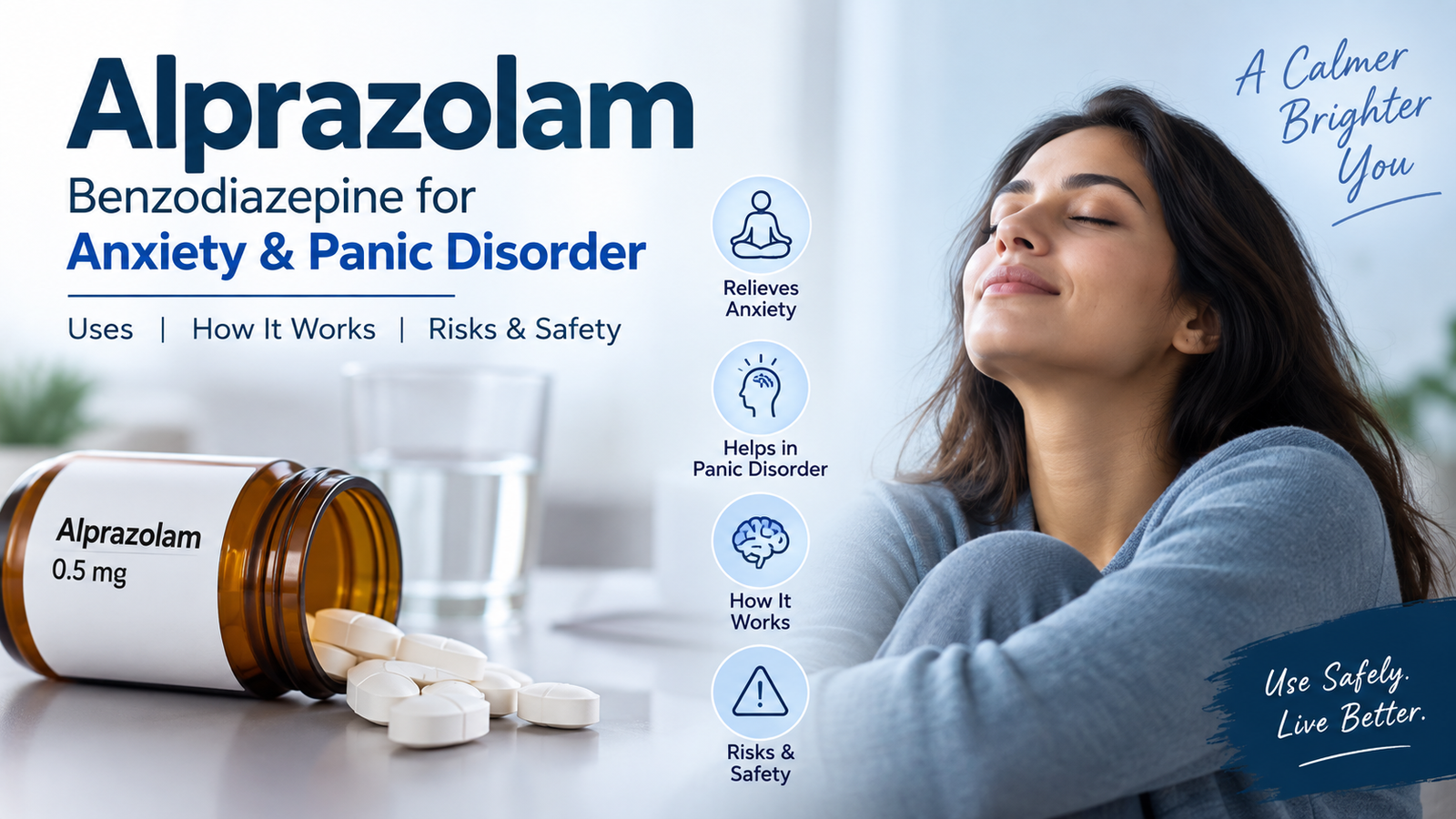
What Is Alprazolam?
Alprazolam is a prescription medication belonging to the benzodiazepine class. In the United States, alprazolam is approved for the management of anxiety disorders and the short-term relief of symptoms of anxiety, as well as panic disorder, with or without agoraphobia. It is commonly recognized by the brand name Xanax, although alprazolam is also available as a generic medication.
Benzodiazepines work primarily by enhancing the effects of gamma-aminobutyric acid (GABA), an inhibitory neurotransmitter in the central nervous system. This decreases excessive neuronal activity and can produce calming, sedative, muscle-relaxant, and anticonvulsant effects.
Because alprazolam can cause sedation, physical dependence, and withdrawal, it is a medication that requires careful prescribing and monitoring. It is also classified as a Schedule IV controlled substance in the United States.
Quick answer: Alprazolam is a benzodiazepine prescription medicine used primarily for anxiety disorders and panic disorder. It can reduce excessive nervous-system activity, but its potential for dependence, withdrawal, sedation, and dangerous interactions means it should only be used according to a healthcare professional’s instructions.
What Is Alprazolam Used For?
The U.S. prescribing information identifies several uses for alprazolam.
Anxiety Disorders
Alprazolam is indicated for the acute treatment of generalized anxiety disorder (GAD). Anxiety can involve persistent worry, nervousness, restlessness, tension, difficulty concentrating, and physical symptoms.
For some patients, a benzodiazepine such as alprazolam may provide relatively rapid relief of acute anxiety symptoms.
However, benzodiazepines are not necessarily the preferred long-term treatment strategy for every person with anxiety. Treatment decisions depend on the severity and duration of symptoms, other health conditions, concurrent medications, previous treatments, and the individual’s clinical circumstances.
Panic Disorder
Alprazolam is also indicated for panic disorder, including panic disorder with or without agoraphobia.
Panic attacks can involve sudden intense fear accompanied by physical symptoms such as a racing heartbeat, sweating, trembling, shortness of breath, dizziness, or a feeling of losing control.
Because alprazolam can have a relatively rapid onset of action compared with some other psychiatric medications, it may be prescribed in certain circumstances for acute panic symptoms.
That does not mean it is appropriate for every panic attack or that people should self-treat unexplained episodes with alprazolam. Symptoms that resemble panic attacks can sometimes occur with cardiovascular, respiratory, neurological, endocrine, or other medical conditions and may require evaluation.
How Does Alprazolam Work?
Alprazolam produces its effects by interacting with GABA-A receptors in the central nervous system.
GABA is one of the brain’s primary inhibitory neurotransmitters. By enhancing GABA-mediated inhibition, benzodiazepines can reduce excessive neuronal activity.
This pharmacological effect helps explain several effects associated with alprazolam:
- Reduced anxiety
- Decreased nervous-system activity
- Sedation
- Relaxation
- Drowsiness
- Impaired coordination
- Memory and concentration effects in some people
The calming effects can be beneficial when alprazolam is appropriately prescribed, but the same central-nervous-system effects contribute to important safety concerns.
For example, combining alprazolam with opioids, alcohol, or other central nervous system depressants can increase the risk of severe sedation and respiratory depression.
How Quickly Does Alprazolam Work?
One reason alprazolam is used for certain anxiety and panic symptoms is its relatively rapid onset compared with some longer-term anxiety treatments.
However, patients should not interpret rapid symptom relief as evidence that alprazolam is suitable for continuous or unsupervised use.
The appropriate dose, frequency, and duration depend on the individual’s diagnosis and response to treatment.
The prescribing information recommends that treatment be individualized and that the lowest effective dose be used, particularly because benzodiazepines carry risks associated with dependence and withdrawal.
Alprazolam Dosage and Forms
Alprazolam is available in different formulations, including immediate-release tablets and extended-release tablets. There are also orally disintegrating tablet formulations.
The appropriate alprazolam dosage varies depending on the condition being treated, the formulation, patient characteristics, clinical response, and tolerability.
For generalized anxiety disorder and panic disorder, prescribing information provides different dosing recommendations. Extended-release formulations are designed differently from immediate-release products and should not be treated as interchangeable on a milligram-for-milligram basis without professional guidance.
Patients should take alprazolam exactly as prescribed.
Do not increase the dose, take it more frequently, or use someone else’s prescription.
Taking more than prescribed can increase sedation, impaired coordination, overdose risk, and the likelihood of physical dependence.
Common Alprazolam Side Effects
Because alprazolam affects the central nervous system, many of its potential side effects involve alertness, coordination, and cognitive function.
Commonly reported adverse effects include:
- Drowsiness
- Dizziness
- Fatigue
- Impaired coordination
- Memory problems
- Difficulty concentrating
- Slurred speech
- Changes in appetite
- Constipation
- Dry mouth
The prescribing information identifies drowsiness and light-headedness among frequently reported adverse reactions and notes that adverse effects can vary according to the indication and formulation.
Some people may experience side effects more strongly when beginning treatment or after a dose increase.
Patients should avoid driving or operating machinery until they understand how alprazolam affects them.
Serious Risks of Alprazolam
Although many patients tolerate alprazolam when appropriately prescribed, its safety profile requires careful consideration.
Sedation and Impaired Coordination
Alprazolam can make a person sleepy or less alert. It may also impair coordination, reaction time, judgment, and concentration.
These effects can increase the risk of falls, accidents, and other injuries.
Respiratory Depression
One of the most important safety concerns is respiratory depression, particularly when alprazolam is combined with opioids or other central nervous system depressants.
The FDA has issued a boxed warning concerning the serious risks associated with combining benzodiazepines with opioids, including extreme sleepiness, respiratory depression, coma, and death.
Dependence and Withdrawal
Physical dependence can develop with benzodiazepine use, including when medication is taken as prescribed.
Stopping alprazolam abruptly after regular use can cause withdrawal symptoms and, in some circumstances, serious complications including seizures.
This is why patients should not suddenly stop alprazolam without medical guidance.
Alprazolam and Dependence
One of the most important questions patients ask is whether alprazolam can cause dependence.
The answer is yes: benzodiazepines can produce physical dependence, particularly with continued use.
Physical dependence is not necessarily the same thing as addiction. A person can become physically dependent on a medication even when taking it exactly as prescribed.
The risk can increase with higher doses, longer treatment periods, and certain patient-specific factors.
The FDA requires boxed warnings for benzodiazepines addressing abuse, misuse, addiction, physical dependence, and withdrawal reactions.
Because of these risks, healthcare professionals generally weigh the expected benefit against the potential harms before prescribing alprazolam.
What Happens If You Stop Alprazolam Suddenly?
Stopping alprazolam abruptly can lead to withdrawal.
Potential alprazolam withdrawal symptoms can include:
- Anxiety
- Irritability
- Insomnia
- Restlessness
- Difficulty concentrating
- Tremors
- Muscle aches
- Sweating
- Headache
- Sensory disturbances
More serious withdrawal reactions can occur, including seizures and other severe neurological or psychiatric symptoms.
The prescribing information recommends gradually reducing the dose rather than abruptly discontinuing treatment. The exact tapering strategy should be individualized by a healthcare professional.
Therefore, someone who has been taking alprazolam regularly should never create their own rapid taper or stop treatment suddenly.
Alprazolam and Alcohol
Combining alprazolam with alcohol can be dangerous.
Both alcohol and alprazolam can depress the central nervous system. Their effects can therefore be additive or unpredictable.
The result may include increased:
- Drowsiness
- Dizziness
- Poor coordination
- Impaired judgment
- Loss of consciousness
- Respiratory depression
The risks become even more concerning when alcohol is combined with alprazolam and other sedating medications.
For safety, patients should discuss alcohol use with their healthcare professional rather than assuming that a particular amount is safe.
Alprazolam and Opioids
The combination of alprazolam and opioids deserves particular attention.
Both medications can suppress central nervous system activity and breathing. The FDA warns that combining benzodiazepines with opioids can result in profound sedation, respiratory depression, coma, and death.
Patients prescribed both medications should receive careful medical supervision.
Symptoms such as extreme sleepiness, unusual difficulty waking, slow or difficult breathing, or unresponsiveness require emergency medical attention.
Patients should never combine these medications on their own or use another person’s prescription.
Other Alprazolam Drug Interactions
Alprazolam can interact with other medications, including drugs that affect the enzyme systems responsible for its metabolism.
Strong CYP3A inhibitors can increase alprazolam exposure and potentially increase adverse effects.
The prescribing information specifically warns about interactions with certain medications that inhibit CYP3A, and it provides examples and precautions for drugs that can significantly affect alprazolam concentrations.
Patients should tell their healthcare professional about:
- Prescription medications
- Over-the-counter medicines
- Herbal products
- Dietary supplements
- Other sedatives
- Sleep medicines
- Opioid pain medicines
- Certain antifungal medications
- Certain antibiotics
- Other psychiatric medications
A complete medication list helps reduce the possibility of clinically significant interactions.
Who Should Be Careful With Alprazolam?
Alprazolam may require additional caution or medical assessment in people with certain health conditions.
Important considerations can include:
- Respiratory disease
- Liver impairment
- Kidney impairment
- Older age
- History of substance-use problems
- Depression or other psychiatric conditions
- Pregnancy
- Breastfeeding
- Concurrent use of opioids or other sedatives
Older adults may be particularly vulnerable to benzodiazepine-related sedation, impaired coordination, and falls.
People with respiratory problems may also require careful assessment because central nervous system depressants can affect breathing.
The medication’s prescribing information should be reviewed by the treating healthcare professional when determining whether alprazolam is appropriate.
Alprazolam During Pregnancy
Pregnancy requires special consideration when using benzodiazepines.
The FDA labeling warns that benzodiazepine exposure during pregnancy may be associated with risks to the fetus and newborn, including neonatal sedation and withdrawal-related effects in certain circumstances.
Patients who are pregnant, planning to become pregnant, or breastfeeding should discuss alprazolam use with their healthcare professional.
They should not independently discontinue long-term benzodiazepine therapy because abrupt withdrawal can itself create significant risks.
Alprazolam vs. Other Anxiety Treatments
Alprazolam is only one treatment option for anxiety and panic disorders.
Depending on the diagnosis, healthcare professionals may consider:
- Psychotherapy
- Cognitive behavioral therapy
- SSRIs
- SNRIs
- Other non-benzodiazepine medications
- Lifestyle and behavioral interventions
- Short-term benzodiazepine treatment in selected circumstances
For long-term anxiety management, treatment may focus on addressing the underlying disorder rather than relying exclusively on rapid symptom suppression.
Cognitive behavioral therapy (CBT) is an important evidence-based approach for several anxiety disorders and panic disorder.
The most appropriate treatment depends on the diagnosis, symptom severity, previous treatment response, other medical conditions, medication interactions, patient preferences, and risk factors.
Is Alprazolam Safe for Long-Term Use?
This question does not have a single answer for every patient.
Long-term benzodiazepine use can be associated with tolerance, physical dependence, withdrawal, cognitive effects, and other risks. The FDA has emphasized that benzodiazepine risks can occur even when medications are taken as prescribed.
Therefore, continued treatment should be periodically reassessed.
If someone has been taking alprazolam for an extended period, they should not suddenly discontinue it simply because they are concerned about dependence. A healthcare professional can determine whether continued treatment, dose reduction, switching medications, or another strategy is appropriate.
Frequently Asked Questions About Alprazolam
Is alprazolam a benzodiazepine?
Yes. Alprazolam is a benzodiazepine medication that acts on the central nervous system by enhancing GABA-mediated inhibitory activity.
What is alprazolam primarily used for?
In the United States, alprazolam is indicated for anxiety disorders and panic disorder, including panic disorder with or without agoraphobia.
Does alprazolam treat anxiety immediately?
Alprazolam can produce relatively rapid calming effects compared with many long-term anxiety treatments, but the exact onset and response vary between individuals.
Can alprazolam cause dependence?
Yes. Physical dependence can develop with benzodiazepine use, and the risk generally increases with prolonged use and higher doses.
Can I stop alprazolam suddenly?
No. Abrupt discontinuation after regular use can cause withdrawal, potentially including serious reactions such as seizures. A healthcare professional should guide any dose reduction.
Can I drink alcohol while taking alprazolam?
Alcohol can increase the sedating and central-nervous-system effects of alprazolam and may increase the risk of dangerous complications. Discuss alcohol use with your healthcare professional.
Can alprazolam be taken with opioids?
Combining benzodiazepines with opioids can cause profound sedation and respiratory depression and may be fatal. The combination should only occur when specifically directed and monitored by a healthcare professional.
Is alprazolam a controlled substance?
Yes. Alprazolam is classified as a Schedule IV controlled substance in the United States.
Key Takeaways
Alprazolam is an established benzodiazepine used primarily for anxiety disorders and panic disorder.
Its ability to enhance GABA-mediated inhibition in the central nervous system can reduce anxiety and panic symptoms, but it can also cause sedation, impaired coordination, and other central nervous system effects.
The most important safety considerations include:
- Alprazolam can cause physical dependence.
- Stopping it suddenly can cause potentially serious withdrawal.
- Alcohol and other sedatives can increase its effects.
- Combining benzodiazepines with opioids can cause life-threatening respiratory depression.
- Patients should take alprazolam only as prescribed.
- Long-term treatment should be periodically reassessed.
- Pregnancy, respiratory problems, older age, liver problems, and other medications may require additional precautions.
For anyone taking or considering alprazolam, the safest approach is individualized medical guidance rather than self-adjusting the medication.
Medical Disclaimer
This article is provided for general educational purposes and does not replace professional medical advice, diagnosis, or treatment. Medication information can change, and individual prescribing decisions depend on a patient’s medical history, current medications, diagnosis, and other factors. Do not start, stop, increase, decrease, or combine alprazolam with other medicines without consulting a qualified healthcare professional. In an emergency involving severe sedation, difficulty breathing, loss of consciousness, seizure, or suspected overdose, seek emergency medical assistance immediately.