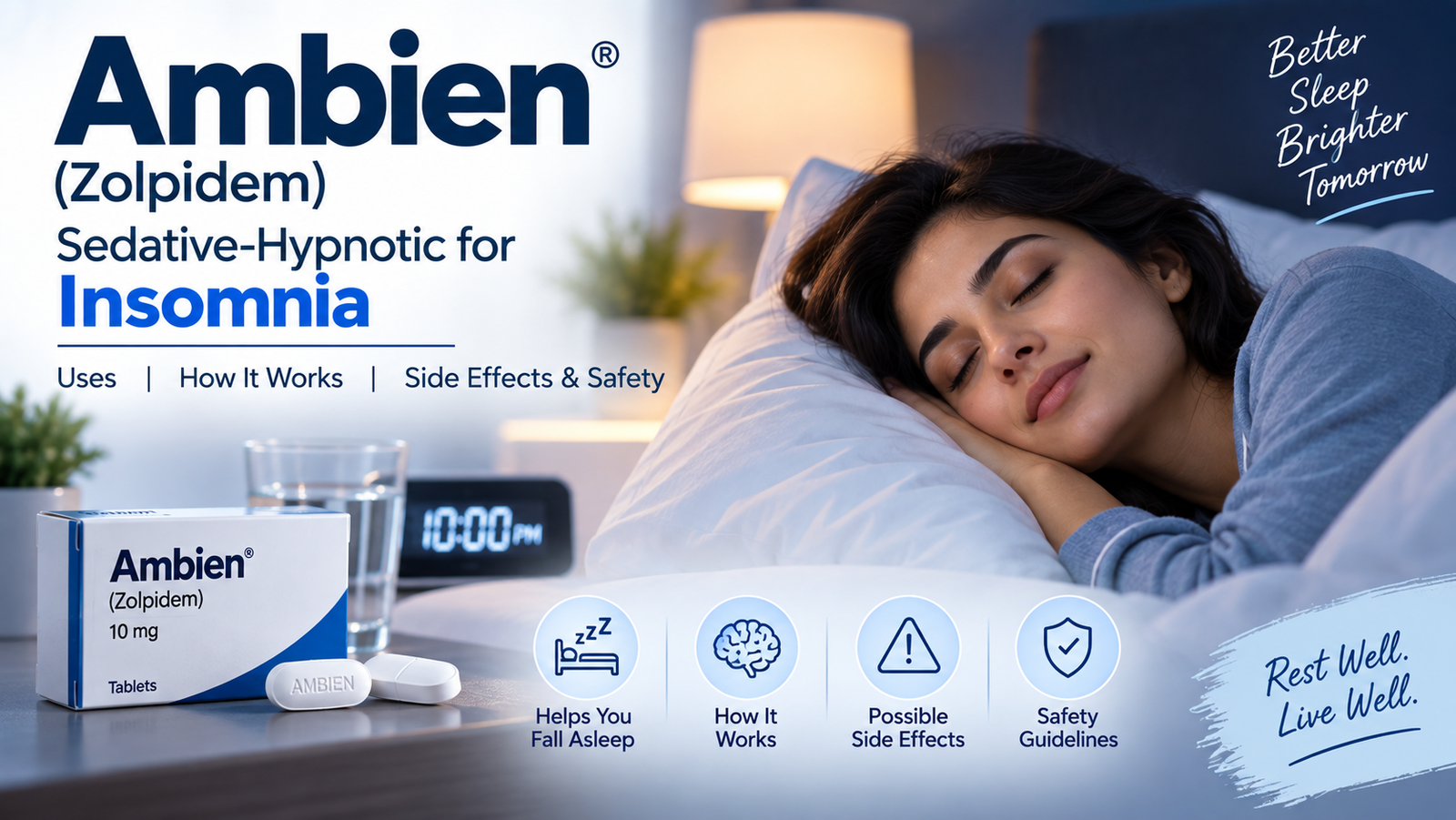
What Is Ambien (Zolpidem)?
Ambien is the brand name for zolpidem, a prescription sedative-hypnotic medication used to treat certain forms of insomnia. In the United States, immediate-release Ambien is indicated for the short-term treatment of insomnia characterized primarily by difficulty falling asleep.
Zolpidem is part of a group of medicines commonly called nonbenzodiazepine sedative-hypnotics or “Z-drugs.” Although its chemical structure differs from traditional benzodiazepines, zolpidem acts at the GABA-A receptor complex and produces central nervous system depressant effects.
It is available in several formulations, including immediate-release zolpidem tablets, extended-release Ambien CR, and certain sublingual or oral formulations designed for particular sleep difficulties.
Quick answer: Ambien (zolpidem) is a prescription sleep medicine used for insomnia. It can help reduce the time needed to fall asleep, but it can also cause drowsiness, impaired alertness, dependence, and potentially dangerous complex sleep behaviors, including sleepwalking and sleep-driving.

What Is Ambien Used For?
Ambien is primarily prescribed for insomnia, a sleep disorder involving difficulty falling asleep or, depending on the formulation, difficulty maintaining sleep.
Insomnia can be short-term or chronic. According to the National Heart, Lung, and Blood Institute (NHLBI), chronic insomnia generally occurs at least three nights a week, lasts for more than three months, and cannot be fully explained by another health problem.
People with insomnia may experience:
- Difficulty falling asleep
- Repeated nighttime awakenings
- Waking too early
- Poor-quality sleep
- Daytime tiredness
- Difficulty concentrating
- Irritability or mood changes
The cause of insomnia matters. Stress, medications, caffeine, alcohol, medical conditions, mental health conditions, irregular sleep schedules, and other sleep disorders can contribute to sleep problems.
Therefore, zolpidem should not simply be viewed as a solution for every type of poor sleep. A healthcare professional may first evaluate why someone is having difficulty sleeping.
Is Ambien the Same as Zolpidem?
Yes. Ambien is a brand name, while zolpidem is the generic name of the active medication.
The active ingredient in Ambien is zolpidem tartrate.
Different zolpidem products can have different formulations and approved uses, however. For example, immediate-release Ambien is designed differently from Ambien CR, while certain sublingual products are intended for specific situations involving nighttime awakening.
This means patients should not assume that instructions for one zolpidem product automatically apply to another.
How Does Zolpidem Work?
Zolpidem works by slowing activity in the brain and promoting sleep. MedlinePlus identifies zolpidem as a sedative-hypnotic and explains that it works by slowing brain activity to allow sleep.
More specifically, zolpidem acts on the GABA-A receptor complex, increasing inhibitory signaling in the central nervous system.
This can produce:
- Sleepiness
- Reduced alertness
- Relaxation
- Reduced brain activity associated with wakefulness
- Easier sleep initiation
Because these effects can impair alertness and coordination, zolpidem should be taken only when the person can go directly to bed and remain in bed for the required amount of time.
The medication is not intended to be taken casually during the day or as a general treatment for stress or anxiety.
How Quickly Does Ambien Work?
Immediate-release zolpidem is intended to be taken immediately before bedtime because it can cause sleepiness relatively quickly.
MedlinePlus advises patients taking standard zolpidem tablets, extended-release tablets, sublingual tablets such as Edluar, or oral spray to take the medication immediately before bedtime and have sufficient time available for sleep afterward.
Taking zolpidem with or immediately after a meal can delay its effect.
For this reason, patients should follow the specific instructions for their formulation rather than changing the timing themselves.
Ambien Dosage and Formulations
Zolpidem is available in multiple formulations, and dosage depends on the specific product.
For immediate-release Ambien, the FDA prescribing information recommends using the lowest effective dose. The labeling provides different initial dosing recommendations for women and men and specifies that the medication should be taken only once per night immediately before bedtime when at least 7–8 hours remain before planned awakening.
The difference in recommended dosing reflects differences in zolpidem exposure and next-day impairment observed in some patients.
Zolpidem is also available as:
- Immediate-release tablets
- Extended-release tablets such as Ambien CR
- Sublingual tablets
- Oral spray
These formulations should not be substituted for one another without appropriate medical guidance.
Never increase your zolpidem dose because the initial dose does not seem to work quickly enough.
How Long Does Zolpidem Stay in Your System?
The effects of zolpidem are intended to occur during the sleep period, but the medication can still affect alertness and coordination the following day.
MedlinePlus warns that zolpidem may cause next-day drowsiness, decreased mental alertness, prolonged reaction time, memory problems, and coordination difficulties—even when a person feels fully awake.
This is particularly important for activities such as:
- Driving
- Operating machinery
- Working at heights
- Performing tasks requiring rapid reactions
- Making safety-critical decisions
The duration of effects can vary depending on the formulation, dose, age, other medications, individual metabolism, and health conditions.
Common Ambien Side Effects
Like other prescription medicines, zolpidem can cause side effects.
Commonly reported zolpidem side effects include:
- Drowsiness
- Dizziness
- Headache
- Fatigue
- Lightheadedness
- Unsteady walking
- Balance problems
- Nausea
- Constipation
- Diarrhea
- Unusual dreams
- A “drugged” feeling
MedlinePlus also describes possible problems involving memory, coordination, and alertness.
Older adults can be particularly vulnerable to medication-related balance problems and falls. MedlinePlus notes that adults age 65 and older generally should not usually take zolpidem because other treatments may be safer or more effective for them.
Ambien and Next-Day Impairment
One important issue with sleep medicines is the possibility of next-day impairment.
A person may wake up feeling normal but still have reduced reaction time, alertness, or coordination.
This can be especially dangerous when driving or performing activities requiring concentration.
The FDA labeling for Ambien specifically warns about impaired alertness and motor coordination the morning after use and recommends considering the risk of next-day impairment when determining the appropriate dose.
Patients should therefore follow their prescription instructions carefully and avoid activities requiring full alertness if they feel drowsy or impaired.
The Most Important Ambien Warning: Complex Sleep Behaviors
One of the most distinctive safety concerns associated with zolpidem is complex sleep behaviors.
These behaviors can include:
- Sleepwalking
- Sleep-driving
- Preparing or eating food while not fully awake
- Making phone calls while asleep
- Having sex while asleep
- Performing other activities without full awareness
A person may have little or no memory of the event afterward.
The FDA prescribing information carries a boxed warning for these complex sleep behaviors because serious injuries and deaths have occurred.
MedlinePlus similarly warns that people taking zolpidem have engaged in activities such as driving, eating, making phone calls, and sleepwalking while not fully awake and later had no memory of the events.
What should you do if this happens?
If you discover that you have experienced a complex sleep behavior while taking zolpidem, stop taking Ambien and contact your healthcare professional immediately, according to the FDA labeling.
This is one of the most important safety points patients and caregivers should understand before using zolpidem.
Can Ambien Cause Dependence?
Yes. Zolpidem can be habit-forming, particularly when it is taken for longer than prescribed or at higher doses.
MedlinePlus states that zolpidem may be habit-forming and advises patients not to take a larger dose, use it more frequently, or take it longer than prescribed.
The risk of dependence can vary between individuals.
Patients with a history of substance-use problems may require additional assessment before treatment.
This is one reason healthcare professionals generally recommend using sleep medications at the lowest effective dose and for the shortest appropriate duration.
What Happens If You Stop Zolpidem Suddenly?
People who have used zolpidem regularly, particularly for longer periods, may experience withdrawal symptoms if they stop suddenly.
Possible symptoms include:
- Anxiety
- Nervousness
- Difficulty sleeping
- Restlessness
- Tremors
- Sweating
- Nausea
- Muscle cramps
- Mood changes
- Panic symptoms
Rarely, more serious symptoms such as seizures can occur.
Patients who have been using zolpidem regularly should therefore talk to their healthcare professional before stopping it.
Some people may also experience rebound insomnia, meaning sleep difficulties temporarily become worse after stopping the medication. MedlinePlus notes that this may occur during the first night or nights after discontinuation.
Can You Take Ambien Every Night?
Whether zolpidem should be taken every night depends on the patient’s diagnosis, formulation, prescription, and treatment plan.
However, zolpidem is generally intended for short-term use, and prolonged use can raise concerns about tolerance, dependence, and reduced effectiveness.
MedlinePlus notes that zolpidem should normally be taken for short periods and that after two weeks or longer, it may not work as well as it did initially.
If insomnia continues, the underlying cause should be reassessed rather than simply increasing the dose or continuing treatment indefinitely.
Ambien and Alcohol
Combining Ambien and alcohol can increase central nervous system depression.
Both substances can cause sedation and impair coordination and judgment.
The combination may increase the likelihood of:
- Excessive drowsiness
- Confusion
- Poor coordination
- Memory problems
- Abnormal behaviors
- Breathing problems
- Accidents and injuries
For this reason, patients taking zolpidem should discuss alcohol use with their healthcare professional and generally avoid combining the two.
Ambien and Other Sedating Medicines
Zolpidem can interact with other medicines that depress the central nervous system.
These may include:
- Opioid pain medicines
- Benzodiazepines
- Other sleep medications
- Certain antihistamines
- Sedating psychiatric medications
- Muscle relaxants
- Alcohol
Combining multiple sedating substances can increase impairment and potentially create dangerous effects.
Patients should tell their healthcare professional about all prescription medicines, over-the-counter medicines, vitamins, supplements, and herbal products they use.
Importantly, patients should not take more than one sleeping pill on the same night unless specifically instructed to do so.
Who Should Be Careful With Zolpidem?
Certain people may require additional evaluation before taking zolpidem.
Important considerations include:
- Older age
- Liver disease
- Respiratory disorders
- History of substance misuse
- Depression or other psychiatric conditions
- Pregnancy
- Breastfeeding
- Concurrent sedating medicines
- Previous unusual sleep behaviors after taking sleep medication
People with a history of sleepwalking or complex sleep behaviors associated with zolpidem or another sedative-hypnotic should tell their healthcare professional.
Patients should also disclose any history of medication or substance dependence.
Ambien and Older Adults
Age can significantly affect the safety of sleep medications.
Older adults may be more sensitive to sedative effects and may experience increased dizziness, confusion, balance problems, or falls.
MedlinePlus specifically states that people 65 years and older generally should not usually take zolpidem because other treatments may be safer or more effective.
For an older adult with insomnia, treatment should therefore involve careful consideration of the underlying cause, fall risk, other medicines, and non-drug approaches.
Ambien During Pregnancy and Breastfeeding
Pregnancy and breastfeeding require individualized medical advice.
Patients who are pregnant, planning pregnancy, or breastfeeding should tell their healthcare professional before taking zolpidem.
Medication decisions during pregnancy should balance potential benefits and risks rather than being based on general information from the internet.
Anyone who becomes pregnant while taking zolpidem should contact their healthcare professional rather than independently changing treatment.
Ambien vs. CBT-I for Insomnia
Medication is not the only approach to insomnia.
Cognitive behavioral therapy for insomnia (CBT-I) is an important evidence-based treatment. NHLBI describes CBT-I as a structured treatment that can help people fall asleep faster and stay asleep longer and notes that it is usually recommended as the first treatment option for long-term insomnia.
CBT-I can include:
- Cognitive therapy
- Relaxation techniques
- Sleep education
- Stimulus control
- Sleep restriction therapy
- Establishing consistent sleep routines
This distinction is important because sleep medication may address symptoms, while CBT-I can address behavioral and cognitive factors contributing to chronic insomnia.
Depending on the individual, healthcare professionals may recommend CBT-I alone, medication, or a combination of approaches.
Healthy Sleep Habits That Can Support Treatment
Good sleep habits can complement professional treatment.
NHLBI recommends strategies such as maintaining a regular sleep schedule, keeping the bedroom quiet and comfortable, exercising during the day, limiting caffeine and nicotine around bedtime, avoiding alcohol close to bedtime, and developing a relaxing wind-down routine.
Helpful habits may include:
- Going to bed and waking up at consistent times
- Keeping the bedroom dark and quiet
- Limiting stimulating activities before bed
- Avoiding excessive caffeine late in the day
- Maintaining regular physical activity
- Managing stress
- Limiting daytime naps when they interfere with nighttime sleep
Persistent insomnia should still be evaluated medically, particularly when it affects daytime functioning.
When Should Insomnia Be Evaluated?
Occasional difficulty sleeping is common, but persistent insomnia deserves attention.
A healthcare professional may investigate:
- Medication side effects
- Anxiety or depression
- Chronic pain
- Sleep apnea
- Restless legs syndrome
- Circadian rhythm problems
- Caffeine or alcohol use
- Other medical conditions
NHLBI notes that insomnia can affect memory and concentration and that chronic insomnia is associated with several health risks.
If someone continues to have sleep problems despite treatment, simply increasing the sleep medication may not address the underlying problem.
Frequently Asked Questions About Ambien and Zolpidem
What is Ambien used for?
Ambien (zolpidem) is used for the short-term treatment of insomnia, particularly difficulty falling asleep.
Is Ambien the same as zolpidem?
Yes. Ambien is a brand name for zolpidem. However, different zolpidem formulations can have different instructions and approved uses.
Is zolpidem a benzodiazepine?
No. Zolpidem is classified as a sedative-hypnotic and is often called a “Z-drug.” Although it acts at GABA-A receptor sites like benzodiazepines, its chemical structure and classification are different.
Can Ambien cause sleepwalking?
Yes. Zolpidem can cause potentially dangerous complex sleep behaviors, including sleepwalking and sleep-driving. The FDA has issued a boxed warning about these events.
Can Ambien cause dependence?
Yes. Zolpidem can be habit-forming, particularly with prolonged or inappropriate use.
Can you take Ambien with alcohol?
Combining zolpidem with alcohol can increase sedation and impairment and may increase safety risks. Patients should discuss alcohol use with their healthcare professional.
Can I drive the morning after taking Ambien?
Zolpidem can cause next-day impairment even when a person feels awake. The FDA specifically warns about impaired alertness and motor coordination after use. Follow your prescription instructions and do not drive if you feel impaired or drowsy.
How long should you take zolpidem?
Zolpidem is generally intended for short-term use. If insomnia continues, speak with a healthcare professional rather than extending treatment or increasing the dose yourself.
What should I do if Ambien causes unusual sleep behavior?
Stop taking Ambien and contact your healthcare professional promptly if you discover that you have engaged in a complex sleep behavior while taking it.
Key Takeaways
Ambien (zolpidem) is a prescription sedative-hypnotic medication used for insomnia. It works by reducing activity in the brain and promoting sleep through effects involving the GABA-A receptor system.
The medication can be useful for appropriately selected patients, but it is not risk-free.
The most important points to remember are:
- Ambien is the brand name for zolpidem.
- It is primarily used to treat certain forms of insomnia.
- Zolpidem can cause drowsiness, dizziness, memory problems, and next-day impairment.
- It can cause potentially dangerous complex sleep behaviors, including sleepwalking and sleep-driving.
- Zolpidem can be habit-forming and may cause withdrawal or rebound insomnia after regular use.
- Alcohol and other sedating medicines can increase its effects.
- It should be taken only as prescribed and only when sufficient time remains for sleep.
- CBT-I and healthy sleep habits are important approaches for managing ongoing insomnia.
The safest approach is to use zolpidem under appropriate medical supervision and to reassess persistent insomnia rather than relying indefinitely on a sleeping pill.
Medical Disclaimer
This article is for general educational and informational purposes only. It does not provide individualized medical advice, diagnosis, or treatment. Prescription medication information can change, and treatment decisions should be based on the patient’s medical history, diagnosis, current medicines, and guidance from a qualified healthcare professional. Do not start, stop, increase, decrease, or combine zolpidem with other medications or alcohol without appropriate medical guidance. Seek emergency medical assistance for severe breathing problems, loss of consciousness, suspected overdose, serious injury, or other potentially life-threatening symptoms.