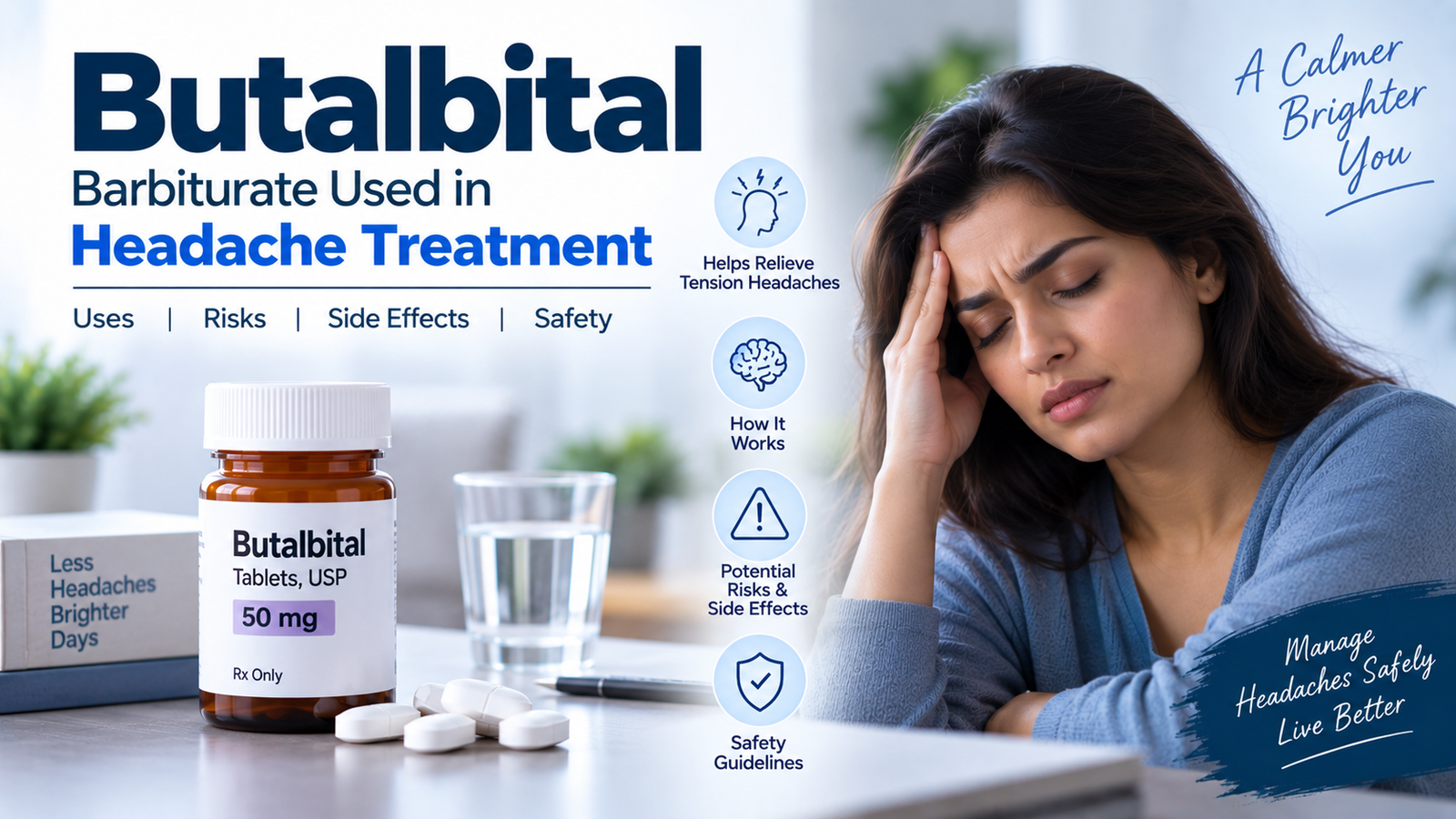
What Is Butalbital?
Butalbital is a barbiturate medication used in certain prescription combination products for the treatment of headache, particularly tension or muscle-contraction headaches.
Butalbital is usually not prescribed as a standalone headache medicine. In the United States, it is commonly found in combination products containing acetaminophen and caffeine, and some products also contain an opioid such as codeine.
Each ingredient contributes a different effect. Butalbital has a calming effect on the brain and central nervous system, acetaminophen provides pain relief, and caffeine is a central nervous system stimulant that can enhance certain analgesic effects.
Because butalbital is a barbiturate, it can cause drowsiness, impairment, tolerance, physical dependence, and withdrawal. Its potential for habit formation and abuse means it should be used only as prescribed.
Quick answer: Butalbital is a barbiturate used in certain prescription combination medicines to relieve tension headaches. It can help reduce headache-related symptoms, but its sedating and habit-forming properties mean that prolonged or frequent use requires particular caution.

What Is Butalbital Used For?
Butalbital-containing combination products are primarily used for the relief of the symptom complex associated with tension headaches, sometimes called muscle-contraction headaches.
The FDA-approved labeling for a combination of butalbital, acetaminophen, and caffeine identifies the product for relief of tension headache.
MedlinePlus similarly explains that the acetaminophen, butalbital, and caffeine combination is used to relieve tension headaches.
Tension headaches may cause:
- Dull or pressure-like head pain
- A feeling of tightness around the head
- Tenderness in the scalp, neck, or shoulders
- Pain associated with muscle tension
- Head discomfort that may be related to stress
Not every headache should be treated with butalbital.
Headaches have many possible causes, including migraine, sinus problems, infections, medication effects, dehydration, sleep problems, and more serious neurological conditions.
A sudden or unusually severe headache requires medical evaluation rather than self-treatment.
What Is a Butalbital Combination Medication?
When people search for butalbital headache medicine, they are often referring to a combination product rather than butalbital by itself.
A common combination contains:
Butalbital + Acetaminophen + Caffeine
Each component serves a different purpose:
| Ingredient | General role |
|---|---|
| Butalbital | Barbiturate that depresses activity in the brain and central nervous system |
| Acetaminophen | Analgesic used to reduce pain |
| Caffeine | CNS stimulant that can contribute to analgesic effects |
MedlinePlus lists acetaminophen/butalbital/caffeine products among medicines used for tension headaches.
Some formulations contain additional ingredients, including codeine. Those products carry additional opioid-related risks and should not be treated as interchangeable with non-opioid butalbital combinations.
How Does Butalbital Work?
Butalbital belongs to the barbiturate class.
Barbiturates act on the central nervous system and can produce sedation and relaxation.
In a butalbital-containing headache product, this central nervous system effect may help reduce muscle tension and contribute to relief of tension-headache symptoms.
The exact contribution of each ingredient to the overall relief of a tension headache is not completely understood. The FDA notes that the role of each component in the symptom complex of tension headache is incompletely understood.
This is important because butalbital is not simply a conventional pain reliever.
Its sedating properties are part of the reason it can cause adverse effects and why frequent use is discouraged.
Butalbital for Tension Headaches
Tension headache is one of the most common types of headache.
MedlinePlus describes tension headaches as commonly associated with tight muscles in the shoulders, neck, scalp, and jaw. Stress, anxiety, depression, inadequate sleep, missed meals, and other factors can contribute.
Some people with tension headaches may receive a butalbital-containing prescription when a healthcare professional determines it is appropriate.
However, treatment should address the overall pattern of headaches rather than simply suppressing individual episodes.
If headaches occur frequently, a healthcare professional may investigate possible triggers and consider preventive strategies.
Is Butalbital Used for Migraines?
This is an important distinction.
Butalbital-containing products are generally associated with tension headaches, not as a preferred first-line treatment for migraine.
Migraine is a distinct neurological condition that can involve:
- Throbbing or pulsating pain
- Nausea
- Vomiting
- Sensitivity to light
- Sensitivity to sound
- Visual or sensory aura in some people
A person who believes they have migraines should receive an appropriate diagnosis rather than assuming that a butalbital product is the best treatment.
Frequent use of headache medicines can also contribute to medication-overuse headache, making the overall headache pattern more difficult to manage.
Butalbital and Medication-Overuse Headache
One of the most important concerns with frequent use of butalbital-containing medicines is medication-overuse headache, sometimes called rebound headache.
When acute headache medications are used too frequently, headaches can become more frequent or persistent.
This can create a difficult cycle:
Headache → medication → temporary relief → medication wears off → more headache → repeated medication use
Butalbital-containing products are particularly concerning when used repeatedly because butalbital can be habit-forming and because frequent use of combination headache medicines can contribute to medication-overuse patterns.
If you are regularly needing a butalbital product to manage headaches, talk with a healthcare professional rather than simply increasing the frequency of treatment.
Common Butalbital Side Effects
Because butalbital is a central nervous system depressant, its adverse effects often involve alertness and coordination.
Potential butalbital side effects include:
- Drowsiness
- Dizziness
- Lightheadedness
- Sedation
- Nausea
- Vomiting
- Stomach discomfort
- Confusion
- Impaired coordination
- Fatigue
The FDA labeling for butalbital/acetaminophen/caffeine reports drowsiness, lightheadedness, dizziness, sedation, nausea, vomiting, abdominal pain, and an intoxicated feeling among frequently observed adverse reactions.
Patients should be particularly careful with driving and other activities requiring full alertness.
Butalbital and Drowsiness
Drowsiness is one of the most important practical effects to understand.
Butalbital can impair mental and physical abilities needed for activities such as:
- Driving
- Operating machinery
- Working at heights
- Making safety-critical decisions
The FDA labeling specifically warns that the medication can impair the mental and physical abilities required for potentially hazardous tasks.
If you feel sleepy, dizzy, confused, or impaired after taking a butalbital-containing medicine, avoid driving or operating machinery.
Can Butalbital Cause Dependence?
Yes.
Butalbital can be habit-forming and potentially abusable.
The FDA labeling specifically warns that extended use is not recommended because butalbital can lead to dependence.
Physical and psychological dependence can develop, particularly with prolonged or high-dose use.
This does not mean that every person who receives a butalbital prescription will become dependent. It does mean that treatment should be used carefully and according to the prescribed instructions.
Patients should not increase their dose or frequency simply because headaches are occurring more often.
Butalbital Withdrawal
Stopping regular butalbital use suddenly can cause withdrawal.
Because butalbital is a barbiturate, withdrawal can potentially be serious, particularly after prolonged or high-dose use.
Possible withdrawal symptoms can include:
- Anxiety
- Restlessness
- Tremors
- Insomnia
- Nausea
- Vomiting
- Weakness
- Sweating
- Increased heart rate
Severe withdrawal can involve seizures and delirium.
FDA labeling for butalbital-containing products warns that major withdrawal symptoms can occur after abrupt cessation of barbiturates and describes cautious, gradual withdrawal as an approach for dependent patients.
Therefore, someone who has been taking butalbital regularly should not abruptly stop it without medical guidance.
Butalbital and Alcohol
Combining butalbital with alcohol can be dangerous.
Both alcohol and butalbital depress the central nervous system.
Together, they can increase:
- Drowsiness
- Dizziness
- Impaired coordination
- Confusion
- Loss of consciousness
- Respiratory depression
The FDA labeling warns that alcohol and other CNS depressants can produce additive central nervous system depression when combined with butalbital-containing products.
Patients should discuss alcohol use with their healthcare professional and avoid unsafe combinations.
Butalbital and Opioids
Some butalbital products contain codeine, an opioid.
This creates additional safety concerns.
Combining butalbital, codeine, alcohol, or other sedatives can substantially increase central nervous system depression and respiratory risk.
Even when a butalbital product does not contain an opioid, taking it with an opioid prescribed separately can increase sedation and impairment.
Patients should always tell their healthcare professional about all medications they take before using a butalbital-containing medicine.
Acetaminophen Safety With Butalbital
One of the most important risks of certain butalbital products comes from the acetaminophen component.
Taking excessive acetaminophen can cause potentially severe liver damage, including liver failure and death.
MedlinePlus warns that people can accidentally exceed the safe daily amount when they take more than one medicine containing acetaminophen.
For adults and children age 12 and older, MedlinePlus states that total acetaminophen should not exceed 4,000 mg per day from all sources, unless a healthcare professional provides different instructions.
This means patients need to check other medications carefully.
For example, a person taking a butalbital/acetaminophen/caffeine product should be cautious about also taking another acetaminophen-containing pain reliever.
People with liver disease should tell their healthcare professional before using an acetaminophen-containing product.
Butalbital Drug Interactions
Butalbital can interact with numerous medicines and substances.
Potentially important combinations include:
- Alcohol
- Opioids
- Benzodiazepines
- Sleep medicines
- Sedating antihistamines
- Other CNS depressants
- Certain antidepressants
- Other barbiturates
- Some medications affecting liver enzymes
The FDA labeling notes that butalbital can enhance the effects of narcotic analgesics, alcohol, tranquilizers, sedative-hypnotics, and other CNS depressants.
Before taking a butalbital-containing product, provide your healthcare professional or pharmacist with a complete list of medications, supplements, and substances you use.
Who Should Be Careful With Butalbital?
Butalbital may require particular caution in certain patients.
Important considerations include:
- Older age
- Liver disease
- Kidney disease
- Respiratory problems
- History of substance misuse
- Depression or other psychiatric conditions
- Pregnancy
- Breastfeeding
- Use of other sedatives
- Use of opioids or alcohol
The FDA labeling recommends caution in elderly or debilitated patients and in people with severe renal or hepatic impairment.
A healthcare professional should evaluate whether the potential benefits outweigh the risks.
Butalbital and Porphyria
Porphyria is an important contraindication for certain butalbital combination products.
The FDA-approved labeling for butalbital/acetaminophen/caffeine states that the product is contraindicated in patients with porphyria.
People with a history of porphyria should therefore tell their healthcare professional before receiving a butalbital-containing medication.
Butalbital During Pregnancy and Breastfeeding
Pregnancy and breastfeeding require individualized medical advice.
Barbiturates can cross the placenta, and the FDA documentation notes that barbiturates may also appear in breast milk.
Anyone who is pregnant, planning to become pregnant, or breastfeeding should discuss butalbital use with a healthcare professional.
Do not discontinue regular medication abruptly without medical guidance, particularly when the medication can produce physical dependence and withdrawal.
How Should Butalbital Be Taken?
The exact instructions depend on the formulation prescribed.
For acetaminophen/butalbital/caffeine combinations, MedlinePlus states that the medicine is commonly taken every four hours as needed, but patients should follow the specific prescription directions. It also states that patients should not take more than six tablets or capsules in one day for that combination product.
This should not be interpreted as a universal dosing instruction for every butalbital product.
Different formulations can contain different amounts of butalbital, acetaminophen, caffeine, or other ingredients.
Always follow the label for the specific medication prescribed.
What If Butalbital Does Not Relieve the Headache?
Do not automatically take additional doses.
If the prescribed medication is not providing adequate relief, contact your healthcare professional.
Frequent or increasingly severe headaches may indicate that:
- The diagnosis needs reassessment
- Another headache disorder is present
- A trigger needs to be identified
- Preventive treatment may be needed
- Medication overuse may be contributing
- Another medical condition needs evaluation
Taking increasingly frequent doses can raise the risk of adverse effects, dependence, and medication-overuse headache.
When Is a Headache an Emergency?
Not every headache requires emergency care, but some symptoms require immediate medical attention.
MedlinePlus recommends urgent evaluation for a sudden, explosive, or unusually severe headache, particularly when it is a first severe headache.
Emergency evaluation may also be necessary when headache occurs with symptoms such as:
- Loss of consciousness
- Confusion
- Stiff neck
- Fever
- Weakness or numbness
- Difficulty speaking
- Vision changes
- Seizure
- Head injury
- Severe vomiting
A prescription headache medication should never be used to delay evaluation of potentially serious symptoms.
Butalbital vs. Other Headache Treatments
Treatment depends on the type and frequency of headache.
For many tension headaches, healthcare professionals may consider simpler analgesics such as acetaminophen, aspirin, or ibuprofen, depending on the person’s medical history. MedlinePlus identifies these medicines as options for tension headache and recommends discussing frequent pain-medicine use with a healthcare professional.
For migraine, treatment may involve entirely different medications.
For people experiencing frequent headaches, preventive strategies may be more appropriate than repeated use of an acute medication.
The important principle is:
Treat the headache diagnosis—not simply the symptom.
Frequently Asked Questions About Butalbital
What is butalbital used for?
Butalbital is used in certain prescription combination products to relieve tension headaches.
Is butalbital a barbiturate?
Yes. Butalbital belongs to the barbiturate class of central nervous system depressants.
Is butalbital a painkiller?
Butalbital itself is not a conventional analgesic like acetaminophen or an NSAID. It is a barbiturate that produces central nervous system effects and is used in combination headache products.
What is Fioricet?
Fioricet is a brand associated with a combination of acetaminophen, butalbital, and caffeine. Generic versions of this combination are also available.
Can butalbital cause dependence?
Yes. Butalbital can be habit-forming, and prolonged use can lead to physical and psychological dependence.
Can I drink alcohol while taking butalbital?
Alcohol can increase the sedating effects of butalbital and may cause dangerous central nervous system depression. Avoid combining them unless specifically advised by a healthcare professional.
Can butalbital cause withdrawal?
Yes. Regular use followed by abrupt discontinuation can cause withdrawal, which may be serious because butalbital is a barbiturate.
Is butalbital used for migraines?
Butalbital-containing products are primarily indicated for tension headaches. A healthcare professional should determine whether a person’s symptoms represent migraine or another headache disorder.
Can butalbital cause rebound headaches?
Frequent use of headache medications can contribute to medication-overuse headache. People who regularly need butalbital-containing medication should discuss their headache pattern with a healthcare professional.
Can I take acetaminophen with butalbital?
Some butalbital products already contain acetaminophen. Taking additional acetaminophen can unintentionally increase the total daily amount and increase liver-toxicity risk.
Can butalbital be taken with opioids?
Some formulations already contain an opioid such as codeine. Combining butalbital with another opioid can increase sedation and respiratory-depression risks and should only occur under appropriate medical supervision.
Key Takeaways
Butalbital is a barbiturate used in certain prescription combination medications for tension headache.
It is often combined with acetaminophen and caffeine, while some products may also contain an opioid.
The most important safety points are:
- Butalbital is a barbiturate and central nervous system depressant.
- It is primarily used in combination products for tension headaches.
- It can cause drowsiness, dizziness, sedation, and impaired coordination.
- Butalbital can be habit-forming and potentially abusable.
- Abrupt discontinuation after regular use can cause potentially serious withdrawal.
- Alcohol and other CNS depressants can increase sedation and respiratory risk.
- Some formulations contain acetaminophen, making total daily acetaminophen intake an important safety consideration.
- Frequent headache-medication use can contribute to medication-overuse headaches.
- Butalbital-containing products are not appropriate for every headache type.
- Sudden or unusually severe headaches require medical evaluation rather than repeated self-treatment.
Butalbital can have a role in selected headache treatment, but its risks make appropriate diagnosis, limited use, medication review, and clinical supervision particularly important.
Medical Disclaimer
This article is intended for general educational and informational purposes only and does not constitute medical advice, diagnosis, or treatment. Butalbital products differ in their ingredients, strengths, formulations, and approved uses. Always consult a qualified healthcare professional and review the labeling for the specific product you are taking. Do not increase the dose, combine butalbital with alcohol or other sedatives, or abruptly discontinue regular use without medical guidance. Seek emergency medical care for a sudden severe headache, seizure, loss of consciousness, difficulty breathing, suspected overdose, or other potentially life-threatening symptoms.