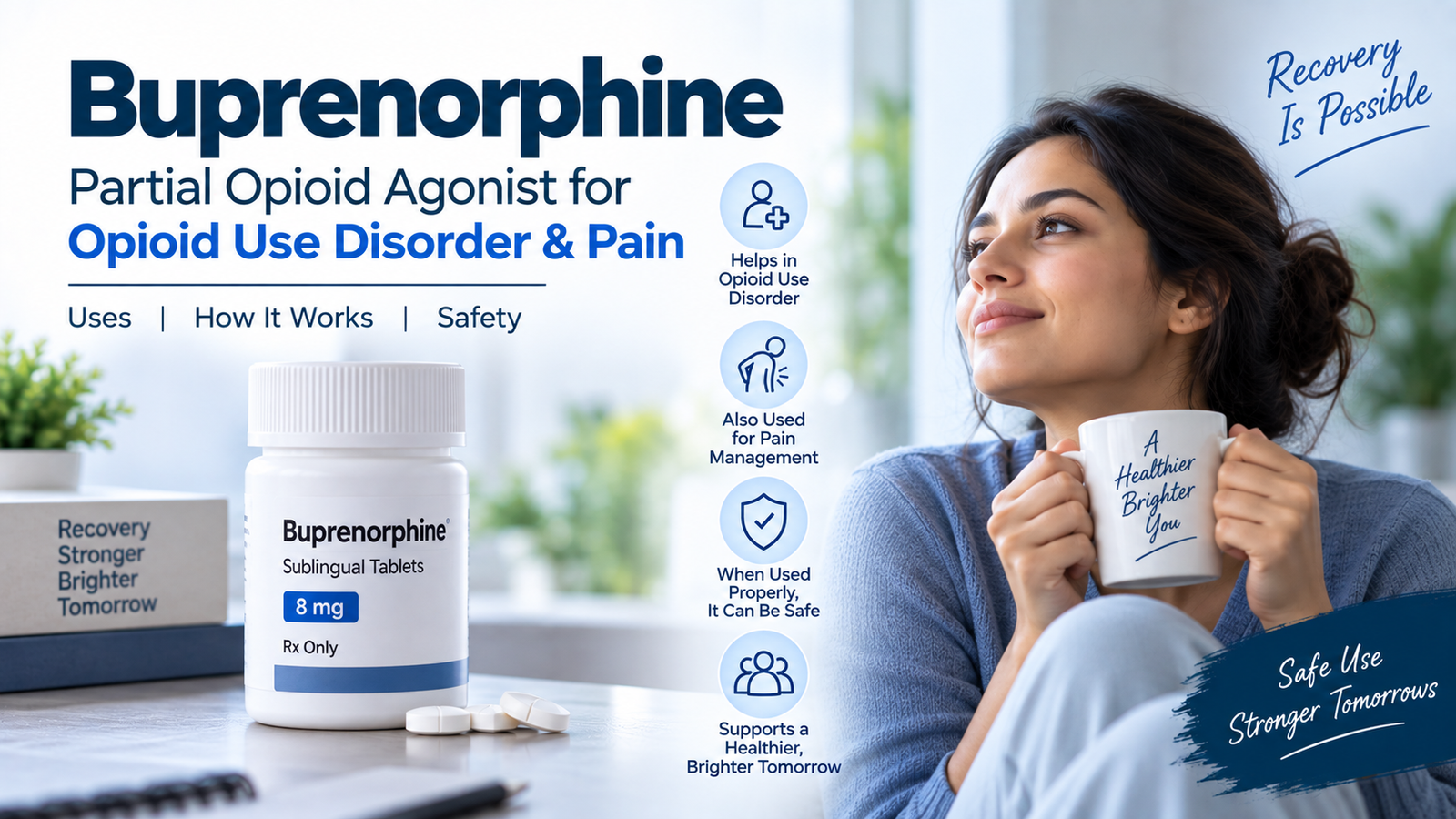
What Is Buprenorphine?
Buprenorphine is a prescription medication that belongs to the opioid class and acts primarily as a partial agonist at the mu-opioid receptor.
Unlike a full opioid agonist, which can produce a progressively stronger opioid effect as the dose increases, buprenorphine has a ceiling effect for some of its opioid effects. This pharmacological characteristic contributes to its important role in treating opioid use disorder (OUD) while also allowing certain buprenorphine formulations to be used for pain management.
Buprenorphine is available in several formulations. Depending on the specific product, it may be used to treat opioid use disorder, manage pain, or serve another specifically approved medical purpose.
This distinction is important because not every buprenorphine product is approved for every indication.
For example, certain sublingual buprenorphine products are used as part of treatment for opioid dependence, while transdermal and buccal formulations have been approved for pain management.
Quick Answer
Buprenorphine is a partial opioid agonist used in the United States primarily in medications for opioid use disorder and, in specific formulations, for pain management. It can reduce opioid withdrawal symptoms and cravings in people with OUD and can provide analgesia for certain patients with pain. However, it remains an opioid medication and carries risks including respiratory depression, misuse, dependence, withdrawal, and potentially dangerous interactions with other central nervous system depressants.

Is Buprenorphine an Opioid?
Yes.
Buprenorphine is an opioid medication, but its pharmacological profile differs from that of full opioid agonists such as heroin, oxycodone, or fentanyl.
It is classified primarily as a partial agonist at the mu-opioid receptor.
This means that buprenorphine activates the receptor but generally produces a more limited opioid effect than a full agonist.
That distinction is particularly important in opioid use disorder treatment.
Buprenorphine can reduce opioid withdrawal symptoms and cravings while helping stabilize patients in treatment.
The medication’s receptor activity also contributes to its ability to block or reduce the effects of other opioids when taken at sufficiently high receptor occupancy.
However, this does not mean buprenorphine is risk-free or impossible to misuse.
It remains a controlled opioid medication and should be taken exactly as prescribed.
How Does Buprenorphine Work?
Buprenorphine binds strongly to mu-opioid receptors in the brain and nervous system.
As a partial agonist, it activates these receptors while producing a limited opioid effect compared with full agonists.
Its pharmacology produces several clinically useful effects:
- Reduces opioid withdrawal symptoms
- Decreases opioid cravings
- Helps stabilize people receiving OUD treatment
- Produces analgesia
- Can reduce the effects of other opioids at the receptor level
Buprenorphine also has a high affinity for the mu-opioid receptor, meaning it binds strongly to the receptor.
This property helps explain why introducing buprenorphine too soon after use of a full opioid agonist can sometimes cause precipitated opioid withdrawal.
For that reason, the timing of treatment initiation is an important part of OUD care.
Patients should follow the initiation instructions provided by their healthcare professional rather than attempting to determine the timing themselves.
Buprenorphine for Opioid Use Disorder
One of the most important uses of buprenorphine is the treatment of opioid use disorder (OUD).
OUD is a chronic medical condition involving problematic opioid use that can cause clinically significant impairment or distress.
Buprenorphine is one of the FDA-approved medications used in medications for opioid use disorder (MOUD).
SAMHSA identifies three FDA-approved medications for OUD treatment:
- Buprenorphine
- Methadone
- Naltrexone
Medication treatment can reduce opioid use, cravings, and withdrawal and can lower the risk of serious consequences associated with untreated OUD.
Treatment may also include counseling, behavioral health services, recovery support, and treatment of coexisting medical or psychiatric conditions.
Importantly, medication treatment for OUD should not be viewed as replacing one addiction with another. Buprenorphine is an evidence-based medical treatment intended to stabilize opioid dependence and reduce the harms associated with illicit or uncontrolled opioid use.
How Buprenorphine Helps With Opioid Withdrawal
When someone who is physically dependent on opioids suddenly stops using them, withdrawal symptoms can develop.
These may include:
- Muscle aches
- Sweating
- Runny nose
- Restlessness
- Anxiety
- Abdominal cramps
- Diarrhea
- Nausea
- Vomiting
- Insomnia
- Opioid cravings
Buprenorphine can activate opioid receptors enough to reduce withdrawal symptoms and cravings without producing the same degree of opioid effect associated with full agonists.
However, timing is important.
If buprenorphine is administered while a full opioid agonist is still strongly occupying opioid receptors, buprenorphine’s high receptor affinity can displace the other opioid and produce precipitated withdrawal.
Therefore, initiation should be guided by an appropriate healthcare professional.
What Is Precipitated Withdrawal?
Precipitated withdrawal is a rapid onset of opioid withdrawal symptoms that can occur when buprenorphine displaces a full opioid agonist from opioid receptors before the person has reached an appropriate stage of withdrawal.
Symptoms can include:
- Sweating
- Anxiety
- Restlessness
- Muscle aches
- Nausea
- Vomiting
- Diarrhea
- Abdominal discomfort
- Chills
- Rapid heart rate
Modern clinical approaches to buprenorphine initiation can vary depending on the opioid involved and the patient’s circumstances.
The important point for patients is that buprenorphine should be started according to a clinician’s instructions, particularly when transitioning from another opioid.
Buprenorphine for Pain
Buprenorphine is also used in certain formulations for pain management.
FDA-approved buprenorphine products for pain include specific formulations such as transdermal patches and buccal film.
These products are not necessarily interchangeable with formulations intended for OUD.
Buprenorphine may be considered for certain patients with persistent pain when an opioid analgesic is clinically appropriate.
The decision involves consideration of:
- Type and severity of pain
- Previous pain treatments
- Other medications
- Respiratory risk
- Age
- Kidney and liver function
- Substance-use history
- Expected treatment duration
Because different formulations have different strengths, release mechanisms, and approved indications, patients should use only the product specifically prescribed to them.
Buprenorphine for Chronic Pain
Some buprenorphine formulations are approved for the management of chronic pain severe enough to require a daily, around-the-clock, long-term opioid analgesic when alternative treatments are inadequate.
This does not mean that buprenorphine is appropriate for every type of chronic pain.
Healthcare professionals generally evaluate whether opioid treatment is warranted after considering non-opioid medications, physical therapies, behavioral approaches, and other options.
For chronic pain, the goal should be meaningful improvement in pain and function while minimizing medication-related risks.
Buprenorphine Formulations
One of the most important things to understand about buprenorphine is that the medication comes in different formulations for different purposes.
Depending on the product, buprenorphine may be available as:
- Sublingual tablets
- Sublingual films
- Buccal films
- Transdermal patches
- Long-acting injectable formulations
- Other specialized formulations
Some products contain buprenorphine alone, while others combine buprenorphine with naloxone.
For example, buprenorphine/naloxone combination products are widely used in OUD treatment.
The specific product determines its approved indication, administration method, dosage, and safety instructions.
Patients should never assume that two products containing buprenorphine can automatically be substituted for each other.
Buprenorphine and Naloxone
A commonly used treatment for OUD combines buprenorphine and naloxone.
The combination is designed to provide the therapeutic benefits of buprenorphine while reducing the potential for misuse through certain non-prescribed routes of administration.
Naloxone has strong opioid-antagonist activity.
When the combination is used as directed under the tongue or inside the cheek, buprenorphine provides the primary therapeutic opioid effect.
The exact formulation and administration instructions vary by product.
Patients should follow the product-specific instructions provided by their healthcare professional or pharmacist.
Buprenorphine Dosage
There is no single universal buprenorphine dosage.
The appropriate dose depends heavily on:
- The indication
- Product formulation
- Treatment phase
- Previous opioid exposure
- Individual response
- Other medications
- Medical conditions
OUD treatment involves different stages, including initiation, stabilization, and maintenance.
Pain formulations have entirely different dosing systems and schedules.
For this reason, online dosage information should never be used to select or change an individual’s dose.
Never take a buprenorphine product prescribed for another person.
Common Buprenorphine Side Effects
Buprenorphine can cause side effects, and the specific effects may vary according to formulation and indication.
Potential buprenorphine side effects include:
- Headache
- Nausea
- Vomiting
- Constipation
- Dizziness
- Drowsiness
- Sweating
- Fatigue
- Dry mouth
- Abdominal discomfort
Some patients may also experience sleep disturbances or other opioid-related effects.
People should discuss persistent or troublesome side effects with their healthcare professional.
Severe or unexpected symptoms require prompt medical assessment.
Buprenorphine and Respiratory Depression
Although buprenorphine has a ceiling effect for some opioid effects, it can still cause respiratory depression.
The risk becomes particularly important when buprenorphine is combined with other substances that depress the central nervous system.
These include:
- Alcohol
- Benzodiazepines
- Other sedatives
- Certain sleep medications
- Other opioids
Respiratory depression can be life-threatening.
Warning signs include:
- Very slow or difficult breathing
- Extreme sleepiness
- Difficulty waking
- Bluish lips or skin
- Loss of consciousness
These symptoms require emergency medical attention.
Buprenorphine and Benzodiazepines
The combination of buprenorphine and benzodiazepines requires particular caution.
Benzodiazepines include medications such as alprazolam, lorazepam, and diazepam.
Both medication groups can depress the central nervous system.
Combining them can increase the risk of:
- Excessive sedation
- Respiratory depression
- Loss of consciousness
- Overdose
However, the presence of benzodiazepine use does not automatically mean that buprenorphine treatment for OUD should be withheld.
FDA guidance emphasizes that untreated OUD also carries substantial risks and that clinicians should carefully manage patients who require both medications rather than automatically denying OUD treatment.
Patients should never change or stop either medication independently.
Buprenorphine and Alcohol
Combining buprenorphine with alcohol can increase central nervous system depression.
Possible consequences include:
- Severe drowsiness
- Impaired coordination
- Confusion
- Respiratory depression
- Loss of consciousness
- Increased overdose risk
Patients taking buprenorphine should discuss alcohol use with their healthcare professional and avoid unsafe combinations.
This is particularly important for people taking other sedating medications.
Can Buprenorphine Cause Dependence?
Yes.
Buprenorphine is an opioid and can cause physical dependence.
Physical dependence means that the body adapts to regular exposure to the medication. Stopping it suddenly can result in withdrawal symptoms.
This does not mean that medically supervised buprenorphine treatment for OUD is equivalent to uncontrolled opioid use.
For people with OUD, continued treatment with buprenorphine can be an evidence-based way of managing a chronic condition and reducing opioid-related harms.
If treatment is discontinued, a healthcare professional can help determine an appropriate plan.
Buprenorphine Withdrawal
Stopping buprenorphine can result in opioid withdrawal symptoms, particularly after prolonged regular use.
Possible symptoms include:
- Muscle aches
- Anxiety
- Restlessness
- Sweating
- Runny nose
- Insomnia
- Nausea
- Diarrhea
- Abdominal cramps
- Opioid cravings
Because buprenorphine has a long duration of action, withdrawal may develop differently from withdrawal from shorter-acting opioids.
Patients receiving buprenorphine for OUD should discuss any desire to discontinue treatment with their healthcare professional.
Abruptly stopping medication without a treatment plan can increase the risk of withdrawal and return to uncontrolled opioid use.
Buprenorphine and Overdose Risk
Buprenorphine can reduce the risk of illicit opioid-related harms when appropriately used as treatment for OUD, but it does not eliminate overdose risk.
Risk can increase when buprenorphine is:
- Taken inappropriately
- Combined with alcohol
- Combined with benzodiazepines
- Combined with other sedatives
- Combined with other opioids
People with OUD should also understand the importance of naloxone, an opioid overdose-reversal medication.
SAMHSA recommends that people with OUD and people at risk for opioid overdose have access to naloxone when appropriate.
Buprenorphine and Naloxone for Overdose
Naloxone is different from buprenorphine/naloxone combination treatment.
Naloxone alone is an opioid antagonist used to rapidly reverse opioid overdose.
If a person is showing signs of an opioid overdose—such as inability to wake, very slow or absent breathing, or blue/gray lips—emergency medical services should be contacted immediately and naloxone administered if available.
Naloxone does not replace emergency medical care.
Who Should Be Careful With Buprenorphine?
Buprenorphine may require additional caution in people with certain conditions.
Important considerations include:
- Respiratory disease
- Sleep apnea
- Liver impairment
- Head injury
- Increased intracranial pressure
- Older age
- Substance-use disorders
- Concurrent sedative use
- Pregnancy
- Breastfeeding
Healthcare professionals may also review other medications that could alter buprenorphine effects or increase sedation.
Patients should provide a complete list of prescription medicines, over-the-counter products, supplements, and substances they use.
Buprenorphine and Liver Function
The liver plays an important role in metabolizing buprenorphine.
People with moderate or severe hepatic impairment may require special consideration depending on the formulation.
Certain buprenorphine/naloxone products have specific precautions because impaired liver function can affect the metabolism of buprenorphine and naloxone.
Patients with liver disease should therefore tell their healthcare professional before starting treatment.
Buprenorphine During Pregnancy
Pregnancy requires individualized medical assessment.
Buprenorphine is used in the treatment of OUD during pregnancy when the benefits of treatment outweigh potential risks.
Untreated OUD can itself create substantial risks for the pregnant patient and fetus.
SAMHSA recognizes medications for OUD, including buprenorphine and methadone, as important evidence-based treatments during pregnancy when clinically appropriate.
Patients should not stop buprenorphine suddenly because they become pregnant.
Instead, they should contact their healthcare professional so treatment can be appropriately evaluated.
Buprenorphine vs. Methadone
Both buprenorphine and methadone are FDA-approved medications for opioid use disorder, but they work differently.
| Feature | Buprenorphine | Methadone |
|---|---|---|
| Opioid type | Partial agonist | Full agonist |
| OUD treatment | Yes | Yes |
| Reduces cravings | Yes | Yes |
| Reduces withdrawal | Yes | Yes |
| Ceiling effect for some opioid effects | Yes | No |
| Controlled medication | Yes | Yes |
| Pain formulations | Certain products | Multiple formulations |
| Respiratory risk | Present | Present |
Neither medication is automatically “better” for every patient.
The choice can depend on treatment history, opioid exposure, medical conditions, access to care, pregnancy, treatment setting, and individual preference.
Buprenorphine vs. Naltrexone
Naltrexone works differently from buprenorphine.
Buprenorphine is a partial opioid agonist, whereas naltrexone is an opioid antagonist.
Naltrexone blocks opioid receptors rather than activating them.
For OUD treatment, naltrexone requires a person to be fully withdrawn from opioids before initiation to avoid precipitating withdrawal.
Buprenorphine, in contrast, can suppress withdrawal and cravings once appropriately initiated.
The choice between medications should be based on individual clinical circumstances.
How Long Does Buprenorphine Stay in the Body?
Buprenorphine has a relatively long duration of action compared with many short-acting opioids.
However, “how long buprenorphine stays in your system” cannot be answered with a single number for everyone.
Factors include:
- Formulation
- Dose
- Frequency of use
- Duration of treatment
- Liver function
- Individual metabolism
- Other medications
Long-acting injectable formulations behave differently from sublingual or buccal products.
This is another reason patients should not make medication decisions based solely on estimated elimination times found online.
Is Buprenorphine Addictive?
Buprenorphine can be misused and can cause physical dependence because it is an opioid.
However, physical dependence and addiction are not identical.
When prescribed and monitored appropriately, buprenorphine is an evidence-based treatment for OUD.
For someone with opioid use disorder, buprenorphine treatment can reduce illicit opioid use, cravings, and withdrawal and can support recovery.
The important distinction is between medically supervised treatment and uncontrolled or nonmedical opioid use.
Frequently Asked Questions About Buprenorphine
What is buprenorphine used for?
Buprenorphine is used in specific formulations to treat opioid use disorder and, in other formulations, to manage certain types of pain.
Is buprenorphine an opioid?
Yes. Buprenorphine is an opioid that acts primarily as a partial mu-opioid receptor agonist.
How does buprenorphine treat opioid use disorder?
It activates opioid receptors enough to reduce withdrawal symptoms and cravings while producing a more limited opioid effect than full opioid agonists.
Can buprenorphine be used for pain?
Yes. Certain FDA-approved buprenorphine formulations are indicated for pain management.
Can buprenorphine cause dependence?
Yes. Physical dependence can develop with regular use, and withdrawal can occur when treatment is stopped.
Can buprenorphine cause withdrawal?
Yes. Stopping buprenorphine can cause opioid withdrawal, particularly after regular long-term use.
Can buprenorphine be taken with benzodiazepines?
The combination can increase sedation and respiratory-depression risk. However, FDA guidance states that buprenorphine for OUD should not automatically be withheld from patients taking benzodiazepines; clinicians should carefully manage the combination.
Can you drink alcohol while taking buprenorphine?
Alcohol can increase central nervous system depression and potentially dangerous sedation. Discuss alcohol use with your healthcare professional.
Is buprenorphine the same as Suboxone?
No. Suboxone is a brand-name combination product containing buprenorphine and naloxone. Buprenorphine is the active opioid medication itself.
What is precipitated withdrawal?
Precipitated withdrawal can occur when buprenorphine displaces another opioid from opioid receptors before the person has reached an appropriate stage of withdrawal.
Is buprenorphine a controlled substance?
Yes. Buprenorphine is a controlled opioid medication in the United States.
Key Takeaways
Buprenorphine is a partial opioid agonist with an important role in modern opioid treatment and pain management.
Its clinical uses depend heavily on the formulation.
For opioid use disorder, buprenorphine can reduce opioid cravings and withdrawal symptoms and is one of the FDA-approved medications for OUD.
For pain management, certain buprenorphine products provide analgesia and are approved for specific pain indications.
The most important safety points are:
- Buprenorphine is an opioid and a partial mu-opioid receptor agonist.
- It is widely used as a medication for opioid use disorder.
- Certain formulations are approved for pain management.
- Different buprenorphine products are not automatically interchangeable.
- Starting buprenorphine too soon after another opioid can cause precipitated withdrawal.
- Buprenorphine can cause physical dependence and withdrawal.
- Alcohol, benzodiazepines, opioids, and other CNS depressants can increase sedation and respiratory-depression risks.
- Naloxone should be available when appropriate for people at risk of opioid overdose.
- Pregnancy does not automatically mean buprenorphine should be stopped; OUD treatment requires individualized medical care.
- Medication treatment should be combined with appropriate follow-up and supportive care according to the patient’s needs.
Buprenorphine is an important example of how the same medication class can have very different clinical applications depending on formulation, dose, indication, and treatment setting.
Medical Disclaimer
This article is intended for general educational and informational purposes only and does not constitute medical advice, diagnosis, or treatment. Buprenorphine products differ in formulation, strength, indication, and prescribing instructions. Always consult a qualified healthcare professional and the current prescribing information for the specific product before starting, stopping, or changing treatment. Do not combine buprenorphine with alcohol, benzodiazepines, opioids, or other sedating substances without appropriate medical guidance. If someone has severe difficulty breathing, cannot be awakened, loses consciousness, or shows signs of opioid overdose, seek emergency medical assistance immediately and administer naloxone if available and appropriate.