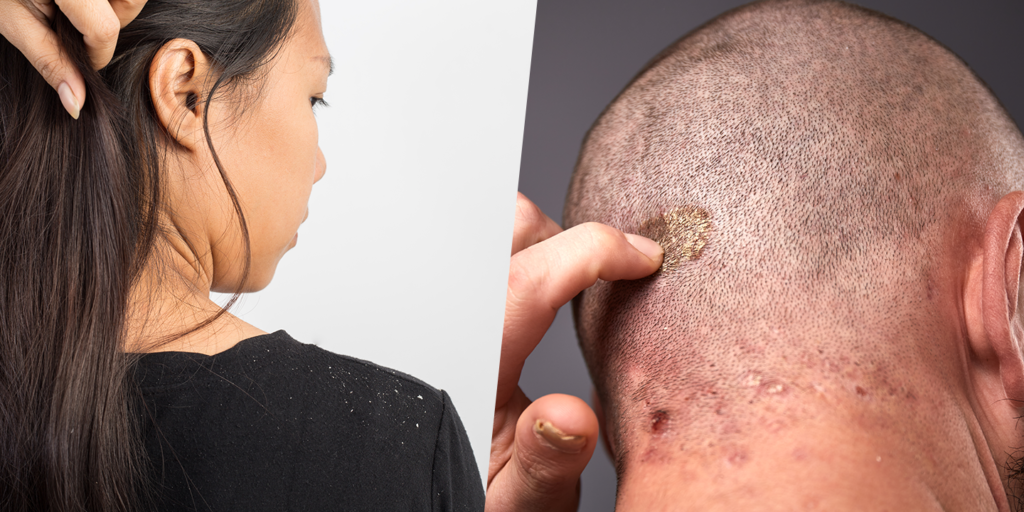
If you’ve noticed white flakes on your shoulders, an itchy scalp, or persistent irritation, you might assume it’s simply dandruff. However, not all scalp flaking is caused by dandruff. In some cases, the real culprit may be scalp psoriasis—a chronic inflammatory skin condition that requires a different treatment approach.
Because the symptoms can look similar at first glance, many people struggle to tell them apart. Understanding the scalp psoriasis vs dandruff difference treatment can help you identify the cause of your symptoms and choose the most effective management strategy.
The good news? Both conditions can often be controlled with proper care, but the first step is knowing which one you’re dealing with.
Quick Answer: What’s the Difference Between Scalp Psoriasis and Dandruff?
Dandruff is a common scalp condition that causes mild flaking and itching, while scalp psoriasis is an autoimmune-related inflammatory condition that produces thicker scales, redness, and more persistent symptoms.
Generally:
- Dandruff: Small white or yellow flakes with mild itching.
- Scalp Psoriasis: Thick, silvery scales, red patches, and more intense inflammation.
The treatments also differ significantly, making accurate identification important.
What Is Dandruff?
Dandruff is one of the most common scalp conditions worldwide.
It occurs when skin cells on the scalp shed faster than normal, leading to visible flakes.
Dandruff is often linked to:
- Oily scalp conditions.
- Sensitivity to a naturally occurring scalp yeast.
- Irritated skin.
- Environmental factors.
- Certain hair care products.
Although annoying, dandruff is generally not dangerous and does not permanently damage hair follicles.
Common Dandruff Symptoms
Signs of Dandruff Include:
- White or yellowish flakes.
- Mild scalp itching.
- Flakes visible on clothing.
- Oily scalp appearance.
- Symptoms that worsen during stress or cold weather.
The flakes tend to be loose and easily shed from the scalp.
What Is Scalp Psoriasis?
Scalp psoriasis is a form of psoriasis, a chronic autoimmune condition that causes the immune system to accelerate skin cell turnover.
Instead of shedding normally, skin cells accumulate rapidly, forming thick patches and scales.
Scalp psoriasis can affect:
- A small area of the scalp.
- The entire scalp.
- Areas beyond the hairline.
- The forehead.
- The back of the neck.
- Around the ears.
Unlike dandruff, scalp psoriasis often involves significant inflammation.
Common Scalp Psoriasis Symptoms
Signs of Scalp Psoriasis Include:
- Thick silvery-white scales.
- Raised red patches.
- Persistent itching.
- Burning or soreness.
- Dry scalp that may crack.
- Temporary hair shedding due to scratching or inflammation.
Symptoms often fluctuate, with periods of improvement followed by flare-ups.
Scalp Psoriasis vs Dandruff Difference Treatment: Key Differences
Understanding the scalp psoriasis vs dandruff difference treatment starts with recognizing how the two conditions differ.
1. Appearance of Flakes
Dandruff
Flakes are typically:
- Small.
- White or yellow.
- Loose and powdery.
Scalp Psoriasis
Scales are often:
- Thick.
- Silvery-white.
- Adherent to the scalp.
- Layered over red skin.
This is often the easiest visual clue.
2. Scalp Redness
Dandruff
May cause mild irritation but usually does not create sharply defined red plaques.
Scalp Psoriasis
Frequently causes:
- Noticeable redness.
- Inflamed patches.
- Well-defined plaques.
3. Location of Symptoms
Dandruff
Usually remains confined to the scalp.
Scalp Psoriasis
May extend:
- Beyond the hairline.
- Behind the ears.
- Onto the forehead.
- Down the neck.
This spread beyond the scalp often suggests psoriasis rather than dandruff.
4. Severity of Itching
Dandruff
Usually causes mild to moderate itching.
Scalp Psoriasis
Can cause:
- Intense itching.
- Burning sensations.
- Significant discomfort.
5. Underlying Cause
Dandruff
Associated with:
- Excess oil production.
- Skin irritation.
- Scalp yeast sensitivity.
Scalp Psoriasis
Caused by:
- Immune system dysfunction.
- Chronic inflammation.
- Genetic predisposition.
Because the causes differ, treatment approaches differ as well.
Can Scalp Psoriasis Be Mistaken for Dandruff?
Absolutely.
Many people initially assume they have severe dandruff when they actually have scalp psoriasis.
Misdiagnosis may lead to:
- Delayed treatment.
- Persistent symptoms.
- Ongoing discomfort.
- Frustration from ineffective dandruff shampoos.
This is why professional evaluation is important when symptoms persist.
Can Dandruff Cause Hair Loss?
Dandruff itself does not usually cause permanent hair loss.
However:
- Excessive scratching can damage hair.
- Severe inflammation may temporarily increase shedding.
Hair generally regrows once symptoms improve.
Can Scalp Psoriasis Cause Hair Loss?
Scalp psoriasis does not typically destroy hair follicles.
However, temporary hair loss may occur due to:
- Chronic inflammation.
- Frequent scratching.
- Aggressive removal of scales.
- Stress associated with flare-ups.
Most hair regrows when inflammation is controlled.
What Triggers Dandruff?
Common dandruff triggers include:
- Stress.
- Cold weather.
- Oily skin.
- Infrequent shampooing.
- Sensitivity to hair products.
Managing triggers often improves symptoms.
What Triggers Scalp Psoriasis?
Common psoriasis flare triggers include:
- Emotional stress.
- Skin injury or irritation.
- Certain infections.
- Smoking.
- Excessive alcohol consumption.
- Some medications.
Trigger management is often part of long-term treatment.
Treatment Options for Dandruff
Many cases respond well to over-the-counter products.
Common Dandruff Treatments
- Anti-dandruff shampoos.
- Regular scalp cleansing.
- Gentle hair care practices.
- Addressing scalp oil buildup.
Persistent symptoms may require medical evaluation.
Treatment Options for Scalp Psoriasis
Because scalp psoriasis involves inflammation and immune system activity, treatment is often more specialized.
Possible Treatments Include:
- Medicated scalp treatments.
- Prescription topical therapies.
- Anti-inflammatory medications.
- Light therapy in selected cases.
- Management of psoriasis triggers.
Treatment plans depend on symptom severity and individual health needs.
When Should You See a Dermatologist?
Consider professional evaluation if you experience:
- Thick scalp plaques.
- Persistent redness.
- Severe itching.
- Symptoms extending beyond the hairline.
- Hair shedding associated with scalp inflammation.
- No improvement with dandruff shampoos.
A dermatologist can help determine the exact cause and recommend targeted treatment.
How Doctors Diagnose Scalp Psoriasis vs Dandruff
Diagnosis often involves:
Medical History
Including:
- Family history of psoriasis.
- Previous skin conditions.
- Symptom duration.
Physical Examination
Doctors evaluate:
- Scale appearance.
- Redness.
- Plaque formation.
- Distribution of symptoms.
Additional Evaluation
In uncommon cases, further testing may be needed to rule out other scalp conditions.
Frequently Asked Questions (FAQ)
What is the main scalp psoriasis vs dandruff difference?
Dandruff causes loose flakes and mild irritation, while scalp psoriasis causes thick scales, redness, and chronic inflammation.
Can dandruff turn into psoriasis?
No. They are separate conditions with different causes.
Does scalp psoriasis always itch?
Not always, but itching is a common symptom and can range from mild to severe.
Can psoriasis spread beyond the scalp?
Yes. Scalp psoriasis often extends beyond the hairline and may affect the forehead, ears, or neck.
Are dandruff shampoos effective for scalp psoriasis?
Some may provide limited relief, but psoriasis often requires specialized treatment because the underlying cause is different.
Can scalp psoriasis cause permanent hair loss?
Permanent hair loss is uncommon. Temporary shedding may occur during flare-ups but often improves when inflammation is controlled.
Final Thoughts
Understanding the scalp psoriasis vs dandruff difference treatment is essential because these conditions may look similar but require very different approaches.
Dandruff typically causes loose flakes and mild irritation, while scalp psoriasis involves chronic inflammation, thick scales, and red plaques that may extend beyond the scalp. Recognizing these differences can help you avoid ineffective treatments and seek appropriate care sooner.
If your symptoms are persistent, worsening, or not responding to standard dandruff shampoos, consulting a dermatologist can provide a clear diagnosis and a personalized treatment plan. Early treatment often leads to better symptom control, improved scalp comfort, and a better quality of life.