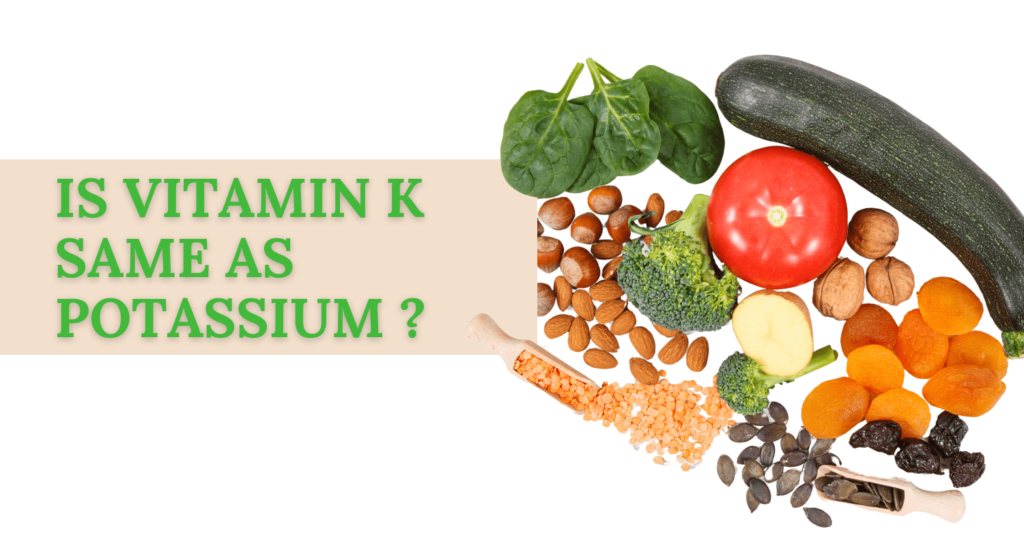
Have you ever wondered whether vitamin K and potassium are the same nutrient?
You’re not alone.
Many people confuse vitamin K with potassium because their names sound similar. However, they are completely different nutrients with different roles in the body.
In this guide, we’ll explain:
- Whether vitamin K is the same as potassium
- How they differ
- Their benefits
- Food sources
- Why both are important for health
Let’s explore the facts.
Key Takeaways
- Vitamin K and potassium are not the same
- Vitamin K is a fat-soluble vitamin
- Potassium is a mineral and electrolyte
- Vitamin K supports blood clotting and bone health
- Potassium supports heart function, muscles, nerves, and fluid balance
- Both are essential for overall wellness
What Is Vitamin K?
Vitamin K is a fat-soluble vitamin that plays a major role in blood clotting and bone metabolism.
It helps the body produce proteins required to:
- Stop excessive bleeding
- Support bone strength
- Maintain cardiovascular health
Doctors sometimes prescribe vitamin K to help reverse the effects of certain blood-thinning medications.
Types of Vitamin K
There are two main types:
Vitamin K1 (phylloquinone)
Found mostly in leafy green vegetables
Vitamin K2 (menaquinone)
Found in fermented foods and animal products
Both forms support bone and heart health.
Functions of Vitamin K
Vitamin K helps:
- Support proper blood clotting
- Strengthen bones
- Reduce fracture risk
- Support cardiovascular health
- Possibly support brain function (ongoing research)
Low vitamin K intake may increase bleeding risk and weaken bones over time.
What Is Potassium?
Potassium is an essential electrolyte mineral required for many vital body processes.
It helps regulate:
- Fluid balance
- Muscle contractions
- Heart rhythm
- Nerve signaling
- Blood pressure levels
Unlike vitamin K, potassium does not function as a vitamin.
Functions of Potassium
Potassium supports:
1. Fluid Balance
Maintains proper water levels inside and outside cells.
2. Muscle Function
Supports movement of all muscles, including the heart.
3. Nerve Signals
Helps transmit messages between the brain and body.
4. Healthy Blood Pressure
Works with sodium to regulate blood pressure levels.
Adequate potassium intake supports long-term heart health ❤️
Differences Between Vitamin K and Potassium
Here’s the simplest comparison:
| Feature | Vitamin K | Potassium |
|---|---|---|
| Nutrient type | Vitamin | Mineral |
| Solubility | Fat-soluble | Water-soluble electrolyte |
| Main role | Blood clotting & bones | Heart, nerves & muscles |
| Stored in body | Yes (limited storage) | Mostly regulated daily |
| Found in | Leafy greens & fermented foods | Fruits, vegetables & legumes |
So clearly, vitamin K and potassium are not the same nutrient.
Similarities Between Vitamin K and Potassium
Even though they are different, they share some similarities:
- Both are essential micronutrients
- Both support heart health
- Both contribute to bone strength
- Both are found in vegetables
- Both support overall body function
Eating a balanced diet helps ensure you get enough of both.
Best Food Sources of Vitamin K
Top vitamin K foods include:
- Kale
- Spinach
- Broccoli
- Cabbage
- Brussels sprouts
- Soybean oil
- Canola oil
- Kiwi
- Blueberries
- Natto (rich in vitamin K2)
Vitamin K absorbs better when eaten with healthy fats like olive oil 🥗
Best Food Sources of Potassium
High-potassium foods include:
Fruits
- Bananas
- Oranges
- Avocados
Vegetables
- Spinach
- Sweet potatoes
- Tomatoes
- Potatoes
Other Sources
- Lentils
- Beans
- Yogurt
- Milk
- Nuts
- Seeds
A varied diet helps maintain healthy potassium levels.
Why Vitamin K Intake Matters
Adequate vitamin K intake supports:
- Normal blood clotting
- Bone density
- Reduced fracture risk
- Possible cardiovascular protection
- Potential cognitive benefits (emerging evidence)
Deficiency is uncommon but possible in people with fat-absorption issues.
Why Potassium Intake Matters
Potassium plays a major role in:
- Maintaining hydration balance
- Supporting heart rhythm
- Improving muscle function
- Controlling blood pressure
- Supporting bone health
Low potassium intake may increase risk of hypertension and fatigue.
People with kidney conditions should consult a doctor before increasing potassium intake.
Final Answer: Is Vitamin K the Same as Potassium?
No — vitamin K and potassium are completely different nutrients.
Vitamin K helps with:
- Blood clotting
- Bone strength
Potassium helps with:
- Heart function
- Muscle movement
- Nerve signaling
- Fluid balance
Both nutrients are essential, but they serve different roles in keeping your body healthy.