If you’ve started feeling a little unsteady—maybe when getting out of bed, walking in the dark, or turning quickly—you’re not imagining it.
Balance issues become more common after 50, and they’re a major reason falls happen. According to the Centers for Disease Control and Prevention, 1 in 4 adults over 65 falls each year in the U.S.—and many of those falls are preventable.
The good news? Most balance problems can be improved with the right awareness and simple daily exercises.
Why Balance Gets Worse After 50
Balance isn’t controlled by just one system—it’s a team effort between your inner ear, muscles, eyes, and brain. As you age, small changes in each area can add up.
1. Inner Ear Changes (Vestibular System)
Your inner ear helps you sense motion and position. Conditions like Benign Paroxysmal Positional Vertigo can cause sudden dizziness or spinning sensations.
2. Muscle Loss (Sarcopenia)
You naturally lose muscle strength with age, especially in your legs and core—key areas for stability.
3. Vision Decline
Your eyes help guide balance. Poor vision or low light can make you feel off-balance.
4. Medication Side Effects
Common medications for blood pressure, sleep, or anxiety can cause dizziness or lightheadedness.
5. Chronic Conditions
Conditions like:
- Diabetes
- Parkinson’s Disease
can affect nerves, coordination, and movement.
Warning Signs You Shouldn’t Ignore
Balance issues aren’t always obvious at first. Watch for:
- Feeling unsteady when walking
- Needing to hold onto furniture
- Dizziness when standing up
- Trouble walking in a straight line
- Fear of falling (even if you haven’t yet)
If these sound familiar, it’s time to act early.
Best Exercises to Improve Balance and Prevent Falls
You don’t need a gym—just consistency. These exercises are widely recommended by physical therapists and fall-prevention programs.
1. Heel-to-Toe Walk (Tandem Walk)
How to do it:
- Walk in a straight line
- Place one foot directly in front of the other
- Look forward, not down
Why it helps: Improves coordination and walking stability
2. Single-Leg Stand
How to do it:
- Stand near a wall or chair
- Lift one foot off the ground
- Hold for 10–30 seconds
Why it helps: Strengthens stabilizing muscles
3. Sit-to-Stand Exercise
How to do it:
- Sit in a chair
- Stand up without using your hands
- Sit back down slowly
Why it helps: Builds leg strength for everyday movements
4. Tai Chi (Gentle Movement Practice)
Practices like Tai Chi are proven to reduce fall risk.
Research shows Tai Chi improves:
- Balance
- Coordination
- Body awareness
5. Marching in Place
How to do it:
- Stand tall
- Lift knees one at a time
- Move slowly and controlled
Why it helps: Improves coordination and hip strength
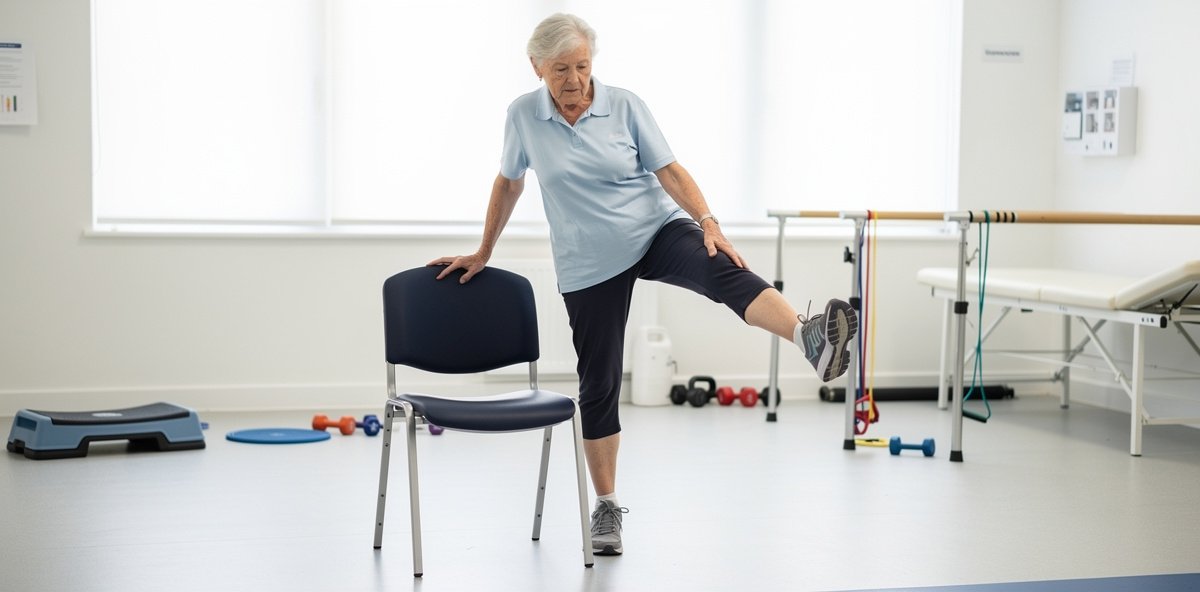
6. Side Leg Raises
How to do it:
- Hold onto a chair
- Lift one leg to the side
- Keep your body upright
Why it helps: Strengthens hip muscles (critical for balance)
Simple Daily Habits That Make a Big Difference
Beyond exercise, small lifestyle changes can dramatically reduce fall risk:
✔ Improve your home safety
- Remove loose rugs
- Add grab bars in bathrooms
- Keep walkways well-lit
✔ Wear proper footwear
Skip slippery socks and worn-out shoes—opt for supportive, non-slip soles.
✔ Stay physically active
Even daily walking helps maintain strength and coordination.
✔ Check your vision and hearing
Poor input from eyes and ears affects balance more than most people realize.
When to See a Doctor
Don’t brush off balance problems as “just aging.” Get checked if you have:
- Frequent dizziness
- Sudden balance changes
- Falls or near-falls
- Vertigo (spinning sensation)
A doctor may evaluate for inner ear issues, nerve problems, or medication side effects.
The Bottom Line
Balance problems after 50 are common—but they’re not something you have to live with.
Most falls are preventable with:
- Strength and balance exercises
- Safer home habits
- Early attention to warning signs
The key is simple: start before a fall happens.