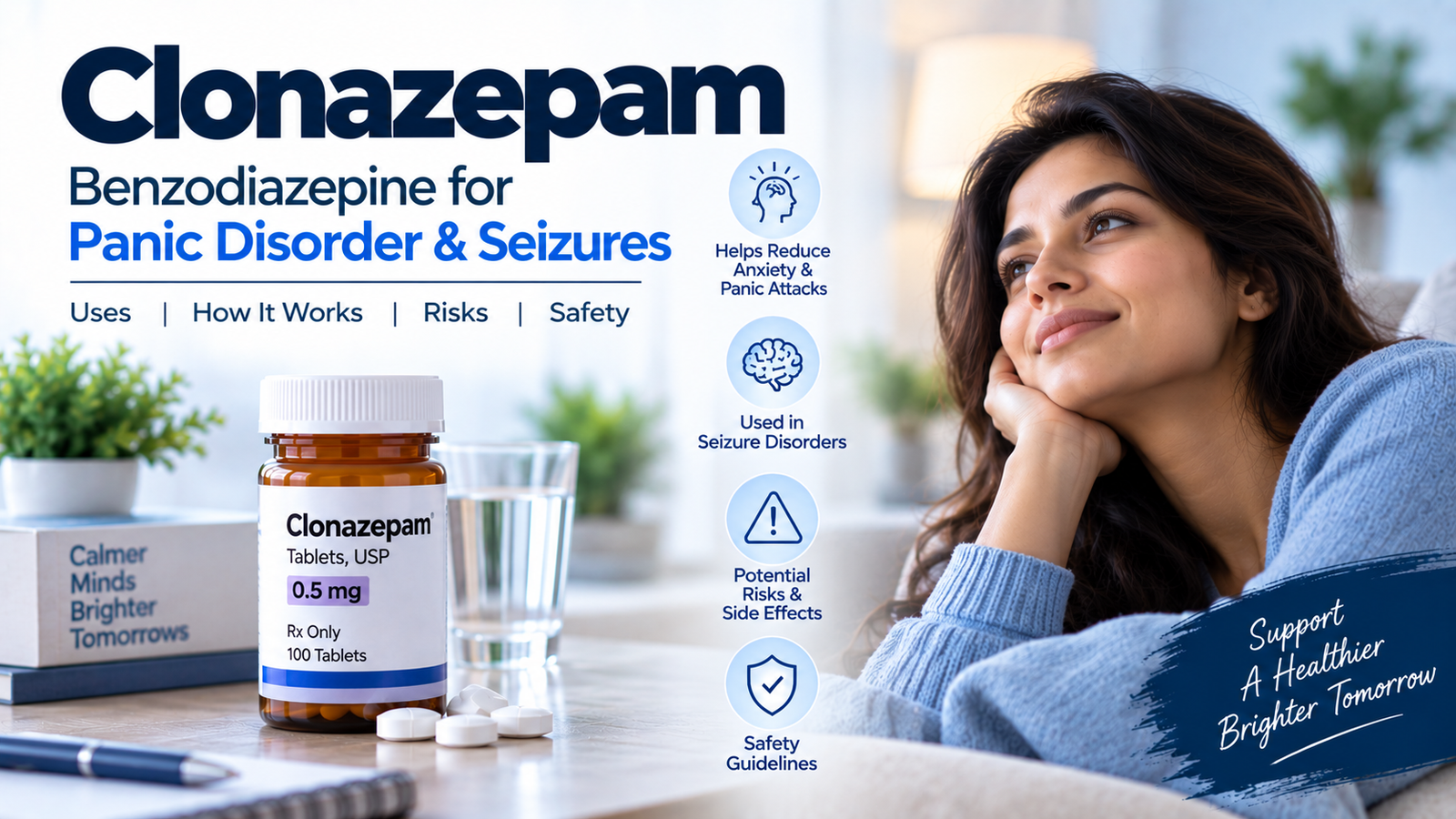
Clonazepam is a prescription benzodiazepine used in the United States to control certain types of seizures and to treat panic disorder/panic attacks. It works primarily by enhancing inhibitory activity in the brain, helping reduce excessive neuronal activity and producing calming and anticonvulsant effects. The medicine is also associated with important risks, including sedation, respiratory depression, misuse, addiction, physical dependence, and potentially dangerous withdrawal.
Because clonazepam is a controlled substance and carries an FDA-required Boxed Warning, it should be taken exactly as prescribed. Combining it with opioids, alcohol, or other central nervous system depressants can substantially increase the risk of severe sedation and breathing problems.

What Is Clonazepam?
Clonazepam is a prescription medication belonging to the benzodiazepine class. In the United States, it is used to control certain types of seizures and to treat panic attacks associated with panic disorder. The brand name Klonopin is associated with clonazepam.
Benzodiazepines affect activity in the central nervous system. They can reduce excessive neuronal activity, which explains why certain medicines in this class can be useful for seizure disorders while also producing calming and anxiolytic effects.
Clonazepam is available as an oral tablet and an orally disintegrating tablet. It is classified as a Schedule IV controlled substance in the United States because of its potential for misuse and dependence.
How Does Clonazepam Work?
Clonazepam enhances the effects of gamma-aminobutyric acid (GABA), an inhibitory neurotransmitter in the brain.
GABA helps reduce excessive neuronal firing. By enhancing GABA-mediated inhibition, clonazepam can:
- Decrease abnormal electrical activity
- Reduce excessive nervous-system activity
- Produce a calming effect
- Reduce anxiety associated with panic disorder
- Help control certain seizure activity
MedlinePlus describes clonazepam as working by decreasing abnormal electrical activity in the brain.
This mechanism is shared broadly across the benzodiazepine class, although individual benzodiazepines differ in pharmacokinetics, duration of action, approved uses, and clinical applications.
Clonazepam Uses
1. Clonazepam for Panic Disorder
One of the established uses of clonazepam is treatment of panic disorder.
Panic disorder involves recurrent panic attacks that can occur unexpectedly and may involve intense fear, physical symptoms, and concern about future attacks.
Clonazepam can reduce the excessive central nervous system activity associated with panic symptoms and may decrease the frequency or severity of panic attacks in appropriate patients. MedlinePlus identifies panic attacks as one of the conditions for which clonazepam is prescribed.
However, benzodiazepines are not automatically the best long-term strategy for every person with panic disorder. Treatment decisions may also involve psychotherapy, particularly cognitive behavioral therapy, and other medications depending on the patient’s circumstances.
2. Clonazepam for Seizures
Clonazepam is also used to control certain types of seizures.
Because it increases inhibitory signaling in the brain, clonazepam can suppress excessive electrical activity associated with some seizure disorders.
The specific seizure type, treatment goals, other antiseizure medicines, and individual response determine whether clonazepam is appropriate.
It should not be assumed that clonazepam is suitable for every type of epilepsy.
Clonazepam Dosage and Administration
Clonazepam dosing depends on the condition being treated, age, response to treatment, other medications, and other clinical factors.
MedlinePlus states that clonazepam is generally taken one to three times daily, with or without food, and that physicians may start with a lower dose and gradually increase it when appropriate.
For SEO and patient-education purposes, it is important to distinguish general prescribing information from individualized dosing. Patients should not change the dose, frequency, or duration of clonazepam on their own.
Why individualized dosing matters
Clonazepam can cause substantial sedation and can produce physical dependence with repeated use. The appropriate amount depends on the condition and the patient’s risk profile.
Factors that may influence treatment include:
- Age
- Other medicines
- Seizure type
- Severity of panic symptoms
- Liver function
- History of substance misuse
- Respiratory conditions
- Other central nervous system depressants
Common Clonazepam Side Effects
Common side effects can occur because clonazepam suppresses activity in the central nervous system.
MedlinePlus identifies the following potential effects:
- Drowsiness
- Dizziness
- Unsteadiness
- Problems with coordination
- Difficulty thinking
- Memory problems
These effects can be particularly important when driving, operating machinery, walking on stairs, or performing activities requiring alertness and coordination.
Clonazepam and daytime drowsiness
Some people may experience significant sleepiness after taking clonazepam. The effect can be more pronounced when clonazepam is combined with other substances that slow the nervous system.
Patients should understand how the medication affects them before engaging in activities that require full alertness.
Clonazepam and Respiratory Depression
One of the most important safety concerns involves respiratory depression, particularly when clonazepam is combined with opioids or other central nervous system depressants.
The current U.S. clonazepam labeling carries a Boxed Warning stating that concomitant use of benzodiazepines and opioids can result in profound sedation, respiratory depression, coma, and death.
MedlinePlus similarly warns that clonazepam can cause serious or life-threatening breathing problems, extreme sleepiness, or coma when combined with certain medications.
Emergency warning signs
Seek emergency medical attention for symptoms such as:
- Unusually slow or difficult breathing
- Extreme sleepiness
- Severe dizziness or lightheadedness
- Unresponsiveness
- Loss of consciousness
These symptoms can indicate potentially life-threatening central nervous system depression.
Clonazepam, Opioids, and Other CNS Depressants
Combining clonazepam with opioids is a particularly important safety concern.
Examples of opioid medicines include some drugs prescribed for:
- Severe pain
- Cough
- Opioid use disorder
The FDA warns that benzodiazepines and opioids together can increase the risk of serious respiratory depression and death. Clinicians are advised to reserve the combination for situations where alternative treatments are inadequate and to use the lowest effective doses and durations when the combination is necessary.
Other central nervous system depressants can also increase sedation.
Patients should tell every healthcare professional about all prescription medicines, over-the-counter products, supplements, and substances they use.
Clonazepam and Alcohol
Alcohol can intensify the sedating effects of benzodiazepines.
The FDA specifically advises patients not to drink alcohol with benzodiazepines, because alcohol can increase the risk of serious and potentially life-threatening adverse effects.
Combining clonazepam and alcohol may increase:
- Drowsiness
- Impaired coordination
- Confusion
- Poor judgment
- Respiratory depression
- Loss of consciousness
The safest approach is to discuss alcohol use openly with the prescribing clinician rather than assuming that a small amount is automatically safe.
Clonazepam Dependence and Addiction
Clonazepam carries an important risk of misuse, abuse, addiction, physical dependence, and withdrawal.
The FDA requires a class-wide Boxed Warning for benzodiazepines addressing these risks. Importantly, physical dependence can develop even when a benzodiazepine is taken as prescribed.
Dependence is not the same as addiction
These terms are related but not identical.
Physical dependence means the body has adapted to repeated exposure to the medication. If the drug is suddenly stopped or reduced too quickly, withdrawal symptoms can occur.
Addiction involves problematic patterns of use, such as compulsive use despite harm, loss of control, or continued use for nonmedical purposes.
A person can develop physical dependence without having an addiction.
Clonazepam Withdrawal
Clonazepam should not be stopped abruptly after regular use unless a healthcare professional specifically directs otherwise.
Abrupt discontinuation or excessively rapid dose reduction can trigger withdrawal symptoms and, in severe cases, seizures and other potentially life-threatening reactions.
Possible withdrawal symptoms can include:
- Anxiety
- Panic attacks
- Insomnia
- Tremors
- Irritability
- Memory problems
- Difficulty concentrating
- Muscle symptoms
- Perceptual disturbances
- Seizures
The FDA recommends gradual, patient-specific tapering rather than a universal discontinuation schedule.
Why tapering matters
A taper gives the nervous system time to adjust to decreasing benzodiazepine exposure.
There is no single tapering schedule appropriate for everyone. The appropriate approach depends on factors such as the medication, dose, duration of treatment, clinical condition, and individual response.
Patients should never attempt to design or accelerate a clonazepam taper without medical supervision.
Clonazepam and Seizure Risk During Withdrawal
Clonazepam has anticonvulsant properties, so abruptly stopping it can be particularly concerning in someone taking it for seizure control.
Even people taking benzodiazepines for anxiety or panic disorder can experience serious withdrawal reactions after prolonged or repeated use.
The FDA specifically warns that rapid benzodiazepine discontinuation can cause withdrawal reactions, including potentially life-threatening seizures.
This is one of the main reasons clonazepam should be discontinued gradually under professional supervision.
Clonazepam and Driving
Because clonazepam can cause:
- Drowsiness
- Dizziness
- Unsteadiness
- Impaired coordination
- Problems with thinking or memory
it may affect activities requiring alertness and rapid responses.
Patients should understand their individual response to clonazepam before driving or operating machinery.
The risk may become greater when clonazepam is combined with alcohol, opioids, sleep medications, or other sedating drugs.
Clonazepam in Older Adults
Older adults may be more vulnerable to medication-related sedation, impaired coordination, and falls.
Because clonazepam can cause dizziness, unsteadiness, and problems with coordination, clinicians may carefully weigh its potential benefits against these risks in older patients.
Polypharmacy is another consideration because older adults may take several medicines that can interact or produce additive sedation.
Clonazepam Drug Interactions
Before starting clonazepam, patients should provide a complete medication list to their healthcare professional.
Important categories include:
Opioids
Can substantially increase sedation and respiratory-depression risk.
Alcohol
Can intensify central nervous system depression and serious adverse effects.
Other sedatives
Other medicines that depress the central nervous system can increase drowsiness and impaired coordination.
Certain prescription and OTC medicines
Some medications may alter sedation or other effects, so all medicines should be disclosed.
Patients should also discuss supplements and recreational substances rather than assuming that nonprescription products are automatically safe.
Clonazepam and Mental Health Monitoring
Although clonazepam can reduce panic symptoms, changes in mood or behavior should be taken seriously.
MedlinePlus advises contacting a healthcare professional for concerning changes such as:
- New or worsening depression
- Severe anxiety or irritability
- Aggressive or unusual behavior
- Mania
- Thoughts of self-harm
- Hallucinations
- Loss of contact with reality
Family members or caregivers may sometimes notice behavioral changes before the patient does, making communication important when long-term treatment is being considered.
Clonazepam for Panic Disorder: Long-Term Considerations
Benzodiazepines can be effective for certain patients with panic disorder, but long-term use requires careful reassessment because of tolerance, dependence, withdrawal, sedation, and misuse risks.
Treatment for panic disorder may also include:
- Cognitive behavioral therapy
- Other prescription medicines
- Lifestyle and behavioral strategies
- Treatment of coexisting anxiety or mood disorders
The FDA encourages clinicians to consider therapeutic alternatives and to periodically reassess the need for benzodiazepine treatment.
The appropriate treatment plan should be individualized rather than based solely on symptom relief.
Clonazepam for Seizures: Treatment Considerations
For seizure disorders, clonazepam may be used as part of a broader antiseizure treatment plan.
The choice of anticonvulsant depends on:
- Seizure type
- Frequency and severity
- Age
- Other health conditions
- Other medications
- Treatment response
- Adverse-effect profile
Patients taking clonazepam for seizure control should not discontinue it suddenly because withdrawal can itself provoke seizures.
Clonazepam vs. Other Benzodiazepines
Clonazepam belongs to the same broad class as medicines such as:
- Alprazolam
- Lorazepam
- Diazepam
- Midazolam
However, these medicines are not interchangeable on a milligram-for-milligram basis.
They differ in:
- Pharmacokinetics
- Duration of action
- Approved indications
- Available formulations
- Onset and duration of clinical effects
- Appropriate clinical settings
For example, clonazepam is used for panic disorder and certain seizures, whereas other benzodiazepines have different approved uses and formulations.
A clinician should determine whether switching between benzodiazepines is appropriate.
Is Clonazepam a Controlled Substance?
Yes.
In the United States, clonazepam is classified as a Schedule IV controlled substance.
This classification reflects its potential for misuse, dependence, and abuse.
Patients should:
- Take only their prescribed medication
- Never share clonazepam
- Store it securely
- Follow appropriate disposal instructions
- Tell healthcare professionals about previous substance-use problems
MedlinePlus specifically advises patients not to let anyone else take their clonazepam.
When Is Clonazepam an Emergency?
Seek emergency medical care if someone taking clonazepam develops:
- Difficulty breathing
- Extreme sleepiness or inability to awaken
- Loss of consciousness
- A seizure
- Severe allergic symptoms such as facial or throat swelling
- Serious behavioral or mental-status changes
- Suspected overdose
For suspected overdose in the United States, Poison Control can be contacted at 1-800-222-1222; emergency services should be called immediately if the person has collapsed, cannot be awakened, has difficulty breathing, or has a seizure.
Frequently Asked Questions About Clonazepam
What is clonazepam used for?
Clonazepam is used to control certain types of seizures and to treat panic attacks associated with panic disorder. It belongs to the benzodiazepine class.
Is clonazepam a benzodiazepine?
Yes. Clonazepam is a benzodiazepine that enhances inhibitory activity in the brain and can produce anticonvulsant and calming effects.
Is clonazepam used for panic attacks?
Yes. Clonazepam is prescribed for panic attacks associated with panic disorder.
Can clonazepam stop seizures?
Clonazepam can help control certain types of seizures, but it is not appropriate for every seizure disorder. Treatment should be individualized by a healthcare professional.
Can clonazepam cause dependence?
Yes. Physical dependence can develop with benzodiazepine use, even when the medicine is taken as prescribed. Abrupt discontinuation can cause withdrawal reactions, including seizures.
Can I stop clonazepam suddenly?
Generally, clonazepam should not be stopped suddenly after regular use. A healthcare professional should determine an appropriate gradual reduction plan when discontinuation is appropriate.
Can clonazepam be taken with opioids?
The combination carries significant risk. Benzodiazepines and opioids together can cause profound sedation, respiratory depression, coma, and death.
Can I drink alcohol while taking clonazepam?
Alcohol can intensify the effects of benzodiazepines and increase the risk of serious adverse effects. The FDA advises patients not to drink alcohol with benzodiazepines.
Does clonazepam make you sleepy?
Yes. Drowsiness is a commonly reported side effect, along with dizziness, unsteadiness, impaired coordination, and problems with thinking or memory.
Is clonazepam addictive?
Clonazepam has a risk of misuse, abuse, addiction, and physical dependence. The FDA requires these risks to appear in the class-wide Boxed Warning for benzodiazepines.
Key Takeaways
Clonazepam is a benzodiazepine used primarily for panic disorder and certain seizure disorders.
The most important points are:
- Clonazepam enhances inhibitory activity in the brain.
- It can reduce panic attacks associated with panic disorder.
- It can control certain types of seizures.
- Drowsiness, dizziness, impaired coordination, and cognitive effects are common concerns.
- It is a Schedule IV controlled substance in the United States.
- Benzodiazepines carry FDA Boxed Warnings for abuse, misuse, addiction, physical dependence, and withdrawal.
- Combining clonazepam with opioids can cause severe respiratory depression, coma, or death.
- Alcohol can increase dangerous central nervous system depression.
- Clonazepam should generally not be discontinued abruptly after regular use.
- Withdrawal can include anxiety, insomnia, tremors, and potentially life-threatening seizures.
- Patients should seek emergency care for breathing difficulties, unresponsiveness, seizures, or other severe reactions.
Medical Disclaimer
This article is for educational and informational purposes only and does not replace professional medical advice, diagnosis, or treatment. Clonazepam is a prescription controlled substance with potentially serious risks. Do not change the dose, combine it with alcohol or other medicines, or stop regular treatment without guidance from a qualified healthcare professional. If severe breathing problems, unresponsiveness, seizures, or another medical emergency occurs, seek emergency medical attention.