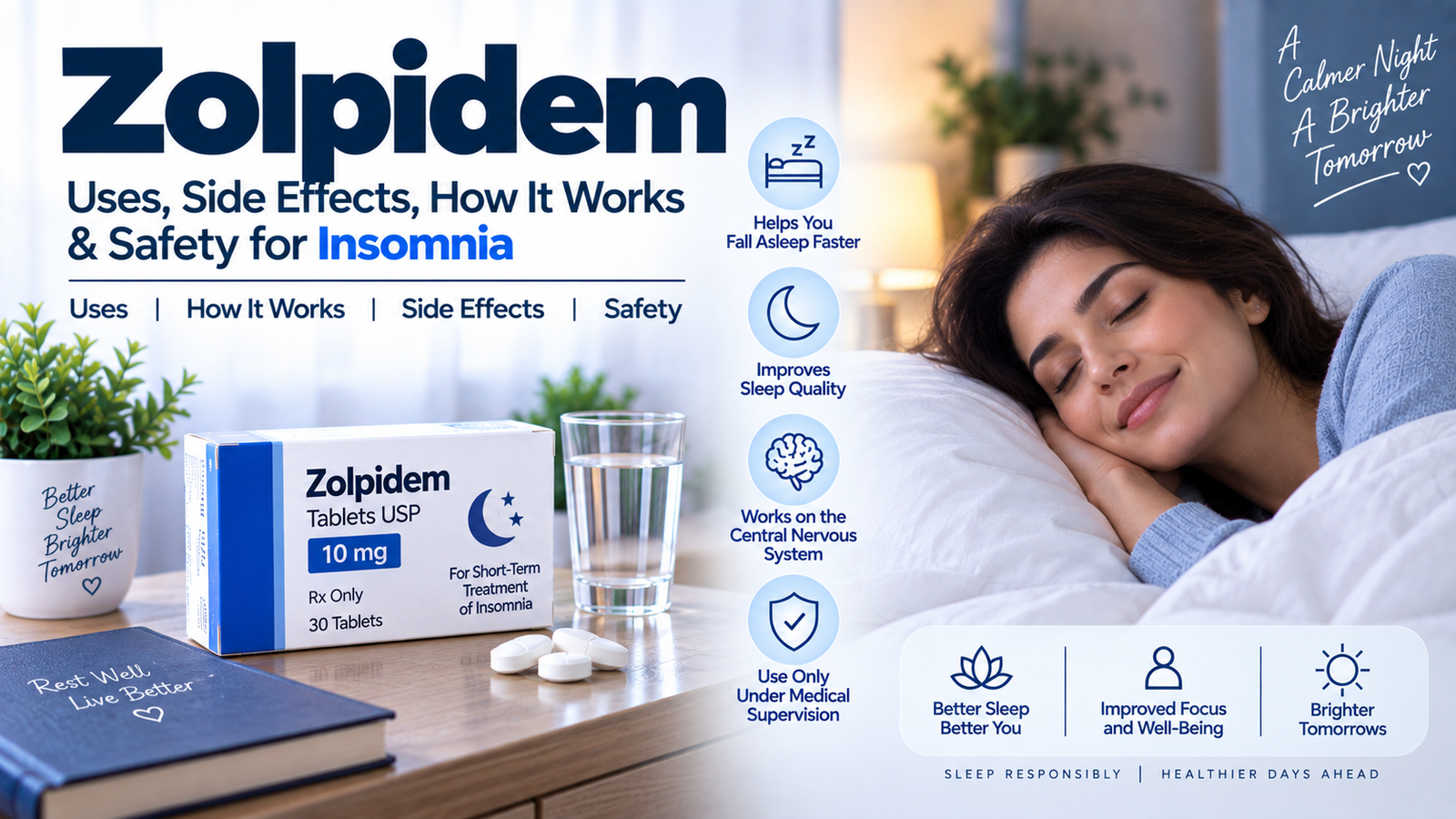
What Is Zolpidem?
Zolpidem is a prescription sedative-hypnotic medication used to treat insomnia. It belongs to a group of medicines commonly called “Z-drugs” and works by reducing activity in the brain to promote sleep. (MedlinePlus )
In the United States, zolpidem products include immediate-release tablets and several other formulations designed for different sleep problems. Depending on the product, zolpidem may be used for difficulty falling asleep, while some formulations are designed for people who wake during the night and have difficulty returning to sleep. (MedlinePlus)
Zolpidem is a Schedule IV controlled substance in the United States. Current U.S. labeling identifies zolpidem tartrate tablets as a GABA-A receptor positive modulator indicated for short-term treatment of insomnia characterized by difficulty with sleep initiation.
Although zolpidem is not a benzodiazepine, it has sedative effects and can cause misuse, dependence, withdrawal symptoms, impaired alertness, and potentially dangerous sleep-related behaviors.

What Is Zolpidem Used For?
Zolpidem is primarily used for insomnia, a sleep disorder characterized by difficulty falling asleep, staying asleep, or both.
Insomnia can be:
- Short-term or acute
- Chronic
- Associated with stress or changes in routine
- Related to another medical condition
- Related to another medication or substance
- Associated with another sleep disorder
MedlinePlus describes insomnia as difficulty falling asleep, staying asleep, or obtaining restorative sleep. Chronic insomnia may sometimes be caused or worsened by another health condition, medication, substance, or sleep disorder.
Because insomnia can have different underlying causes, prescription sleep medication is not necessarily appropriate for everyone.
How Does Zolpidem Work?
Zolpidem works primarily through the GABA-A receptor system in the brain.
GABA, or gamma-aminobutyric acid, is an inhibitory neurotransmitter that reduces neuronal activity.
Zolpidem enhances GABA-related inhibitory activity, helping produce:
- Sleepiness
- Reduced brain activity
- Faster sleep initiation
- Sedation
Current U.S. labeling describes zolpidem as a GABA-A receptor positive modulator.
In simplified terms:
Zolpidem → GABA-A receptor modulation → reduced central nervous system activity → increased sleepiness → easier sleep initiation
The medication is therefore intended to be taken immediately before bedtime when the person can remain in bed for the appropriate amount of time.
Zolpidem Forms and Formulations
Zolpidem is available in several formulations, including:
- Immediate-release oral tablets
- Extended-release tablets
- Sublingual tablets
- Other formulation-specific products
Examples of U.S. brand names historically associated with zolpidem include:
- Ambien
- Ambien CR
- Edluar
- Intermezzo
- Zolpimist
Different formulations are designed for different sleep problems and have different instructions. (MedlinePlus )
For example, immediate-release zolpidem is generally intended for people who have difficulty falling asleep, whereas certain sublingual products are designed for middle-of-the-night awakening under specific conditions.
Do not assume that different zolpidem products can be substituted for one another.
How Should Zolpidem Be Taken?
Zolpidem should be taken exactly as prescribed.
For bedtime formulations, MedlinePlus advises taking zolpidem immediately before going to bed and ensuring there is enough time available for sleep afterward. For many bedtime zolpidem products, patients should plan to remain in bed for 7–8 hours. (MedlinePlus
Taking zolpidem when there is not enough time for a full night’s sleep can increase the risk of:
- Next-day drowsiness
- Impaired coordination
- Memory problems
- Reduced alertness
- Driving impairment
For middle-of-the-night formulations such as Intermezzo, the required remaining sleep period is shorter and formulation-specific. (MedlinePlus
Zolpidem and Food
Food can affect how quickly some zolpidem formulations work.
MedlinePlus states that zolpidem may work faster when it is not taken with a meal or immediately after a meal. (MedlinePlus
Patients should follow the instructions for their specific formulation because administration recommendations can differ between products.
Common Zolpidem Side Effects
Common side effects can include:
- Drowsiness
- Tiredness
- Dizziness
- Lightheadedness
- Headache
- Feeling “drugged”
- Unsteady walking
- Balance problems
- Nausea
- Constipation
- Diarrhea
- Stomach discomfort
- Unusual dreams
- Muscle aches or cramps
MedlinePlus lists drowsiness, tiredness, dizziness, headache, impaired balance, nausea, and other symptoms among possible adverse effects.
Not everyone experiences these effects, and severity can vary.
Zolpidem and Next-Day Drowsiness
One of the important safety concerns with zolpidem is that its effects can continue into the following morning.
A person may feel awake but still have impaired:
- Reaction time
- Coordination
- Judgment
- Memory
- Driving ability
- Ability to perform tasks requiring full alertness
The FDA has specifically warned that zolpidem blood levels can remain high enough the next morning to impair activities requiring alertness, including driving.
This risk contributed to FDA-required changes in recommended dosing for certain zolpidem products.
Feeling fully awake does not necessarily mean that driving ability has returned to normal.
Zolpidem and Complex Sleep Behaviors
One of the most important warnings associated with zolpidem is the risk of complex sleep behaviors.
These behaviors can occur while a person is not fully awake and may include:
- Sleepwalking
- Sleep driving
- Preparing or eating food
- Making phone calls
- Having sex
- Taking medications
- Other activities performed while apparently asleep
A person may have little or no memory of the event the following morning. (MedlinePlus
The FDA requires a boxed warning for zolpidem and certain other prescription insomnia medicines because these behaviors have caused serious injuries and, in some cases, deaths.
What should you do if this happens?
If someone experiences a complex sleep behavior while taking zolpidem, the FDA recommends stopping the medicine and contacting a healthcare professional immediately.
Zolpidem should not be prescribed to someone who has previously experienced a complex sleep behavior after taking zolpidem or another affected Z-drug.
Zolpidem, Alcohol and Other Sedatives
Combining zolpidem with alcohol or other central nervous system depressants can increase sedation and impairment.
Potential effects include:
- Excessive drowsiness
- Poor coordination
- Memory problems
- Confusion
- Increased risk of falls
- Dangerous respiratory or CNS depression in severe cases
The FDA advises people taking Z-drugs not to drink alcohol before or while taking them and warns against combining them with other sleep medicines unless directed by a healthcare professional.
Other sedating substances may include:
- Benzodiazepines
- Opioids
- Certain antihistamines
- Other prescription sleep medicines
- Some muscle relaxants
- Other CNS depressants
Zolpidem and Opioids
Extra caution is required when zolpidem is combined with opioid medicines.
Examples include:
- Hydromorphone
- Oxycodone
- Morphine
- Fentanyl
- Codeine
- Hydrocodone
Both opioids and zolpidem can depress the central nervous system. Combining them may increase sedation and can potentially contribute to dangerous respiratory depression.
Patients should tell their healthcare professional about all opioid medications and other sedating drugs before starting zolpidem.
Is Zolpidem Addictive?
Zolpidem can be habit-forming and can cause physical dependence, particularly with prolonged or inappropriate use.
MedlinePlus advises patients not to take a larger dose, take zolpidem more frequently, or use it for longer than prescribed.
The risk of problematic use can vary according to factors such as:
- Dose
- Duration of treatment
- Personal history
- Other medications or substances
- Previous substance-use problems
Zolpidem is classified as a Schedule IV controlled substance in the United States.
Zolpidem Withdrawal and Rebound Insomnia
Stopping zolpidem after regular use can produce withdrawal-related symptoms.
These may include:
- Anxiety
- Irritability
- Tremors
- Sweating
- Nausea
- Muscle cramps
- Difficulty sleeping
- Panic symptoms
- Mood changes
- Rarely, seizures
MedlinePlus notes that stopping suddenly after longer use can cause withdrawal symptoms and that sleep may temporarily become worse during the first night or nights after discontinuation.
For people who have been using zolpidem regularly for an extended period, discontinuation should be discussed with a healthcare professional rather than handled independently.
Zolpidem and Memory Problems
Zolpidem can affect memory, particularly when a person gets out of bed too soon after taking it or does not obtain sufficient sleep.
Possible problems include:
- Forgetfulness
- Difficulty recalling nighttime activities
- Confusion
- Reduced alertness
Complex sleep behaviors can be especially concerning because people may perform activities without subsequently remembering them. (MedlinePlus
Zolpidem and Driving
Driving after taking zolpidem can be dangerous.
The FDA has documented concerns about next-morning impairment, including impaired driving ability.
The risk may be greater when:
- A higher dose is taken
- The medicine is taken late at night
- There is insufficient time remaining for sleep
- Alcohol is consumed
- Other sedating medicines are used
- The person is older or medically vulnerable
People should follow their product-specific instructions and healthcare professional’s advice regarding driving and other activities requiring alertness.
Zolpidem in Older Adults
Older adults can be more sensitive to sedative medicines.
Potential concerns include:
- Excessive sedation
- Confusion
- Balance problems
- Falls
- Memory problems
- Next-day impairment
MedlinePlus states that adults aged 65 years and older generally should not take zolpidem because other medicines may be safer or more effective for this age group.
This does not mean every older adult who uses zolpidem will experience complications, but age is an important factor when assessing the risks and benefits of treatment.
Zolpidem and Long-Term Use
Zolpidem is generally intended for short-term treatment of insomnia.
MedlinePlus notes that sleep problems should improve within approximately 7–10 days after starting treatment and advises contacting a healthcare professional if symptoms do not improve or become worse. It also notes that zolpidem may become less effective with continued use and that treatment lasting two weeks or longer should be discussed with the prescriber.
Long-term insomnia should also prompt evaluation for underlying causes.
These can include:
- Sleep apnea
- Restless legs syndrome
- Depression or anxiety
- Chronic pain
- Medication effects
- Alcohol or substance use
- Irregular sleep schedules
- Other medical conditions
Cognitive Behavioral Therapy and Insomnia
Medication is not the only approach to insomnia.
Cognitive behavioral therapy for insomnia (CBT-I) is a structured behavioral treatment that addresses sleep-related habits, thoughts, and behaviors.
MedlinePlus notes that behavioral and other approaches can be used to manage chronic insomnia, particularly when an underlying cause can be identified.
Depending on the individual’s situation, treatment may involve:
- Consistent sleep and wake times
- Improving the sleep environment
- Reducing stimulating activities before bed
- Addressing anxiety surrounding sleep
- CBT-I
- Treating an underlying medical or sleep disorder
- Medication when clinically appropriate
Who Should Use Zolpidem With Extra Caution?
Healthcare professionals may need to consider additional risks in people with:
- Older age
- Liver disease
- Respiratory problems
- Sleep apnea or other sleep-related breathing disorders
- History of substance misuse
- Depression or other psychiatric conditions
- Current opioid use
- Other sedating medicines
- Pregnancy
- A history of complex sleep behaviors
A complete medication and medical-history review can help determine whether zolpidem is appropriate.
Zolpidem and Pregnancy
People who become pregnant while taking zolpidem should contact their healthcare professional.
Pregnancy changes medication decisions, and the risks and benefits of continuing treatment need to be evaluated individually.
Patients should not independently stop regular zolpidem treatment without discussing discontinuation with a healthcare professional, particularly when withdrawal or rebound insomnia is possible.
Zolpidem and Breastfeeding
Zolpidem can be present in breast milk.
Anyone who is breastfeeding or planning to breastfeed should discuss zolpidem use with a healthcare professional, who can consider the specific formulation, dose, timing, and infant-related factors.
What Happens in a Zolpidem Overdose?
Taking more zolpidem than prescribed can cause excessive central nervous system depression.
Potential symptoms can include:
- Extreme sleepiness
- Confusion
- Poor coordination
- Reduced consciousness
- Breathing problems, particularly when combined with other CNS depressants
The risk can become substantially more serious when zolpidem is combined with alcohol, opioids, benzodiazepines, or other sedating substances.
If someone cannot be awakened, has abnormal or slowed breathing, collapses, or experiences another severe reaction, call 911 or seek emergency medical care immediately.
Zolpidem vs. Benzodiazepines
Zolpidem and benzodiazepines are different medication classes, although both can produce sedative effects through GABA-related mechanisms.
| Feature | Zolpidem | Benzodiazepines |
|---|---|---|
| Drug class | Sedative-hypnotic / Z-drug | Benzodiazepine |
| Primary sleep use | Insomnia | Some may be used for insomnia, but indications vary |
| GABA-related activity | Yes | Yes |
| Dependence possible | Yes | Yes |
| Withdrawal possible | Yes | Yes |
| Complex sleep behavior warning | Yes | Not the same class-wide warning |
| Alcohol interaction | Important | Important |
| Opioid interaction | Important | Particularly significant |
Zolpidem should not be considered a risk-free alternative to benzodiazepines simply because it belongs to a different class.
Zolpidem vs. Ambien
Ambien is a brand name for zolpidem.
The active medication is zolpidem, while Ambien is one brand under which zolpidem has been marketed.
Other zolpidem products may use different formulations, such as extended-release or sublingual forms.
Therefore, patients should look at the active ingredient and formulation, rather than assuming every zolpidem product has identical instructions.
Frequently Asked Questions About Zolpidem
What is zolpidem used for?
Zolpidem is a prescription sedative-hypnotic used to treat insomnia, particularly difficulty initiating sleep with certain formulations.
Is zolpidem a benzodiazepine?
No. Zolpidem is a sedative-hypnotic commonly classified as a Z-drug, not a benzodiazepine. It nevertheless affects the GABA-A receptor system and can cause sedation and dependence.
Is zolpidem addictive?
Zolpidem can be habit-forming and can lead to physical dependence and withdrawal symptoms. It is classified as a Schedule IV controlled substance in the United States.
How long does zolpidem take to work?
Zolpidem is designed to work relatively quickly and is generally taken immediately before bedtime. The exact onset varies by formulation and individual. Food can delay its effects.
How long should you sleep after taking zolpidem?
For many bedtime zolpidem formulations, patients should plan for 7–8 hours of sleep after taking the medicine. Some middle-of-the-night formulations have different requirements.
Can zolpidem cause sleepwalking?
Yes. Zolpidem can cause complex sleep behaviors, including sleepwalking and sleep driving. These behaviors can result in serious injury or death and may occur even after a first dose.
What should I do if I sleepwalk after taking zolpidem?
Stop taking the medicine and contact your healthcare professional immediately. The FDA considers complex sleep behaviors an important safety issue and recommends discontinuation after such an episode.
Can zolpidem cause next-day drowsiness?
Yes. Zolpidem can cause next-day impairment even when a person feels awake. The FDA has specifically warned about impaired driving and activities requiring alertness.
Can I drink alcohol while taking zolpidem?
Alcohol can increase zolpidem-related sedation and impairment. The FDA advises avoiding alcohol while taking prescription Z-drugs.
Can zolpidem be taken with opioids?
Combining zolpidem with opioids can increase central nervous system depression and sedation. Patients should tell their healthcare professional about all opioid medications and other sedatives they use.
Can you stop zolpidem suddenly?
Stopping regular zolpidem treatment suddenly can cause withdrawal symptoms and rebound insomnia. Discuss discontinuation with a healthcare professional, particularly after longer-term use.
Is zolpidem safe for older adults?
Older adults may be more vulnerable to sedation, confusion, balance problems, and falls. MedlinePlus states that zolpidem generally should not be used in people aged 65 and older when safer or more effective alternatives are available.
Key Takeaways
Zolpidem is a prescription sedative-hypnotic medication for insomnia.
The most important points are:
- Zolpidem is a GABA-A receptor positive modulator and is not a benzodiazepine.
- It is primarily used to help treat insomnia and certain difficulties with sleep initiation.
- Different formulations are designed for different sleep patterns.
- It should generally be taken immediately before bedtime with sufficient time remaining for sleep.
- Common side effects include drowsiness, dizziness, headache, tiredness, impaired balance, and nausea.
- Zolpidem can cause next-day impairment, including impaired driving ability.
- Zolpidem has an FDA boxed warning for complex sleep behaviors, including sleepwalking and sleep driving.
- Complex sleep behaviors can result in serious injury or death and may occur even after the first dose.
- Alcohol and other sedating medicines can increase risks.
- Zolpidem can be habit-forming and can cause physical dependence and withdrawal.
- Long-term or persistent insomnia should prompt evaluation for underlying causes and consideration of behavioral treatments such as CBT-I.
- Patients should not increase the dose, combine sleep medicines, or discontinue regular treatment without appropriate medical guidance.