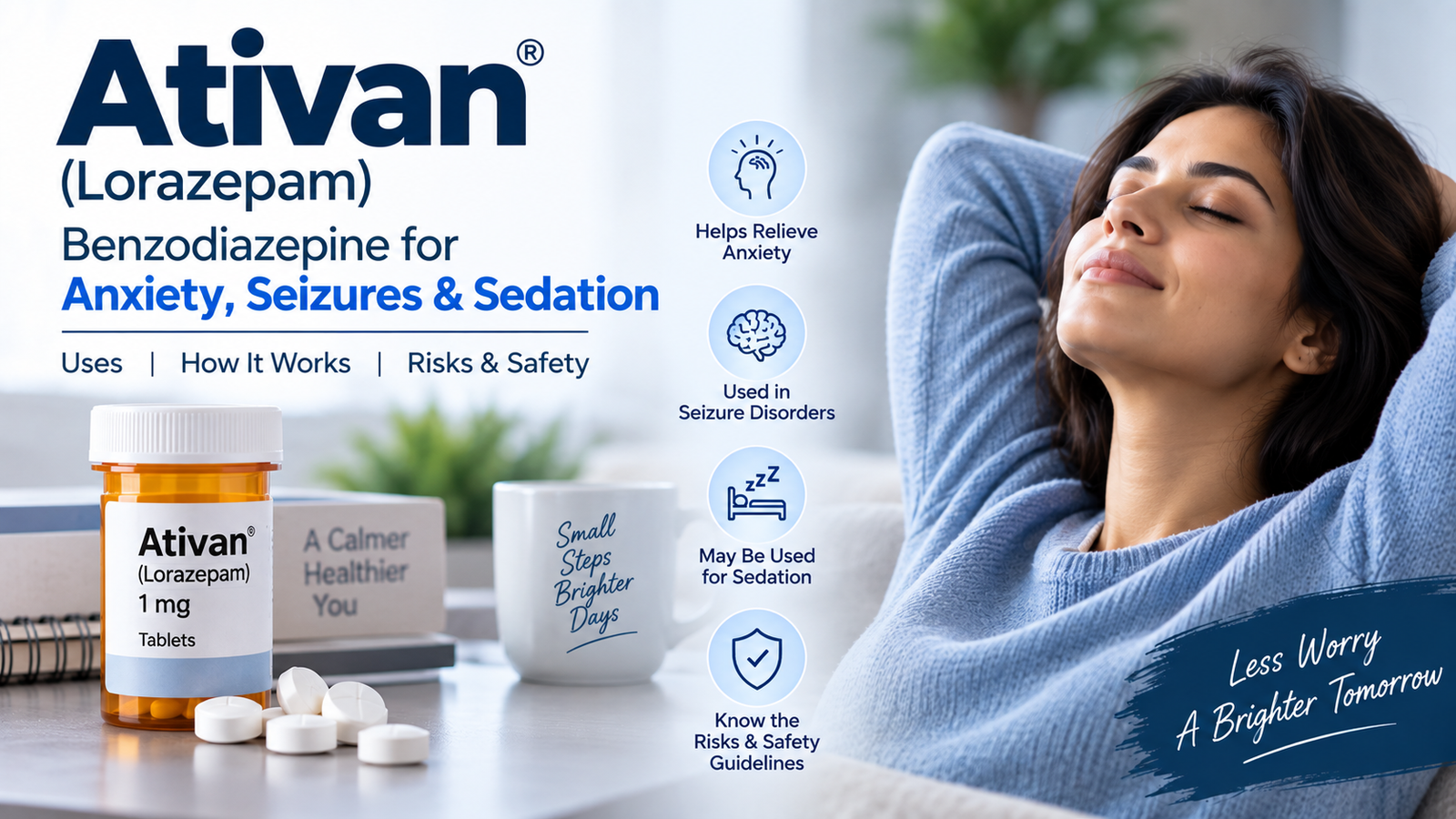
What Is Ativan (Lorazepam)?
Ativan is a brand name for lorazepam, a prescription medication belonging to the benzodiazepine class.
In the United States, oral lorazepam is indicated for the management of anxiety disorders and for the short-term relief of symptoms of anxiety or anxiety associated with depressive symptoms. Lorazepam injection has additional medical uses, including the treatment of status epilepticus and preanesthetic sedation.
Lorazepam works primarily by enhancing the activity of gamma-aminobutyric acid (GABA) in the central nervous system. GABA is an inhibitory neurotransmitter that helps reduce excessive neuronal activity.
This mechanism contributes to lorazepam’s anxiolytic, sedative, anticonvulsant, and muscle-relaxant effects.
Because lorazepam can cause sedation and physical dependence, it is a medication that requires careful prescribing. It is also classified as a Schedule IV controlled substance in the United States.
Quick Answer
Ativan (lorazepam) is a benzodiazepine prescription medication used for anxiety and, in specific medical settings, seizures and sedation. Its effects on the central nervous system can reduce excessive neuronal activity, but the medication also carries important risks involving sedation, respiratory depression, misuse, dependence, and withdrawal.

What Is Ativan Used For?
Lorazepam has different uses depending on its formulation and the clinical situation.
Anxiety Disorders
Oral lorazepam is indicated for the management of anxiety disorders and for short-term relief of anxiety symptoms.
Anxiety can involve excessive worry, nervousness, tension, restlessness, difficulty concentrating, and physical symptoms such as increased heart rate or muscle tension.
Because benzodiazepines can provide relatively rapid symptom relief, lorazepam may be prescribed in certain circumstances when short-term reduction of severe anxiety is clinically appropriate.
However, the medication is not necessarily suitable as a long-term solution for every anxiety disorder.
A healthcare professional may consider other treatments, including psychotherapy and longer-term medications, depending on the diagnosis and individual circumstances.
Seizures
Lorazepam also has an important role in emergency seizure management.
Lorazepam injection is indicated for the treatment of status epilepticus, a medical emergency involving prolonged or repeated seizures without adequate recovery between episodes.
In this setting, lorazepam is administered by healthcare professionals in an appropriate medical environment.
This use should not be confused with taking oral lorazepam at home for ordinary anxiety symptoms. Different formulations and clinical situations have different indications and administration requirements.
Sedation
Injectable lorazepam is also used for preanesthetic sedation, helping reduce anxiety and produce sedation before certain procedures or surgeries.
Because intravenous or intramuscular benzodiazepines can cause significant central nervous system depression, administration requires appropriate monitoring.
How Does Lorazepam Work?
Lorazepam belongs to the benzodiazepine class and works by enhancing the effects of GABA, an inhibitory neurotransmitter in the brain.
GABA helps reduce excessive electrical activity within the nervous system.
By increasing GABA-mediated inhibition, lorazepam can produce several pharmacological effects:
- Reduced anxiety
- Sedation
- Muscle relaxation
- Anticonvulsant activity
- Reduced central nervous system activity
This explains why the same medication can have different medical applications.
For anxiety, reducing excessive neuronal activity can produce a calming effect.
For seizures, its anticonvulsant activity can help suppress abnormal electrical activity.
For procedural sedation, its central nervous system effects can help reduce anxiety and produce sedation.
However, stronger central nervous system depression can also cause drowsiness, impaired coordination, respiratory depression, and loss of consciousness, particularly when lorazepam is combined with other depressant substances.
Lorazepam for Anxiety
Lorazepam may be prescribed when anxiety symptoms are severe enough to require medication and when a healthcare professional determines that a benzodiazepine is appropriate.
It can reduce symptoms relatively quickly compared with some medications intended for long-term anxiety management.
However, benzodiazepines are associated with risks that become increasingly important with prolonged use.
The prescribing information states that the effectiveness of lorazepam tablets for long-term use—more than four months—has not been systematically assessed.
This is one reason clinicians generally evaluate whether continued benzodiazepine treatment remains appropriate.
For persistent anxiety, treatment may also include:
- Cognitive behavioral therapy (CBT)
- SSRIs
- SNRIs
- Other medications
- Behavioral interventions
- Stress-management strategies
The best approach depends on the person’s diagnosis, symptom severity, medical history, other medications, and treatment response.
Lorazepam for Seizures and Status Epilepticus
One of the most clinically important uses of lorazepam is the treatment of status epilepticus.
Status epilepticus is a neurological emergency. Prolonged seizure activity can result in serious complications and requires immediate medical treatment.
Injectable lorazepam is used in healthcare settings because its anticonvulsant effects can help stop ongoing seizure activity.
This is different from using lorazepam as a routine daily medication for anxiety.
If someone is experiencing a prolonged seizure, repeated seizures, difficulty breathing, injury, or failure to regain consciousness, emergency medical services should be contacted immediately.
Lorazepam for Sedation Before Procedures
Lorazepam injection can be used as preanesthetic medication before certain procedures.
The goal may include reducing anxiety, producing sedation, and decreasing recall associated with the procedure.
Because sedation can affect breathing and cardiovascular function, injectable lorazepam should be administered by appropriately trained healthcare professionals with suitable monitoring and resuscitation capabilities.
This is an important distinction for patients searching for Ativan sedation information: medication used for procedural sedation is administered under controlled medical conditions and is not equivalent to taking an oral tablet independently before a procedure.
Ativan Dosage and Forms
Lorazepam is available in different formulations, including oral tablets and injectable forms.
The appropriate dose depends on:
- The condition being treated
- Age
- Medical history
- Other medications
- Response to treatment
- Formulation
- Kidney or liver considerations
- Duration of therapy
For oral lorazepam, dosing recommendations vary according to the indication.
The prescribing information emphasizes that treatment should be individualized and that the lowest effective dose should be used.
Patients should never increase their dose because they believe the medication is becoming less effective.
Similarly, injectable lorazepam has specific dosing and administration requirements and should only be given by healthcare professionals in appropriate settings.
Common Ativan Side Effects
Like other benzodiazepines, lorazepam can produce effects related to central nervous system depression.
Common lorazepam side effects may include:
- Drowsiness
- Dizziness
- Weakness
- Fatigue
- Unsteadiness
- Reduced coordination
- Confusion
- Memory difficulties
The FDA prescribing information identifies sedation, dizziness, weakness, and unsteadiness among commonly reported adverse effects associated with lorazepam.
Side effects can be more pronounced when treatment begins, after a dose increase, or when lorazepam is combined with alcohol or other sedating medications.
People should be cautious about driving or operating machinery until they understand how the medicine affects them.
Lorazepam and Next-Day Drowsiness
Although lorazepam may be taken for anxiety rather than insomnia, its sedative properties can cause prolonged drowsiness.
Some people may experience:
- Slower reaction time
- Reduced concentration
- Impaired coordination
- Sleepiness
- Difficulty performing complex tasks
These effects can increase the risk of accidents.
Older adults can be particularly susceptible to medication-related sedation and balance problems.
Patients should follow their prescription instructions and discuss persistent daytime sedation with their healthcare professional.
Serious Risks of Lorazepam
Lorazepam can cause serious adverse effects, particularly when used incorrectly or combined with other central nervous system depressants.
Respiratory Depression
Benzodiazepines can contribute to respiratory depression.
This risk becomes particularly important when lorazepam is combined with opioids.
The FDA requires benzodiazepine labeling to include strong warnings about the potentially fatal consequences of combining benzodiazepines with opioids.
Possible warning signs include:
- Extremely slow or difficult breathing
- Extreme sleepiness
- Difficulty waking
- Loss of consciousness
These symptoms require emergency medical attention.
Severe Sedation
High doses or combinations with other depressants can result in profound sedation.
Alcohol, opioids, sleep medicines, and other sedatives can increase this risk.
Ativan and Alcohol
Combining Ativan and alcohol can be dangerous.
Both substances can suppress activity in the central nervous system.
When combined, their effects may become stronger and can result in:
- Severe drowsiness
- Confusion
- Poor coordination
- Impaired judgment
- Memory problems
- Loss of consciousness
- Breathing problems
The safest approach is to discuss alcohol consumption with the prescribing healthcare professional and avoid combining alcohol with lorazepam unless specifically advised otherwise.
Lorazepam and Opioids
The combination of lorazepam and opioids is an important medication-safety concern.
Opioids can suppress breathing, while benzodiazepines can increase sedation and central nervous system depression.
The FDA warns that combining benzodiazepines with opioids can lead to extreme sleepiness, respiratory depression, coma, and death.
Patients should never combine these medications on their own.
If both are prescribed, the healthcare professional should carefully evaluate the benefits and risks and provide appropriate instructions.
Other Lorazepam Drug Interactions
Lorazepam can interact with other medicines and substances that affect the central nervous system.
Potentially important combinations include:
- Opioid pain medicines
- Other benzodiazepines
- Sleeping pills
- Sedating antihistamines
- Muscle relaxants
- Certain psychiatric medications
- Alcohol
- Other central nervous system depressants
Patients should provide their healthcare professional with a complete list of medicines and supplements they use.
This includes over-the-counter medicines and herbal products.
A complete medication review can help identify interactions that may increase sedation or other adverse effects.
Can Lorazepam Cause Dependence?
Yes.
Lorazepam can cause physical dependence, particularly with continued use.
Physical dependence means that the body has adapted to the medication. If treatment is stopped abruptly, withdrawal symptoms can occur.
Dependence is not identical to addiction, although benzodiazepines can also be misused and can contribute to substance-use problems.
The FDA’s benzodiazepine boxed warning emphasizes risks involving abuse, misuse, addiction, physical dependence, and withdrawal reactions.
The risk varies between individuals and can be influenced by factors such as dose, treatment duration, and personal history.
Lorazepam Withdrawal
Stopping lorazepam suddenly after regular use can cause withdrawal.
Possible lorazepam withdrawal symptoms include:
- Anxiety
- Irritability
- Insomnia
- Restlessness
- Tremors
- Sweating
- Headache
- Muscle pain
- Difficulty concentrating
- Sensory disturbances
Severe withdrawal can include seizures, hallucinations, psychosis, or other serious neurological and psychiatric reactions.
For this reason, patients who have been taking lorazepam regularly should not suddenly stop treatment without medical guidance.
A healthcare professional can determine whether the medication should be reduced gradually and develop an individualized tapering strategy when appropriate.
How Long Can You Take Lorazepam?
The appropriate duration depends on why lorazepam was prescribed.
For anxiety, clinicians generally consider the potential benefits against the risks of prolonged benzodiazepine exposure.
The prescribing information notes that long-term effectiveness of lorazepam tablets beyond four months has not been systematically evaluated.
This does not mean that every patient must stop at a specific time. Rather, continued treatment should be periodically reassessed.
If anxiety remains persistent, a healthcare professional may consider longer-term treatment strategies, including psychotherapy or other medications.
Who Should Not Take Ativan?
Certain patients require particular caution or may not be appropriate candidates for lorazepam.
The prescribing information lists acute narrow-angle glaucoma as a contraindication for lorazepam tablets and warns about use in certain respiratory and medical conditions.
Additional considerations include:
- Severe respiratory problems
- Sleep apnea
- Liver disease
- Older age
- Pregnancy
- Breastfeeding
- History of substance misuse
- Depression or other psychiatric disorders
- Concurrent opioid therapy
- Other sedating medications
A healthcare professional should evaluate the complete clinical picture before prescribing lorazepam.
Lorazepam in Older Adults
Older adults can be more sensitive to benzodiazepines.
Sedation, impaired coordination, confusion, and balance problems can increase the risk of falls and injuries.
For this reason, clinicians may use lower doses and monitor older patients particularly carefully.
Anyone caring for an older adult taking lorazepam should watch for unusual confusion, excessive sleepiness, impaired walking, or other significant changes and communicate concerns to the healthcare professional.
Lorazepam During Pregnancy and Breastfeeding
Pregnancy and breastfeeding require special consideration.
The FDA prescribing information contains warnings regarding benzodiazepine exposure during pregnancy and notes that lorazepam and its metabolite can cross the placenta. Neonates exposed to benzodiazepines may experience sedation, respiratory depression, or withdrawal-related effects.
Lorazepam also passes into breast milk.
Anyone who is pregnant, planning pregnancy, or breastfeeding should discuss lorazepam use with a healthcare professional.
Importantly, someone who has been taking lorazepam regularly should not abruptly discontinue it solely because pregnancy has occurred. Sudden benzodiazepine withdrawal can create its own serious risks.
Ativan vs. Other Anxiety Medications
Lorazepam is one of several approaches to treating anxiety.
Depending on the diagnosis, healthcare professionals may consider:
| Treatment | Typical role |
|---|---|
| Lorazepam | Short-term or selected anxiety treatment |
| SSRIs | Longer-term treatment for several anxiety disorders |
| SNRIs | Longer-term treatment for several anxiety disorders |
| CBT | Evidence-based psychological treatment |
| Lifestyle interventions | Supportive management |
The right choice depends on the specific anxiety disorder and individual circumstances.
Cognitive behavioral therapy (CBT) can help patients identify and change thought and behavior patterns associated with anxiety.
For some people, a longer-term medication may be more appropriate than continued benzodiazepine use.
Is Ativan Addictive?
The word “addictive” is often used broadly, so it is useful to distinguish physical dependence, misuse, and addiction.
Lorazepam can cause physical dependence, meaning the body adapts to continued exposure and withdrawal can occur when the medication is reduced or stopped.
Benzodiazepines can also be misused, and the FDA requires warnings about abuse, misuse, and addiction.
Taking more than prescribed, taking someone else’s medication, using it for recreational effects, or combining it with other substances can increase risk.
Because lorazepam is a Schedule IV controlled substance, prescriptions should be used only by the person for whom they were prescribed.
Frequently Asked Questions About Ativan and Lorazepam
What is Ativan used for?
Ativan (lorazepam) is used for anxiety disorders. Injectable lorazepam also has medical indications for status epilepticus and preanesthetic sedation.
Is Ativan a benzodiazepine?
Yes. Ativan is the brand name for lorazepam, a benzodiazepine medication.
How does lorazepam work?
Lorazepam enhances the effects of GABA, an inhibitory neurotransmitter in the central nervous system. This reduces excessive neuronal activity and produces calming and sedative effects.
Can lorazepam be used for seizures?
Yes. Injectable lorazepam is indicated for the treatment of status epilepticus in an appropriate medical setting.
Can Ativan cause dependence?
Yes. Regular or prolonged use can result in physical dependence, and abrupt discontinuation can cause withdrawal.
Can I stop lorazepam suddenly?
No. If you have been taking lorazepam regularly, speak with your healthcare professional before stopping. Abrupt discontinuation can cause serious withdrawal reactions, including seizures.
Can you take Ativan with alcohol?
Combining lorazepam and alcohol can increase central nervous system depression and may cause dangerous sedation and impairment.
Can lorazepam be taken with opioids?
The combination can cause severe sedation and respiratory depression and may be life-threatening. It should only be used together when specifically prescribed and monitored by a healthcare professional.
Is Ativan safe for long-term anxiety?
Long-term benzodiazepine treatment requires careful reassessment because of risks involving tolerance, dependence, withdrawal, and other adverse effects. The long-term effectiveness of lorazepam tablets beyond four months has not been systematically assessed.
Is lorazepam a controlled substance?
Yes. Lorazepam is classified as a Schedule IV controlled substance in the United States.
Key Takeaways
Ativan (lorazepam) is a prescription benzodiazepine with several important medical applications.
Its primary oral use is for anxiety disorders, while injectable lorazepam has additional uses in medical settings, including status epilepticus and preanesthetic sedation.
The medication works by enhancing GABA-mediated inhibition in the central nervous system. This can reduce anxiety and suppress excessive neurological activity, but it can also cause sedation and impaired coordination.
The most important safety points are:
- Lorazepam is a benzodiazepine.
- It is used for anxiety disorders and, in injectable form, certain seizure and sedation indications.
- It can cause drowsiness, dizziness, weakness, and impaired coordination.
- Lorazepam can cause physical dependence and withdrawal.
- Abrupt discontinuation after regular use can cause serious withdrawal reactions.
- Alcohol and other CNS depressants can increase sedation.
- Combining benzodiazepines with opioids can cause potentially fatal respiratory depression.
- Long-term treatment should be regularly reassessed.
- Lorazepam should be taken only according to the prescribing healthcare professional’s instructions.
For people prescribed Ativan, understanding both its benefits and risks is essential. Medication decisions should be individualized according to the diagnosis, medical history, other medications, and treatment goals.
Medical Disclaimer
This article is intended for general educational and informational purposes only. It does not constitute medical advice, diagnosis, or treatment. Prescription medication information may change, and individual treatment decisions depend on a patient’s medical history, diagnosis, current medications, and other factors. Do not start, stop, increase, decrease, or combine lorazepam with other medications or alcohol without guidance from a qualified healthcare professional. If someone experiences severe breathing difficulty, extreme sedation, loss of consciousness, a prolonged seizure, or another medical emergency, seek emergency medical care immediately.