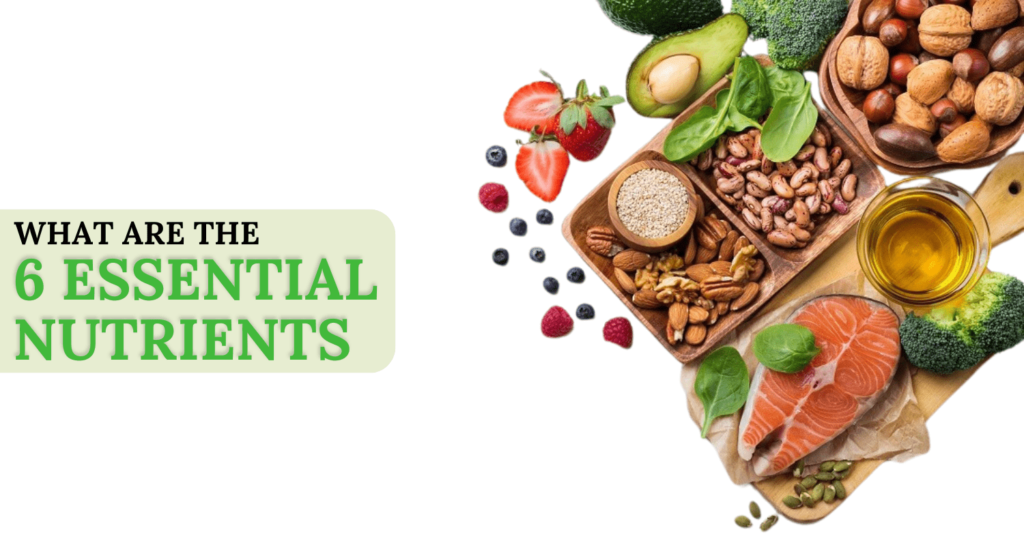
Did you know the human body depends on six essential nutrients every day to function properly?
These nutrients support:
- energy production
- growth and repair
- immune protection
- brain function
- hormone balance
- disease prevention
Understanding what the 6 essential nutrients are helps you build a healthier and more balanced diet.
Let’s explore each one and why your body needs them daily.
Key Takeaways
- The body needs six essential nutrients every day
- They are divided into macronutrients and micronutrients
- Macronutrients provide energy
- Micronutrients support body functions
- Water is an essential nutrient required for survival
The 6 Essential Nutrients Your Body Needs
The six essential nutrients include:
Macronutrients
Needed in larger amounts:
- carbohydrates
- proteins
- fats
Micronutrients
Needed in smaller amounts:
- vitamins
- minerals
Plus One Critical Nutrient
- water 💧
All six are necessary for optimal health.
1. Protein
Protein supports:
- muscle growth
- tissue repair
- enzyme production
- hormone balance
- immune strength
Proteins are made from amino acids, including essential amino acids the body cannot produce on its own.
Healthy Protein Sources
Include:
- chicken
- fish
- eggs
- beans
- lentils
- tofu
- nuts
- dairy products
Most adults need about 0.8 grams per kilogram of body weight daily, though needs increase with activity level.
2. Carbohydrates
Carbohydrates are the body’s main energy source.
They fuel:
- brain activity
- muscles
- metabolism
- physical movement
There are two main types:
Complex Carbohydrates (Best Choice)
Found in:
- whole grains
- legumes
- vegetables
- oats
- brown rice
They provide steady energy and fiber.
Simple Carbohydrates
Found in:
- fruit
- milk
- sugar
- processed snacks
These provide quick energy but should be balanced with complex carbs.
Experts recommend carbohydrates make up 45–65% of daily calories.
3. Fats
Healthy fats are essential for:
- brain function
- hormone production
- vitamin absorption
- cell structure
- skin health
There are two main types to understand.
Healthy Fats (Recommended)
Sources include:
- olive oil
- avocados 🥑
- nuts
- seeds
- fatty fish
These support heart health.
Saturated Fats (Limit Intake)
Common sources:
- butter
- red meat
- full-fat dairy
Too much may increase risk of Heart Disease.
Moderation is important.
4. Vitamins
Vitamins support many body systems, including:
- immunity
- vision
- metabolism
- skin health
- nerve function
There are 13 essential vitamins, including:
- vitamin A
- vitamin B-complex
- vitamin C
- vitamin D
- vitamin E
- vitamin K
Vitamin-Rich Foods
Include:
- fruits 🍊
- vegetables 🥦
- dairy
- eggs
- whole grains
- fortified foods
Eating colorful foods helps ensure adequate vitamin intake.
5. Minerals
Minerals strengthen:
- bones
- muscles
- nerves
- blood circulation
- hydration balance
Important minerals include:
- calcium
- iron
- zinc
- magnesium
- potassium
Mineral-Rich Foods
Sources include:
- leafy greens
- nuts
- seeds
- dairy products
- whole grains
- legumes
Iron supports oxygen transport through hemoglobin in red blood cells.
6. Water
Water is often overlooked—but it is one of the most important essential nutrients.
It helps:
- regulate body temperature
- transport nutrients
- remove waste
- support digestion
- maintain energy levels
Even mild dehydration can affect concentration and metabolism.
Most adults need about 2–3 liters daily, depending on activity level and climate.
Why These Nutrients Matter for Disease Prevention
A balanced intake of essential nutrients helps reduce risk of:
- Obesity
- Type 2 Diabetes
- Heart Disease
- nutrient deficiencies
Eating a variety of whole foods ensures better long-term health outcomes.
How to Get All 6 Essential Nutrients Daily
A balanced plate should include:
✔ fruits and vegetables
✔ whole grains
✔ lean proteins
✔ healthy fats
✔ dairy or alternatives
✔ enough water
Variety is the key to meeting daily nutrition needs.
Final Thoughts
Understanding what the 6 essential nutrients are is the first step toward building a healthier lifestyle.
These nutrients support:
- energy production
- immunity
- growth
- organ function
- long-term disease prevention
By eating a balanced diet rich in whole foods and staying hydrated, you can provide your body with everything it needs to function at its best 🌿