

Dehydration in Older Adults: Warning Signs, Risks and a Daily Prevention Plan
Direct answer: Dehydration happens when your body loses more fluid than it takes in, and it is one of the most common — and most preventable — health problems after age 60. Older adults dehydrate more easily because the sense of thirst weakens with age, the kidneys conserve water less well, and many common medicines…
Direct answer: Dehydration happens when your body loses more fluid than it takes in, and it is one of the most common — and most preventable — health problems after age 60. Older adults dehydrate more easily because the sense of thirst weakens with age, the kidneys conserve water less well, and many common medicines increase fluid loss. The early signs are easy to miss: a dry mouth, dark-colored urine, unusual tiredness, a headache or lightheadedness. More serious dehydration can cause confusion, fainting, a rapid heartbeat and very little urination — and at that point it can be life-threatening and needs urgent medical care. The fix for most people is simple and practical: drink fluids regularly through the day instead of waiting to feel thirsty, keep water within easy reach, eat water-rich foods, and drink extra during hot weather or illness. If you have heart failure, kidney disease or a fluid limit from your doctor, your target is different — ask your doctor how much is right for you.
Important disclaimer: This article is general information only. It is not medical advice, and it does not replace advice from your doctor or pharmacist. Do not use this information instead of medical care. If you or someone you care for has confusion, fainting, no urination, a rapid heartbeat or rapid breathing, seek medical help right away — severe dehydration can be life-threatening. If you have heart failure, kidney disease, liver disease or a fluid restriction, talk to your doctor before increasing how much you drink.
Why Older Adults Dehydrate More Easily
Dehydration is not just a hot-weather problem, and it is not a sign of neglect. Aging changes the way the body handles water in several ways at once, and most of them are invisible until a problem appears.
Thirst fades. The thirst signal — the brain’s prompt to drink — becomes weaker and slower with age. By the time many older adults feel thirsty, they may already be mildly dehydrated. This is the single most important fact in this article: after 60, you cannot rely on thirst alone to tell you when to drink.
The body holds less water. As we age, muscle is gradually replaced by fat, and muscle holds far more water than fat does. That means an older body has a smaller fluid reserve to draw on. A day of low intake or a bout of diarrhea that a younger person would shrug off can tip an older adult into dehydration quickly. This is one more reason to protect muscle as you age — see our guide to muscle loss after 50.
Kidneys conserve water less well. Healthy kidneys concentrate urine to save water when intake is low. With age, that ability weakens, so more water is lost in urine even when the body needs it. Chronic kidney disease, diabetes and other common conditions make this worse.
Medicines increase fluid loss. Many medicines taken every day by older adults affect fluid balance. Diuretics (“water pills”) prescribed for blood pressure or heart failure deliberately increase urination. Some blood pressure medicines, laxatives, and medicines for diabetes also increase fluid loss. None of this means you should stop a prescribed medicine — never do that without talking to your doctor — but it does mean you need a deliberate drinking plan if you take them.
Illness, heat and mobility add risk. Fever, vomiting and diarrhea all drain fluid fast. Hot weather and heated homes in winter both increase losses. And practical barriers matter too: difficulty walking to the kitchen, fear of needing the bathroom at night, trouble swallowing, or simply living alone and forgetting to drink. For someone with dementia, the problem is sharper still — they may not recognize thirst, ask for a drink, or remember to drink at all.
Warning Signs: What to Watch For, From Mild to Severe
Dehydration usually builds gradually, and the early signs are mild enough to blame on a bad night’s sleep or a hot day. Knowing the stages helps you act early, when a glass of water is still enough.
Early signs (mild dehydration)
- Feeling very thirsty or having a dry, sticky mouth
- Urinating less often than usual, with darker, strong-smelling urine
- Dry skin, chapped lips, or a dry tongue
- Feeling unusually tired, weak or headachy
- Mild dizziness, especially when standing up quickly
Signs it is getting worse (moderate dehydration)
- Very dark urine, or going many hours without urinating
- Noticeable dizziness or lightheadedness on standing
- A dry mouth that water does not seem to fix
- Muscle cramps, a fast heartbeat, or feeling unusually confused or irritable
- Sunken eyes or skin that stays pinched up when gently pulled (less reliable in older skin, but worth noting)
Red flags — seek urgent medical care
According to MedlinePlus on dehydration, get medical help right away if dehydration symptoms also include confusion, fainting, lack of urination, rapid heartbeat or rapid breathing. Severe dehydration can lead to shock, kidney failure and death, and it may need intravenous (IV) fluids in a hospital — drinking alone may not be enough at that stage. Call your doctor, an urgent-care clinic or 911 if any of these appear, and do not wait to see whether it passes.
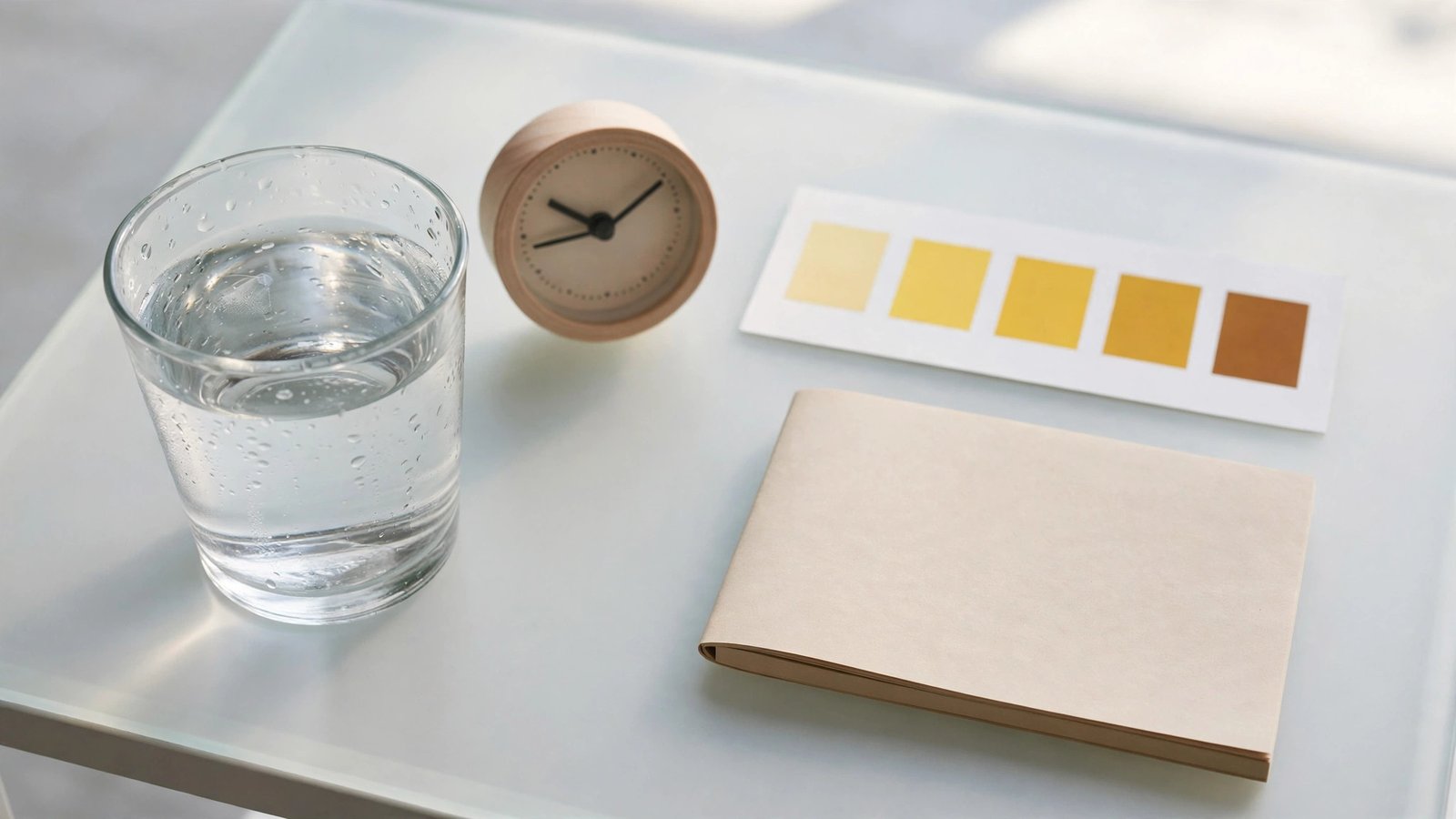
A quick check anyone can do at home is the urine color check: pale straw yellow is a good sign; dark amber or honey-colored urine usually means you need more fluid. It is not a perfect test — some medicines and vitamins change urine color — but as a daily habit it is simple and useful. Also note how often you urinate: far fewer trips than usual is a warning sign in itself.
Dehydration, Confusion, Falls and UTIs: The Hidden Chain Reaction
Dehydration rarely stays a single problem. In older adults it often sets off a chain of events that looks like something else entirely — and that is what makes it dangerous.
Sudden confusion is the classic trap. A person who was sharp yesterday becomes confused, agitated or unusually sleepy today, and the family worries it is dementia or a stroke. Sometimes it is — but sometimes the cause is dehydration, and it improves quickly once fluids are restored. Any sudden change in thinking or alertness in an older adult should be treated as urgent and checked by a clinician the same day. Do not assume it is “just old age.”
Dizziness leads to falls. Low fluid volume lowers blood pressure, especially on standing — the room spins, the legs feel weak, and a fall follows. Falls are already the leading cause of injury in older adults, and dehydration is a preventable contributor. Our room-by-room fall prevention checklist for seniors at home covers the home side of the problem; steady hydration covers the body side.
Dehydration and urinary tract infections feed each other. Drinking too little concentrates the urine and means less frequent flushing of the bladder, which can raise the risk of a urinary tract infection (UTI). And a UTI itself — especially in older adults — can cause confusion, falls and fatigue, which in turn reduce drinking. If someone is drinking less because they are afraid of leaking or of nighttime bathroom trips, that fear needs a conversation with a doctor, not silent fluid restriction. Limiting fluids to avoid the bathroom is one of the most common and most harmful mistakes in this area.
Kidneys and electrolytes take the strain. Severe or repeated dehydration can injure the kidneys and disturb the body’s salts — sodium and potassium — which the heart and brain depend on. Blood tests can check kidney function and electrolyte levels, and kidney function is one of the routine checks covered in our guide to health screenings by age.
How Much Water Should You Drink Each Day?

There is no single number that fits everyone, and any article that gives you one without conditions is oversimplifying. The right amount depends on your age, body size, climate, activity level, health conditions and medicines.
As a general guide, the NIH notes that experts generally recommend around 9 cups of fluids a day for women and 13 cups for men on average, counting all fluids — not just plain water. That is a population average, not a prescription. Older adults often need a deliberate routine to reach even a modest target, because thirst no longer prompts them. Research funded by the NIH has also linked staying well hydrated in middle age with a lower risk of chronic disease and slower aging — another reason this simple habit is worth taking seriously. Read the full summary in the NIH News in Health article on hydrating for health.
Three important exceptions:
- If you have heart failure, kidney disease or liver disease, your doctor may have set a fluid limit. In that case, your doctor’s number overrides any general guidance — including this article’s. Never increase fluids sharply against medical advice.
- If you take diuretics (“water pills”) or diabetes medicines that increase urination, ask your doctor or pharmacist how much fluid you should aim for and whether you need extra on hot days.
- On hot days, during illness, or after exercise, you need more than usual. Fever, vomiting, diarrhea and sweating all increase losses, and the extra fluid should be replaced the same day — small, frequent sips are better than large amounts at once, especially if your stomach is unsettled.
One more caution: it is possible to drink too much plain water, which can dilute the blood’s sodium (a condition called hyponatremia). This is uncommon, but the risk rises if you drink very large volumes quickly, especially if you take certain medicines. The practical rule is to drink steadily through the day, not to force large amounts, and to talk to your doctor if you are ever told your sodium is low.
Medicines and Health Conditions That Raise Your Risk
If any of the following apply to you, your hydration plan deserves extra attention — and a quick word with your doctor or pharmacist:
- Diuretics (water pills) such as furosemide or hydrochlorothiazide, prescribed for blood pressure or heart failure
- Blood pressure medicines such as ACE inhibitors and ARBs, which change how the kidneys handle fluid and salt
- Diabetes medicines that increase urination, including SGLT2 inhibitors
- Laxatives used regularly, which increase fluid loss through the bowel
- Diabetes itself, especially when blood sugar runs high, because the kidneys pass more water
- Kidney disease, which reduces the kidneys’ ability to conserve water
- Dementia or memory problems, which make it easy to forget to drink or hard to recognize thirst
- Swallowing difficulties or mobility problems, which make getting a drink a physical effort
- Fever, vomiting or diarrhea from any illness — these are the fastest routes to dehydration at any age
Bring a full medicine list — including over-the-counter medicines, vitamins and supplements — to your checkups. The Medicare Annual Wellness Visit is a good time to ask your doctor to review your medicines and your fluid needs together. And if you take a supplement such as vitamin D, it is worth knowing that a blood test can show whether you actually need it — see our guide on vitamin D for seniors for what the test means and what levels to ask about.
Your Daily Prevention Plan: A Simple Routine That Works

Prevention is easier than recovery. The plan below is designed for a typical older adult with no fluid restriction. If your doctor has set a limit, adapt the routine to your number — the habit matters more than the exact amount.
Morning: start hydrated
- Drink a full glass of water when you wake up, before coffee. Keep a glass or bottle on your nightstand so it is the first thing you see.
- Have a glass of water or milk with breakfast. Tea and coffee count toward fluids in normal amounts — the old idea that they dehydrate you is not supported for regular drinkers — but water should still be the mainstay.
- Take morning medicines with a full glass of water unless your pharmacist says otherwise.
Through the day: small sips, on a schedule
- Link drinking to routine moments: a glass with each meal, one mid-morning, one mid-afternoon, one with an evening snack. A schedule beats relying on thirst.
- Keep water where you sit. A bottle or jug on the table beside your chair removes the trip to the kitchen. Refill it at set times so you can see how much you have had.
- Use a marked bottle or a simple tally. A bottle with time markings, or a tick on a notepad each time you finish a glass, turns an invisible habit into a visible one. For caregivers, a daily tally is one of the most useful tools there is.
- Eat your water. Soup, yogurt, milk, fruit and vegetables all contribute. Watermelon, oranges, cucumber, tomatoes and lettuce are mostly water. A bowl of soup at lunch is an easy, pleasant way to add a cup of fluid.
- Flavor it if plain water bores you. A slice of lemon, cucumber or orange, a splash of 100% juice, or sparkling water can make drinking easier. Avoid making sugary soda or sweetened drinks your main source — they add calories and little nutrition.
Evening: plan for the night without overdoing it
- Drink steadily through the evening, but taper off an hour or two before bed if nighttime bathroom trips disturb your sleep — do not stop drinking altogether.
- Keep a small glass or bottle by the bed for the night and for the morning.
- If you wake at night, a few sips are fine.
Hot weather and illness: step it up
- In heat: drink extra before you go out, carry water with you, rest in shade or air conditioning, and watch for headache, dizziness or cramps — early signs of heat exhaustion. Older adults are more vulnerable to heat illness, and dehydration is usually part of it.
- During illness: with fever, vomiting or diarrhea, take small, frequent sips of water or an oral rehydration solution, or suck on ice chips if you cannot keep liquids down. If you cannot keep any fluids down, or you have not urinated for many hours, seek medical care the same day.
- After exercise or gardening: drink before, during and after activity, even if you do not feel thirsty.
What Counts as Fluid — and What Does Not Help
Almost any drink counts toward your daily total, but they are not all equal.
| Drink | Counts? | Notes |
|---|---|---|
| Water | Yes — best choice | Plain, sparkling or flavored with fruit; no calories, no sugar |
| Milk and milk alternatives | Yes | Adds calcium, vitamin D and protein; a good choice with meals |
| Tea and coffee (plain) | Yes, in normal amounts | Regular drinkers do not lose extra fluid from moderate caffeine; keep sugar out |
| Soup, broth and yogurt | Yes | Useful for people who struggle to drink enough |
| 100% juice | Yes, in small amounts | Adds calories and sugar, so a small glass is enough |
| Sports drinks | Sometimes | Helpful after heavy sweating or illness to replace salts, but many are high in sugar — use only when needed |
| Sugary soda and sweetened drinks | Counts as fluid, but a poor choice | Adds many calories with little nutrition; do not rely on them |
| Alcohol | No — it works against you | Alcohol increases urination and worsens dehydration; avoid it, especially in heat or illness |
The NIH’s advice matches this table: get fluids mainly from water or other low-calorie drinks, and do not rely on soda or sugary drinks for most of your fluids.
Common Mistakes That Lead to Dehydration
- Waiting to feel thirsty. After 60, thirst is a late signal, not an early one. Drink on a schedule instead.
- Cutting back on fluids to avoid the bathroom. This raises the risk of dehydration, UTIs, constipation and falls — and it does not solve the underlying bladder problem. Talk to your doctor about the real cause.
- Drinking a lot at once, then nothing for hours. The kidneys pass a large sudden intake quickly. Steady sipping through the day hydrates better.
- Forgetting fluids when ill. Fever, vomiting and diarrhea increase losses exactly when drinking feels hardest. Small sips and ice chips help.
- Assuming coffee and tea do not count. They do count in normal amounts — but they should not be your only fluids.
- Not adjusting for heat. A routine that works in winter may be far too little on a hot summer day or in a heated house.
- Ignoring a sudden change in thinking. New confusion, unusual sleepiness or a sudden fall should never be written off as “just aging” — check hydration and get medical advice the same day.
- Stopping a prescribed medicine to “save water.” Never stop a diuretic or blood pressure medicine on your own. Ask your doctor whether your fluid target should change instead.
When to Seek Medical Care
Call your doctor or an urgent-care clinic the same day if you notice:
- You have not urinated for 8 hours or more, or your urine is very dark and there is very little of it
- Dizziness or confusion that does not clear after drinking fluids and resting
- A rapid heartbeat, rapid breathing, or feeling faint
- Vomiting or diarrhea that prevents you from keeping fluids down
- A fever with signs of dehydration
- Swelling, unusual shortness of breath, or sudden weight gain after drinking more — especially if you have heart or kidney disease
Call 911 or go to the emergency department immediately for fainting, severe confusion, inability to urinate, or signs of shock such as cold, clammy skin and a very fast pulse. Tell the responders how much you have drunk, what medicines you take, and when the symptoms began.
Frequently Asked Questions
How much water should a 70-year-old drink each day?
There is no single number. As a rough guide, experts generally suggest around 9 cups of fluids a day for women and 13 cups for men, counting all drinks and water-rich foods — but your own target depends on your health, medicines, climate and activity. If you have heart failure or kidney disease, your doctor may set a lower limit, and that limit comes first. Ask your doctor for your personal number at your next visit.
What are the first signs of dehydration in older adults?
The earliest signs are usually a dry or sticky mouth, feeling very thirsty, urinating less often with darker urine, unusual tiredness, a headache, or mild dizziness when standing. Because thirst weakens with age, the first sign may be tiredness or a headache rather than thirst — which is why a daily drinking routine matters more than waiting to feel thirsty.
Can dehydration cause confusion in elderly people?
Yes. Dehydration is a common cause of sudden confusion, agitation or unusual sleepiness in older adults, and it can look like dementia or delirium. Any sudden change in thinking should be checked by a clinician the same day. If dehydration is the cause, the confusion often improves once fluids are restored — but the underlying cause still needs a proper medical check.
Is it safe for seniors to drink a lot of water?
For most healthy older adults, drinking steadily through the day is safe and sensible. But drinking very large amounts of plain water very quickly can dilute blood sodium, and people with heart failure, kidney disease or liver disease may have a fluid limit set by their doctor. Drink regularly, do not force huge volumes, and follow your doctor’s advice if you have one of these conditions.
Does coffee dehydrate you?
For regular coffee and tea drinkers, moderate amounts do not cause net dehydration — they count toward daily fluids. The old warning that coffee “cancels out” water is not supported for people who drink it every day. Still, water should be your main drink, and sugary coffee drinks add calories without adding nutrition.
What should I do if an older parent will not drink enough?
Make it easy and routine: keep water within arm’s reach, offer a glass with every meal and snack, use a marked bottle or a daily tally, flavor water with lemon or cucumber, and offer soup, milk, yogurt and water-rich fruit. If they resist because of bathroom worries, incontinence or swallowing difficulty, raise it with their doctor — those are treatable problems, and restricting fluids makes things worse. If they suddenly stop drinking, become confused or stop urinating, seek medical care the same day.
What is the best drink for dehydration in older adults?
For mild dehydration, plain water is the best first choice, taken in small, frequent sips. If there has been heavy sweating, vomiting or diarrhea, an oral rehydration solution or a sports drink can help replace salts as well as fluid — but check sugar content and ask a pharmacist if you have diabetes or take medicines affected by potassium or sodium. Severe dehydration needs medical care and may require IV fluids in hospital.
How can I tell if I am dehydrated?
Check your urine: pale straw yellow usually means you are drinking enough; dark amber means you probably need more fluid. Also notice how often you urinate, whether your mouth feels dry, and whether you feel unusually tired, headachy or dizzy. If several of these signs appear together, drink fluids and rest — and seek care promptly if confusion, fainting, very little urination or a rapid heartbeat appear.
Conclusion: A Small Habit With a Big Payoff
Dehydration in older adults is common, it is often missed, and it is usually preventable. The reason it catches so many people out is simple: the body’s warning system gets quieter with age. Thirst fades, kidneys conserve less, medicines add to the losses, and the first signs — tiredness, a headache, dark urine — are easy to blame on something else. Left alone, it can lead to confusion, falls, urinary infections and hospital visits that nobody needed.
The answer is not complicated, and it does not cost anything. Drink on a schedule instead of waiting for thirst. Keep water where you sit. Eat water-rich foods. Drink extra in heat and illness. Watch urine color and how often you go. And treat any sudden confusion, fainting or lack of urination as urgent — because it is.
If you found this helpful, start today: put a glass of water beside your chair, and bring your fluid and medicine questions to your next checkup — the Medicare Annual Wellness Visit is a good place to do it. And if you care for an older parent, share this guide with the rest of the family so everyone is watching for the same signs.
This article is general information only and is not medical advice. Talk to your doctor or pharmacist about how much fluid is right for you, especially if you have heart failure, kidney disease or liver disease, take diuretics or other medicines that affect fluid balance, or have been told to limit fluids.






4 Comments