

How Much Sleep Do You Need After 50, 60 and 70? Plus a Senior Sleep Routine
The Short Answer: Most Adults Over 50 Still Need 7–9 Hours a Night If you are 50, 60 or 70, you probably still need 7 to 9 hours of sleep every night — about the same as a healthy adult in their 30s. That is the clearest answer in this guide, and it comes straight…
The Short Answer: Most Adults Over 50 Still Need 7–9 Hours a Night
If you are 50, 60 or 70, you probably still need 7 to 9 hours of sleep every night — about the same as a healthy adult in their 30s. That is the clearest answer in this guide, and it comes straight from the U.S. Centers for Disease Control and Prevention (CDC), which recommends 7 or more hours for adults aged 18 to 60, and 7 to 8 hours for adults aged 61 to 64 and 65 and older.
So if you regularly sleep only 5 or 6 hours and wake up tired, that is not your body “needing less sleep because you are older.” It is usually a sign that your sleep has become lighter, more broken up, or squeezed by habits and health issues — and that is something you can often improve.
This guide explains exactly how sleep needs change in your 50s, 60s and 70s, why your sleep feels different now, what too little (or too much) sleep can do to your health, and a practical senior sleep routine you can start tonight. Everything here is general information, not medical advice — if sleep problems are affecting your daily life, talk with your doctor.
Key Takeaways
- Most adults aged 50, 60 and 70 still need 7–9 hours of sleep per night; the CDC recommends 7–8 hours for adults 65 and older.
- What changes with age is usually sleep quality, not the amount your body needs: lighter sleep, more awakenings and earlier wake times are common.
- Consistently sleeping under 7 hours is linked to higher risks of heart disease, type 2 diabetes, high blood pressure, falls and memory problems.
- Regularly sleeping more than 9–10 hours and still feeling tired can be a sign of an underlying health issue worth discussing with a doctor.
- A fixed wake time, morning daylight, daytime movement, a caffeine cut-off and a calm wind-down routine are the most reliable building blocks of better sleep after 50.
How Much Sleep Do You Need at 50, 60 and 70?
The honest answer is that the number barely changes — but the experience of sleep does. Here is how it breaks down by decade.
In Your 50s: 7–9 Hours
In your 50s, the target is 7 to 9 hours. This is also the decade when many people first notice sleep getting lighter. Work stress, caregiving, hot flashes during menopause, an enlarging prostate, new medications and the first signs of sleep apnea can all start chipping away at sleep quality. Many people in their 50s still think they can “get by” on 6 hours because they did in their 30s — but recovery is slower now, and the cost shows up faster: foggy thinking, irritability and higher blood pressure.
In Your 60s: 7–8 Hours
The CDC recommends 7 to 8 hours for adults aged 61 to 64. In practice, most sleep experts still use the 7-to-9-hour range for healthy adults in their 60s, because individual needs vary. What is new in your 60s is often a stronger shift toward earlier sleep and earlier waking — the internal clock moves forward. You may feel sleepy at 8:30 p.m. and wide awake at 4:30 a.m. That early schedule is not a problem in itself, as long as the total sleep adds up to 7 hours or more.
At 70 and Beyond: 7–8 Hours
For adults 65 and older, the CDC recommends 7 to 8 hours per night. By your 70s, deep sleep — the most physically restorative stage — is noticeably shorter than it was at 40. Nighttime trips to the bathroom, joint pain, and medications become more common causes of broken sleep. The goal stays the same: 7 to 8 hours of reasonably unbroken sleep, even if it takes a more deliberate routine to get there.
| Age group | Recommended sleep | What usually changes |
|---|---|---|
| 50–60 | 7–9 hours | Sleep gets lighter; stress, menopause, prostate and new medicines start to interfere |
| 61–64 | 7–8 hours (CDC) | Earlier sleep and wake times; deep sleep shortens |
| 65 and older | 7–8 hours (CDC) | More awakenings; bathroom trips, pain and medicines break up the night |
The pattern is clear: the amount of sleep you need stays close to 7 to 9 hours for life. The work shifts from getting enough hours to protecting the quality of those hours.

Why Sleep Changes After 50
If you sleep worse now than you did at 35, you are not imagining it. Several normal age-related changes stack up at once.
Your Internal Clock Shifts Earlier
Your circadian rhythm — the internal clock that tells you when to feel sleepy and when to wake — tends to advance with age. Melatonin, the hormone that signals sleepiness, is released earlier in the evening and fades earlier in the morning. That is why many older adults feel drowsy at 8 p.m. and wake before dawn. It is a timing shift, not a reduced need for sleep.
Deep Sleep Gets Shorter
Sleep has stages, and the deepest stage is where the body does most of its physical repair. With age, you spend less time in deep sleep and more time in light sleep. Light sleep is easier to wake from, so a creaking floorboard, a full bladder or a partner’s snoring that you once slept through can now wake you. The result is sleep that feels less refreshing even when the hours look right.
Your Bladder Wakes You More Often
Nocturia — waking at night to urinate — becomes much more common after 60. It can be caused by an enlarged prostate in men, bladder changes in women, heart or kidney conditions, diabetes, or simply by drinking fluids late in the evening. Each trip breaks up sleep, and falling back asleep gets harder with age. Spreading fluids through the day and tapering them in the evening helps many people — and our guide to dehydration in older adults (https://theagingnest.com/dehydration-in-older-adults/) explains how to stay hydrated without overdoing evening drinks.
Pain, Medications and Health Conditions
Arthritis pain, back pain, heartburn, breathing problems and restless legs all make it harder to fall asleep and stay asleep. So do many common medicines: some blood pressure drugs, steroids, antidepressants, decongestants and diuretics (“water pills”) can disturb sleep. Never stop a prescribed medicine because of sleep problems — instead, ask your doctor or pharmacist whether the timing or the drug itself could be adjusted.
Stress and Low Mood
Retirement, bereavement, money worries, caregiving and health anxiety are real sleep disruptors. Worry keeps the mind alert at exactly the moment it needs to power down, and depression can both shorten sleep and make people sleep far too long. If low mood and poor sleep arrive together and last more than a couple of weeks, that combination deserves a conversation with your doctor, not just a new pillow.
Do Older Adults Really Need Less Sleep? The Myth, Explained
This is one of the most stubborn myths in healthy aging — and it does real harm. Here is where it comes from and why it is wrong.
Where the myth comes from: Older adults often spend less time in bed asleep because they wake earlier, nap during the day, or lie awake at night. Family members see grandma up at 5 a.m. and assume she only needs 5 hours. In reality, she may have gone to bed at 9 p.m., woken at 1 a.m. and 3 a.m., and dozed in front of the television at 3 p.m. — her total sleep is still short, and she is likely tired.
What the evidence actually says: The CDC and the American Academy of Sleep Medicine both keep the adult recommendation at 7 or more hours, including for people over 65. There is no age at which the recommendation drops to 5 or 6 hours. Some individuals genuinely function well on slightly less, but they are the exception — and the only reliable test is how you feel and function during the day.
The cost of believing the myth: People who accept short sleep as “normal for my age” stop looking for treatable causes. Sleep apnea, insomnia, depression, medication side effects and thyroid problems all get missed this way. If you sleep under 7 hours most nights and feel tired, foggy or unwell during the day, treat that as a problem to solve — not as aging.
What Happens When You Don’t Get Enough Sleep After 50
One bad night makes you tired. Months of short sleep quietly raise the stakes for almost every system in the body.
Your thinking and memory suffer first. Sleep is when the brain consolidates memories and clears away waste. Short sleep is linked to slower thinking, poor concentration, forgetfulness and worse decision-making. Families often worry these are early dementia signs — and while persistent memory problems always deserve medical attention, poor sleep is one of the most common reversible causes of “brain fog” after 60.
Your heart and blood pressure take a hit. The CDC notes that getting enough sleep can help lower the risk of heart disease, high blood pressure, type 2 diabetes and stroke. During deep sleep, blood pressure and heart rate naturally fall, giving the cardiovascular system a nightly rest. Short, broken sleep denies the heart that recovery window night after night.
Your blood sugar control worsens. Even a few nights of short sleep can reduce insulin sensitivity, making blood sugar harder to manage. Over time, chronic short sleep is associated with a higher risk of type 2 diabetes — a particular concern after 50, when diabetes risk is already rising.
Your mood and resilience drop. Irritability, anxiety and low mood are among the earliest signs of sleep debt. Poor sleep and depression feed each other in both directions, which is why doctors take the combination seriously.
Your fall and accident risk rises. This is the danger older adults underestimate most. Sleepiness slows reaction time and impairs balance, and both raise the risk of falls and car crashes. A tired 70-year-old on the stairs is at far greater risk than a tired 30-year-old. Our fall prevention checklist (https://theagingnest.com/fall-prevention-seniors-home-checklist/) covers the home-safety side; protecting your sleep is the other half of the same job.
For a fuller picture of what a week of short sleep does to the body, see our guide to sleep deprivation health effects (https://theagingnest.com/sleep-deprivation-health-effects-what-happens-to-your-body-after-one-week/).
Can You Sleep Too Much After 60?
Yes — regularly sleeping more than 9 to 10 hours can also be a warning sign, especially if you still feel tired during the day. Long sleep is not usually the cause of problems, but it can be a signal of them.
Possible contributors include:
- Sleep apnea — fragmented, low-quality sleep that leaves you needing more hours to feel rested
- Depression — which often increases both time in bed and daytime sleepiness
- Chronic illness — including heart failure, lung disease and thyroid problems
- Medication side effects — sedating drugs, some painkillers and certain blood pressure medicines
- Poor sleep quality — spending 10 hours in bed but only 6 hours truly asleep
The key question is not the number on the clock but how you feel. If you sleep 9 or 10 hours, wake unrefreshed, and still need long naps, mention it to your doctor. A sleep study can rule out apnea and other disorders quickly, and many of them are very treatable.
Common Sleep Problems After 50
Knowing the name of the problem is half the battle — most of these have effective treatments, and none of them is “just old age.”
Insomnia
Insomnia means trouble falling asleep, staying asleep, or waking too early and being unable to get back to sleep, at least three nights a week for three months or more. Short-term insomnia often follows stress, illness or a change in routine. The most effective long-term treatment is not a pill but CBT-I — cognitive behavioral therapy for insomnia — a structured, drug-free programme that retrains sleep habits. Ask your doctor about it before reaching for nightly sleep medication.
Obstructive Sleep Apnea
Sleep apnea is very common after 50, especially in people who snore loudly, carry extra weight, or have high blood pressure. The airway repeatedly closes during sleep, causing brief pauses in breathing, gasping, morning headaches and heavy daytime sleepiness. It raises the risk of heart disease, stroke and diabetes — and it is highly treatable, most often with a CPAP machine that keeps the airway open. If your partner says you stop breathing in your sleep, get checked: this is one of the most important sleep diagnoses to catch.
Restless Legs Syndrome (RLS)
RLS is an uncomfortable urge to move the legs, usually in the evening or at bedtime, that eases with movement. It can delay sleep for an hour or more. Low iron is a known contributor, so doctors often check iron levels, and several treatments can help. Gentle evening stretching and avoiding caffeine late in the day may reduce symptoms.
Nocturia and Nighttime Bathroom Trips
Waking two or more times a night to urinate fragments sleep badly. Causes range from prostate enlargement and overactive bladder to heart failure, diabetes, sleep apnea itself, and diuretic medicines taken late in the day. Keep a simple note of how often you wake and what you drank in the evening, and share it with your doctor — the pattern usually points to the cause.
Pain That Wakes You
Arthritis, back pain and nerve pain often worsen at night, when there is nothing to distract from them. Treating the pain properly — with your doctor’s guidance — is often the fastest route to better sleep. Sleeping position, a supportive mattress and a warm bath before bed can help, but persistent pain that breaks sleep deserves medical attention rather than silent endurance.
The Senior Sleep Routine: A Step-by-Step Plan
A routine works because it gives your internal clock the same signals at the same times every day. You do not need to adopt all of it at once — pick two or three steps, keep them for two weeks, then add more. Here is the full routine, morning to night.
Morning: Set the Clock
1. Wake at the same time every day — including weekends. A fixed wake time is the single most powerful sleep habit there is. Your bedtime can vary a little, but your wake time should not. Choose a realistic time you can keep seven days a week.
2. Get daylight within an hour of waking. Step outside, sit by a bright window, or take a short morning walk. Bright morning light is the strongest signal that resets your internal clock, and it is especially important for older adults whose clocks drift earlier. Even 10 to 20 minutes helps.
3. Move your body during the day. Regular physical activity improves sleep quality and helps you fall asleep faster. Walking, swimming, gardening, tai chi and light strength work all count. Aim for some movement most days, and try to finish vigorous exercise at least 3 hours before bed. If you are starting strength training, our beginner guide built around protecting muscle as you age (https://theagingnest.com/sarcopenia-muscle-loss-with-age-and-how-to-stop-it-starting-in-your-40s/) pairs well with a sleep routine, because stronger muscles and better sleep reinforce each other.
Afternoon: Protect the Night Ahead
4. Set a caffeine cut-off — and keep it. Caffeine can stay in your system for 8 hours or more, and older adults clear it more slowly. A practical rule: no coffee, tea, cola, energy drinks or chocolate after 2 p.m. Remember that decaf coffee, some painkillers and green tea still contain small amounts of caffeine.
5. Nap smart, or skip it. If you nap, keep it short — 20 minutes or less — and before 3 p.m. A long or late nap steals sleep from the night that follows. If you regularly need a long nap to function, that is useful information for your doctor, not a personal failure.
6. Eat dinner at a sensible hour. Finish eating 2 to 3 hours before bed. A heavy, spicy or fatty late meal can cause heartburn and discomfort that wakes you. A small, light snack (a banana, a few crackers, warm milk) is fine if hunger keeps you awake.
Evening: Wind Down on Purpose
7. Start a 30–60 minute wind-down routine. Your body needs a signal that sleep is coming. A warm shower or bath, reading a book, gentle stretching, breathing exercises, calming music or a short journaling session all work. The activity matters less than the consistency — do the same things, in the same order, every night.
8. Dim the lights and park the screens. Bright light and screens suppress melatonin. Turn off phones, tablets and televisions at least 30 minutes before bed, or at minimum switch them to night mode and keep them out of reach. Charge your phone outside the bedroom if you can — the scroll is the enemy of the wind-down.
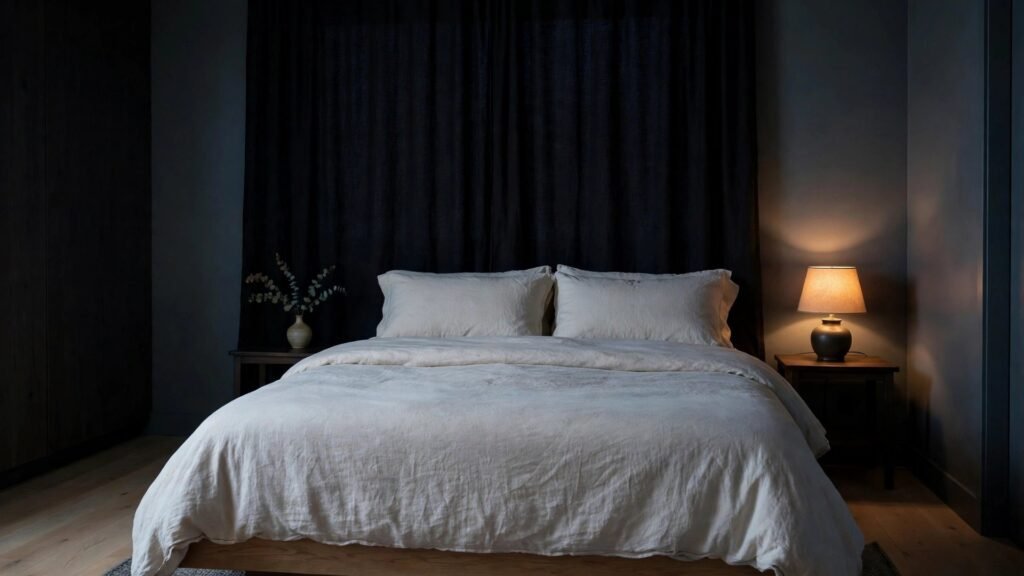
9. Make the bedroom cool, dark and quiet. Sleep experts recommend a bedroom temperature around 65–68°F (18–20°C), with minimal light and noise. Blackout curtains or an eye mask, earplugs or a white-noise machine, and a comfortable mattress and pillows are simple upgrades that pay off nightly.
10. Go to bed only when you feel sleepy. Lying awake in bed trains your brain to associate the bed with frustration. If you are not asleep after about 20 minutes, get up, go to another room, do something calm and boring in dim light, and return when you feel drowsy. This is a core technique of CBT-I, and it works.
11. Keep a notepad by the bed. Racing thoughts — tomorrow’s appointments, a worry about a bill — are a top cause of 2 a.m. wakefulness. Writing the thought down and telling yourself “it is on the list, I will handle it tomorrow” lets the brain let go. It sounds simple because it is, and it works surprisingly well.
A Sample Senior Sleep Schedule
| Time | What to do |
|---|---|
| 7:00 a.m. | Wake at the same time; daylight and a short walk |
| 8:00 a.m. | Breakfast; medicines as prescribed |
| 2:00 p.m. | Caffeine cut-off; optional 20-minute nap before 3 p.m. |
| 6:00 p.m. | Dinner; gentle evening activity |
| 8:30 p.m. | Dim lights; screens off; wind-down routine begins |
| 9:30 p.m. | In bed, only when sleepy; notepad nearby |
| 7:00 a.m. | Wake again — same time, every day |
Adjust the times to your own rhythm — early birds can shift everything an hour earlier. What matters is the regularity, not the exact hour.

Sleep Aids and Supplements After 50: What to Know First
Walk into any pharmacy and the sleep aisle looks like a solution. For adults over 50, it needs more caution than the packaging suggests.
Melatonin
Melatonin is a hormone your body makes naturally, and low-dose supplements (often 0.5–1 mg) can help some people fall asleep sooner, particularly when the sleep schedule has shifted. But more is not better — higher doses often cause vivid dreams, morning grogginess and headaches without improving sleep. Melatonin can interact with blood thinners, diabetes medicines, blood pressure drugs and immune-suppressing drugs. Tell your doctor before starting it, especially if you take warfarin or other anticoagulants.
Magnesium
Magnesium is often marketed for sleep, and it does play a role in muscle relaxation and nervous system function. Food sources — leafy greens, nuts, seeds, beans and whole grains — are the safest way to get it. Supplements can cause diarrhea and can interact with antibiotics, diuretics and some heart medicines. If you are considering a supplement, read our comparison of magnesium glycinate vs citrate vs oxide (https://theagingnest.com/magnesium-oxide-vs-citrate-vs-glycinate-which-magnesium-supplement-is-best/) first, and check with your doctor or pharmacist about the form and dose for you.
Herbal Products: Valerian, Chamomile and Others
Chamomile tea is generally gentle and safe for most people, and a warm drink can be a pleasant part of a wind-down routine. Valerian and other herbal sleep products have mixed evidence and can interact with sedatives, alcohol and some prescription drugs. “Natural” does not mean “risk-free” — treat herbal sleep aids with the same caution as any medicine.
Over-the-Counter Sleep Aids (Antihistamines)
Products containing diphenhydramine or doxylamine (found in many “PM” painkillers and sleep aids) are a particular concern after 65. They can cause next-day grogginess, confusion, dry mouth, constipation, urinary retention and falls — and regular use is linked to worse memory. Geriatrics experts generally advise older adults to avoid them for sleep. If you have been using a PM product nightly, talk to your doctor about stopping safely rather than quitting abruptly.
Prescription Sleep Medicines
Prescription options exist — including newer drugs designed to be safer for older adults — but every one of them carries trade-offs: dependence, falls, memory effects and interactions. They are usually meant for short-term use while the underlying cause is treated, not as a permanent nightly solution. Never borrow someone else’s sleep medicine, never mix sleep medicine with alcohol, and never increase a dose on your own.
The safety rule for all sleep aids: tell your doctor or pharmacist about everything you take for sleep — including supplements, herbal products and over-the-counter aids — because interactions with your regular medicines are common and sometimes serious. Bring the bottles to your appointment if that is easier.
Naps After 50: Helpful or Harmful?
Short naps can be genuinely helpful: a 10–20 minute nap in the early afternoon can improve alertness, mood and memory, and many healthy older adults nap without any harm to their nighttime sleep. The problems start when naps get long or late.
- Helpful naps: under 20 minutes, before 3 p.m., in a chair or on the sofa rather than in bed.
- Harmful naps: over 45 minutes, after 4 p.m., or long naps that replace nighttime sleep.
If you find you cannot get through the day without a long nap, ask why. It may mean your nighttime sleep is too short, too broken, or affected by a disorder such as apnea. Fixing the night usually fixes the nap.
Common Mistakes That Ruin Sleep After 50
- Treating 5–6 hours as “enough for my age.” It almost never is. Aim for 7–8 and judge by how you function.
- A different bedtime every night. An irregular schedule confuses your internal clock more than a slightly late one.
- Caffeine after lunch. That 4 p.m. coffee is still working at midnight — older bodies clear caffeine more slowly.
- Alcohol as a nightcap. Alcohol may make you drowsy, but it fragments sleep, worsens snoring and apnea, and increases nighttime bathroom trips.
- Bright screens in bed. The light suppresses melatonin and the content keeps the mind alert — a double hit.
- Long daytime naps. A 2-hour afternoon nap feels restorative and then quietly steals the night.
- Nightly antihistamine sleep aids. They fog memory, raise fall risk and worsen confusion in older adults.
- Ignoring loud snoring and gasping. These are not harmless quirks — they are the classic signs of sleep apnea, and they are worth a medical check.
- Staying in bed awake for hours. It trains the brain to link bed with wakefulness. Get up, do something calm, and return when sleepy.
- Suffering in silence. Sleep problems after 50 are common, often treatable, and worth mentioning at your next appointment — even if you think they are “just aging.”
When to Talk to a Doctor
Occasional bad nights are normal. Book an appointment — and mention sleep specifically — if you notice any of these:
- You consistently sleep less than 6 hours, or lie awake for long stretches most nights
- You feel exhausted during the day despite spending enough time in bed
- You snore loudly, gasp, or stop breathing during sleep (ask your partner — they often notice first)
- You fall asleep unintentionally during the day, while reading, watching TV or driving
- You have had insomnia for more than 3 weeks
- You have an overwhelming urge to move your legs at night
- Sleep problems started after a new medicine, or got worse when a dose changed
- You regularly sleep 10+ hours and still feel unrefreshed
Your doctor may suggest a sleep diary, a blood test (for thyroid or iron, for example), a review of your medicines, or a sleep study. A sleep study sounds daunting, but it is painless and often done at home now — and it can identify apnea and other disorders that are very treatable.
Frequently Asked Questions
How much sleep does a 70-year-old need?
Most 70-year-olds need 7 to 8 hours per night, according to the CDC. Some healthy adults do well on 7 hours, others need closer to 9. The right amount is the amount that leaves you alert and functioning well during the day without relying on long naps or heavy caffeine.
Is 6 hours of sleep enough for a senior?
For most seniors, no. Six hours is below the recommended 7–8 hours for adults over 65, and regularly sleeping 6 hours or less is associated with higher risks of heart disease, diabetes, memory problems and falls. If 6 hours is all you can get despite a good routine, talk to your doctor — there may be a treatable cause.
Do older adults need less sleep than younger adults?
No. That is a myth. The CDC recommends 7 or more hours for all adults, and 7–8 hours for those 65 and older. What changes with age is sleep quality — lighter sleep, more awakenings and earlier wake times — not the amount of sleep the body needs.
Why do older adults wake up so early?
The internal body clock shifts earlier with age, so melatonin is released earlier in the evening and fades earlier in the morning. Many older adults feel sleepy at 8 or 9 p.m. and wake naturally at 4 or 5 a.m. An early schedule is fine as long as total sleep reaches 7 hours or more.
Why do I wake up at 3 a.m. and can’t get back to sleep?
Waking in the early hours is common after 50. Causes include a full bladder, pain, worry, medications, alcohol wearing off, or simply lighter sleep. If you are awake for more than about 20 minutes, get up and do something calm in dim light, then return to bed when sleepy. If it happens most nights for weeks, discuss it with your doctor.
Is melatonin safe for seniors?
Low-dose melatonin (0.5–1 mg) is generally considered safe for short-term use in healthy older adults, but it can interact with blood thinners, diabetes and blood pressure medicines, and higher doses often cause grogginess and vivid dreams. Always check with your doctor or pharmacist first, especially if you take other medicines.
Are naps good for older adults?
Short naps of 10–20 minutes before 3 p.m. can improve alertness and mood. Long or late naps can make nighttime sleep harder. If you need long naps every day to function, it may signal that your nighttime sleep needs attention.
What is the best sleep routine for seniors?
The most reliable routine is: the same wake time every day, morning daylight, daytime movement, no caffeine after 2 p.m., a light dinner, a 30–60 minute calm wind-down with screens off, and a cool, dark, quiet bedroom. Keep the routine for at least two weeks before judging whether it works.
The Bottom Line
You do not outgrow the need for sleep. At 50, 60, 70 and beyond, your body still needs about 7 to 9 hours a night — the CDC puts it at 7 to 8 hours for adults 65 and older. What changes is not the need but the challenge: lighter sleep, earlier clocks, bathroom trips, pain and medicines all make good sleep harder to get. That is exactly why a deliberate routine matters more now, not less.
Start small. Pick a fixed wake time and a caffeine cut-off this week. Add morning daylight and a wind-down routine next week. Give each change two weeks. And if sleep problems persist — loud snoring, gasping, chronic insomnia, exhaustion despite enough time in bed, or sleeping 10 hours and still feeling tired — bring it up with your doctor. Many of the most common sleep problems after 50 are treatable, and better sleep is one of the highest-return investments you can make in your health at this age.
For more on building healthy daily habits, read our 12 sleep hygiene tips for better, deeper sleep (https://theagingnest.com/sleep-hygiene-tips-for-better-sleep/) — and if you want to understand what short sleep does to the body, our guide to sleep deprivation health effects (https://theagingnest.com/sleep-deprivation-health-effects-what-happens-to-your-body-after-one-week/) walks through it day by day.
This article is general information only and is not medical advice. Sleep needs and sleep problems vary from person to person, and some sleep disorders need medical treatment. If you have ongoing sleep problems, take medicines that affect sleep, or are considering a supplement or sleep aid, talk with your own doctor or pharmacist first.
Sources: CDC — About Sleep (https://www.cdc.gov/sleep/about/index.html); National Institute on Aging — 6 Healthy Sleep Habits for Older Adults (https://www.nia.nih.gov/health/sleep/6-healthy-sleep-habits-older-adults/).






14 Comments