
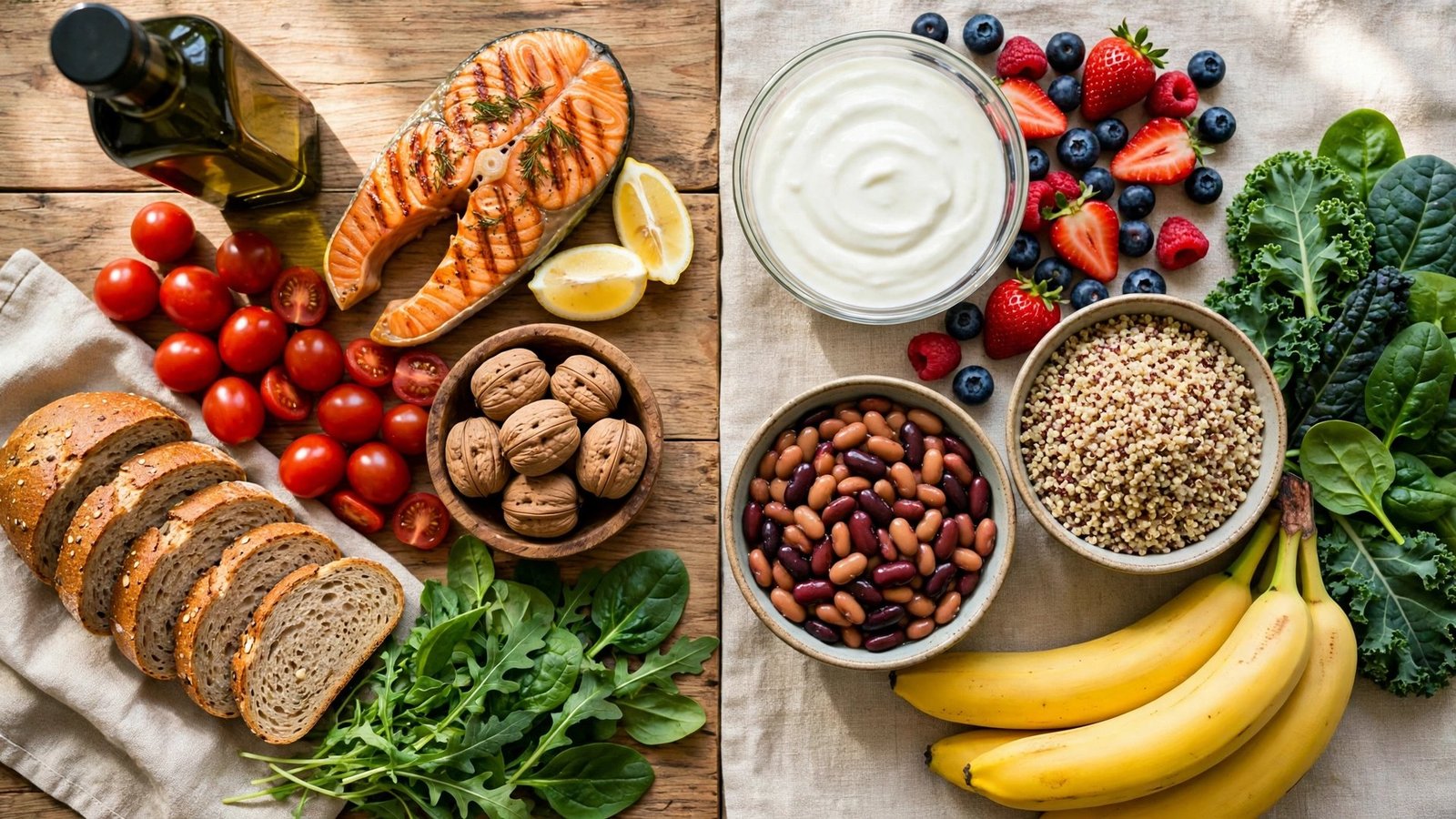
Mediterranean vs DASH Diet After 60: Which Is Better for Heart and Blood Pressure?
If you have high blood pressure, or you simply want to eat in a way that protects your heart after 60, two diets come up again and again: the Mediterranean diet and the DASH diet. Both are recommended by the American Heart Association, both are built on whole foods, and both have strong research behind…
If you have high blood pressure, or you simply want to eat in a way that protects your heart after 60, two diets come up again and again: the Mediterranean diet and the DASH diet. Both are recommended by the American Heart Association, both are built on whole foods, and both have strong research behind them. So which one should you choose? The short answer: if your main goal is lowering blood pressure, DASH has the stronger, more direct evidence — it was designed for exactly that job, and in the DASH-Sodium trial it lowered systolic blood pressure by about 11–12 points in people with high blood pressure when combined with a 1,500 mg sodium target. If your main goal is overall heart health, brain health and long-term eating you can enjoy, the Mediterranean pattern has the broader evidence, including a large trial in which it cut major cardiovascular events by about 30%. For most people over 60, the honest answer is that either diet is a big improvement on the typical American diet — and a hybrid of the two is often the most practical choice of all. This guide compares them food by food, verdict by verdict, and gives you a simple plan to start this week.
Medical disclaimer: This article is general information only and is not medical advice. Changing your diet can affect blood pressure, blood sugar, kidney function and how your medicines work. Talk to your doctor or a registered dietitian before starting a new eating plan, especially if you have kidney disease, diabetes, heart failure, or take blood pressure, diabetes, blood-thinner or diuretic (“water pill”) medicines. Never stop or change a prescribed medicine because of something you read here. If you have chest pain, severe shortness of breath, or a blood pressure reading above 180/120, seek medical help right away.
At a Glance: Mediterranean vs DASH After 60
| Question | Mediterranean diet | DASH diet |
|---|---|---|
| Designed for | Traditional eating pattern of Mediterranean countries; overall health and longevity | Lowering blood pressure (Dietary Approaches to Stop Hypertension) |
| Best for blood pressure | Good — helps, but sodium is not strictly limited | Best — strongest direct evidence; structured sodium targets |
| Best for heart disease | Slight edge — large trial showed about 30% fewer major cardiovascular events | Very good — lowers blood pressure and improves cholesterol |
| Best for blood sugar / diabetes | Slight edge — linked to better blood sugar control | Good — supports diabetes management |
| Best for brain health | Slight edge — linked to healthier cognitive aging | Good — also linked to better brain health |
| Best for weight loss | Tie — neither is a weight-loss diet; both help through whole foods and fibre | Tie |
| Best for inflammation | Slight edge — olive oil, fish, nuts and polyphenol-rich foods | Good |
| Sodium limit | No fixed limit; depends on how you cook | 2,300 mg a day, or 1,500 mg for a bigger blood pressure drop (NHLBI) |
| Main fat | Extra-virgin olive oil | Vegetable oils in small amounts; low-fat dairy instead of butter |
| Dairy | Moderate, mostly yogurt and cheese | 2–3 servings a day of low-fat or fat-free dairy |
| Red meat | Rare — a few times a month | Limited — lean meats only, 6 or fewer servings a day |
| Alcohol | Optional, low to moderate with meals | Not a feature; limit alcohol |
| Structure | Flexible, lifestyle-based | More structured, with daily serving targets |
| Cost after 60 | Can be higher — fish, olive oil and nuts cost more | Usually cheaper — beans, grains and seasonal produce |
What Is the Mediterranean Diet?
The Mediterranean diet is not a diet in the modern sense of a set of rules. It is a description of how people traditionally ate in countries bordering the Mediterranean Sea — Greece, Italy, Spain and their neighbours. The American Heart Association notes there is no single standard version: at least 16 countries border the Mediterranean, and eating styles vary by region, culture and religion. But the common threads are consistent, and they are what make the pattern healthy.
A Mediterranean-style diet typically includes plenty of fruits, vegetables, bread and other grains, potatoes, beans, nuts and seeds; olive oil as the primary fat; and dairy products, eggs, fish and poultry in low to moderate amounts. Fish and poultry are more common than red meat. Meals centre on minimally processed, plant-based foods. Wine may be consumed in low to moderate amounts, usually with meals, and fruit is the usual dessert instead of sweets.
Three features matter most after 60. First, the fat is mostly unsaturated — extra-virgin olive oil, nuts and oily fish — rather than the saturated fat in butter, fatty meat and processed foods. Second, the diet is naturally high in fibre, from vegetables, legumes and whole grains, which helps with blood sugar, cholesterol and digestion. Third, it is a lifestyle, not a prescription: meals are shared, food is cooked at home, and the pattern is meant to be enjoyed for years, not endured for weeks.
The American Heart Association says a Mediterranean-style diet can help you meet its recommendations for a healthy dietary pattern, and that this style of eating “can play a big role in preventing heart disease and stroke and reducing risk factors such as obesity, diabetes, high cholesterol and high blood pressure.” The evidence base is large. In the PREDIMED trial — a major randomised trial in Spain in people at high cardiovascular risk — a Mediterranean diet supplemented with extra-virgin olive oil or nuts reduced major cardiovascular events (heart attack, stroke and cardiovascular death) by about 30% compared with advice to follow a low-fat diet. That is the kind of long-term, hard-outcome evidence few diets can match.
There is also brain-health evidence. The American Heart Association notes that in one study, the healthiest eaters at age 50 had a nearly 90% lower risk of dementia compared with those who had the least healthy diets, and that both the Mediterranean and DASH diets have been shown to boost brain health as well as heart health. That does not mean the diet prevents dementia — no diet can promise that — but the association is strong and consistent across studies.
A typical Mediterranean day after 60 might look like this: breakfast of Greek yogurt with berries and walnuts; lunch of a big salad with chickpeas, tomatoes, cucumber and olive oil dressing, plus whole-grain bread; a snack of an apple and a small handful of almonds; dinner of baked salmon, roasted vegetables and quinoa, with fruit for dessert. Nothing exotic, nothing you need a special shop for — though good olive oil and fresh fish do cost more than cooking oil and processed meat, which is a real consideration on a fixed income.

What Is the DASH Diet?
DASH stands for Dietary Approaches to Stop Hypertension. Unlike the Mediterranean pattern, which grew out of tradition, DASH was designed in a laboratory sense: researchers at the National Heart, Lung, and Blood Institute (NHLBI) built it specifically to lower blood pressure, then tested it in clinical trials. It works, and it works measurably.
The DASH eating plan requires no special foods. Instead, it sets daily and weekly nutritional goals. According to the NHLBI, for a 2,000-calorie-a-day diet, DASH recommends 6–8 servings of grains, 4–5 servings of vegetables, 4–5 servings of fruit, 2–3 servings of low-fat or fat-free dairy, 6 or fewer servings of meat, poultry and fish, and 2–3 servings of fats and oils each day, plus 4–5 servings a week of nuts, seeds, dry beans and peas, and 5 or fewer servings of sweets a week. Sodium is set at 2,300 mg a day — and the NHLBI notes that 1,500 mg of sodium a day “lowers blood pressure even further than 2,300 mg sodium daily.”
MedlinePlus describes the same pattern in plain terms: the DASH diet is low in salt and rich in fruits, vegetables, whole grains, low-fat dairy and lean protein. It emphasises foods high in calcium, potassium, magnesium and fibre, which together help lower blood pressure. You limit sweets and sugar-sweetened drinks, foods high in saturated fat such as full-fat dairy and fatty meats, tropical oils, most packaged snacks, and alcohol.
Why does it lower blood pressure? Three mechanisms work together. First, less sodium means less fluid retention, so there is less pressure on artery walls. Second, more potassium, calcium and magnesium helps blood vessels relax and helps the body get rid of excess sodium. Third, the overall pattern — high fibre, low saturated fat, plenty of produce — improves cholesterol and blood sugar at the same time. MedlinePlus notes that following DASH may help lower high blood pressure, reduce the risk of heart disease, heart failure and stroke, help prevent or regulate type 2 diabetes, improve cholesterol levels, and reduce the chance of kidney stones.
The blood pressure numbers are concrete. In the original DASH trial, the eating pattern lowered systolic blood pressure by about 5–6 points on average. In the follow-up DASH-Sodium trial, combining the DASH pattern with a 1,500 mg sodium target lowered systolic blood pressure by about 11–12 points in people who already had high blood pressure. Those are averages from trials, not a promise for any individual — your own result depends on your starting blood pressure, your medicines, and how closely you follow the plan — but they explain why doctors reach for DASH first when blood pressure is the main problem.
A typical DASH day after 60 might look like this: breakfast of oatmeal with banana and low-fat milk; lunch of a turkey and vegetable sandwich on whole-grain bread with a side salad and an orange; a snack of low-fat yogurt with berries; dinner of grilled chicken, brown rice, steamed broccoli and a whole-grain roll. It is a familiar, practical pattern — and because it is built on beans, grains, seasonal produce and low-fat dairy, it is often cheaper than the Mediterranean pattern.
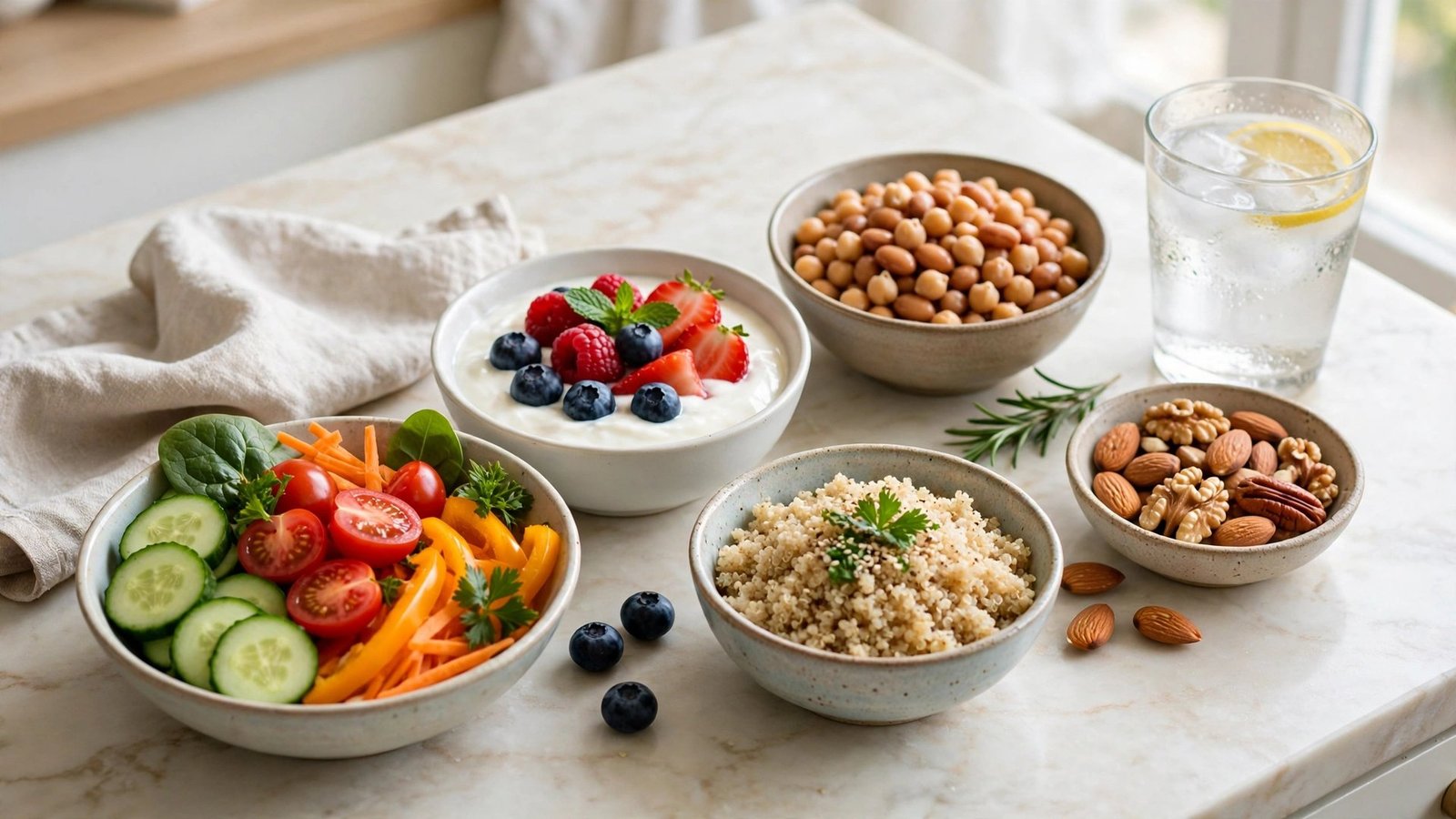
Mediterranean vs DASH: The Full Comparison
| Feature | Mediterranean diet | DASH diet |
|---|---|---|
| Origin | Traditional eating in Mediterranean countries | Designed by the NHLBI to lower blood pressure |
| Primary goal | Overall health, heart health, longevity | Lower blood pressure |
| Vegetables | 2+ servings a day, often much more | 4–5 servings a day |
| Fruit | 3+ servings a day | 4–5 servings a day |
| Whole grains | 1–2 servings at most meals | 6–8 servings a day |
| Legumes / beans | 2+ servings a day | 4–5 servings a week (nuts, seeds, beans, peas) |
| Fish / seafood | 2+ servings a week, often more | Included in the 6-or-fewer daily meat/poultry/fish servings |
| Poultry | 2 servings a week | Lean poultry within the daily meat allowance |
| Red meat | Less than 2 servings a week | Limited; lean cuts only, within the daily allowance |
| Dairy | Moderate — mainly yogurt and cheese | 2–3 servings a day, low-fat or fat-free |
| Main fat | Extra-virgin olive oil, used freely | Vegetable oils, 2–3 servings a day |
| Nuts | 1–2 servings a day | 4–5 servings a week (with seeds, beans, peas) |
| Eggs | 2–4 a week | Within the lean-protein allowance |
| Sodium | No fixed limit — depends on cooking and processed food | 2,300 mg a day; 1,500 mg for a bigger effect |
| Sweets | Rare; fruit is dessert | 5 or fewer servings a week |
| Alcohol | Optional, low to moderate with meals | Limit it |
| Structure | Flexible, pattern-based | Structured, with daily serving targets |
| Evidence strength | Very strong for heart events, brain health, longevity | Very strong for blood pressure; good for heart and diabetes |
Look at that table and the first thing you notice is how much the two diets agree. Both are built on vegetables, fruit, whole grains, beans, nuts, fish and lean protein. Both cut red and processed meat, sugary drinks, sweets and highly processed foods. If you are eating either diet properly, you are already eating far better than the average American diet. The differences are matters of emphasis: DASH is stricter about sodium and dairy and more structured; Mediterranean is freer with olive oil and fish and more flexible. That is why the “which is better” question has different answers for different goals — and why combining them works so well.
Which Diet Is Better for High Blood Pressure?
Winner: DASH — clearly.
This is the one verdict with no real argument. DASH was built for this job, and the trial evidence is direct. The DASH-Sodium trial showed that the DASH pattern plus a 1,500 mg sodium target lowered systolic blood pressure by about 11–12 mm Hg in people with high blood pressure. The Mediterranean diet also helps blood pressure — more vegetables, more potassium, less processed food all push in the right direction — but it has no sodium target, and sodium is the single biggest dietary lever on blood pressure. A Mediterranean-style eater who still eats a lot of salty bread, cheese, cured meats and restaurant food can easily take in 3,500 mg of sodium a day without realising it.
The CDC’s numbers explain why this matters. Normal blood pressure is less than 120/80 mm Hg; high blood pressure is consistently at or above 130/80 mm Hg. High blood pressure usually has no symptoms — the CDC notes that measuring your blood pressure is the only way to know if you have it — and over time it can damage your heart, brain and kidneys. If your blood pressure is your main concern, start with DASH’s sodium discipline, even if you keep the Mediterranean foods you enjoy.
A practical note: the 1,500 mg target is the more effective level, but it is also much harder to hit. The NHLBI’s standard DASH target is 2,300 mg, and even that is a big cut from the roughly 3,400 mg the average American eats. If 1,500 mg feels impossible, start at 2,300 mg and work down. And check your blood pressure at home with a validated monitor — our step-by-step guide explains how to do it correctly — so you can see whether the changes are working and share the readings with your doctor.
Learn how to check your blood pressure at home correctly — the right cuff size, timing and technique matter more than most people realise.
Which Diet Is Better for Heart Disease?
Slight winner: Mediterranean.
Both diets protect the heart, and the difference is small. DASH lowers blood pressure and improves cholesterol, which are two of the biggest drivers of heart disease. But the Mediterranean pattern has the single strongest piece of outcome evidence of any diet: the PREDIMED trial, in which a Mediterranean diet supplemented with extra-virgin olive oil or nuts cut major cardiovascular events — heart attack, stroke and cardiovascular death — by about 30% in people at high risk.
Why might Mediterranean edge ahead here? Probably the olive oil and the fish. Extra-virgin olive oil is rich in monounsaturated fat and polyphenols, and the American Heart Association notes there is evidence that a Mediterranean diet rich in virgin olive oil may help the body remove excess cholesterol from arteries and keep blood vessels open. Oily fish — salmon, sardines, mackerel — provide omega-3 fats (EPA and DHA), which support heart rhythm and triglycerides. DASH includes fish too, but it does not emphasise it the way the Mediterranean pattern does.
That said, if your heart risk is driven mainly by high blood pressure, DASH’s blood pressure advantage may matter more for you personally than Mediterranean’s trial edge. This is a conversation to have with your doctor, who knows your numbers.
For more on fish and heart health, see our guide to omega-3 for heart health over 60, including dose and blood-thinner warnings.
Which Diet Is Better for Diabetes and Blood Sugar?
Slight winner: Mediterranean — but both help.
Both diets are high in fibre and low in refined carbohydrates and sugary drinks, which is the foundation of blood-sugar control. Research frequently associates the Mediterranean pattern with better blood sugar control, improved insulin sensitivity and a lower risk of type 2 diabetes — helped by its fibre-rich foods, healthy fats and lower reliance on refined carbohydrates. DASH also supports diabetes management, and MedlinePlus notes it may help prevent or regulate type 2 diabetes.
After 60, two details matter. First, DASH’s 6–8 daily servings of grains can be a trap if those grains are mostly white bread, white rice and crackers — the serving count is a target, not a licence, and whole grains are what count. Second, fruit is healthy in both diets, but juice is not: whole fruit comes with fibre that slows sugar absorption; juice does not. If you take diabetes medicine, especially insulin or sulfonylureas, changing your eating pattern can change your blood sugar quickly — check your readings more often in the first few weeks and tell your doctor you are changing your diet.
Which Diet Is Better for Weight Loss?
Tie.
Neither diet was designed as a weight-loss programme, and neither will make you lose weight on its own. Both help indirectly: whole foods and fibre keep you full, ultra-processed foods and sugary drinks are cut, and portions are naturally smaller when half the plate is vegetables. Studies generally find modest, similar weight loss with both patterns when people follow them — and the best results come from long-term adherence, not from a perfect first month.
After 60, be careful with weight loss itself. Losing weight too fast can cost you muscle as well as fat, and muscle is what keeps you strong and steady on your feet. If you are trying to lose weight, pair either diet with protein at every meal and with strength exercise — and talk to your doctor about a safe rate of loss.
Our strength training guide for seniors has a safe beginner programme for ages 60–80.
Which Diet Is Better for Brain Health and Inflammation?
Slight winner: Mediterranean.
The Mediterranean diet is often described as one of the most evidence-supported anti-inflammatory eating patterns, and for good reason: olive oil, fatty fish, nuts, fruits, vegetables and polyphenol-rich foods all contribute. Research has linked Mediterranean-style eating with healthier cognitive aging and a lower risk of dementia. The American Heart Association points out that the healthiest eaters at age 50 had a nearly 90% lower risk of dementia in one study compared with the least healthy eaters, and that both the Mediterranean and DASH diets have been shown to boost brain health as well as heart health.
DASH is not far behind — its high fruit, vegetable and whole-grain intake supports brain health too, and blood pressure control itself protects the brain, since the CDC notes high blood pressure is linked to poorer cognitive function and a higher risk of dementia. But Mediterranean’s extra emphasis on fish, olive oil and nuts gives it the edge in this category.
For cholesterol, it is a draw with different strengths: the Mediterranean pattern may support higher HDL (“good”) cholesterol and better overall lipid profiles, while DASH may support lower LDL (“bad”) cholesterol. Both improve cholesterol compared with a typical processed-food diet.
Which Diet Is Easier to Follow After 60?
Depends on you — and this is the question that matters most.
The best diet is the one you will still be following in a year. Here is how they compare on the practical issues that decide that after 60:
Flexibility. Mediterranean wins. It is a pattern, not a prescription — no counting servings, no sodium maths. DASH is more structured, with daily serving targets for eight food groups. Some people find that structure reassuring; others find it a chore. If you hate tracking, Mediterranean will feel easier. If you like clear targets, DASH will feel easier.
Cooking. Both need home cooking to work well. Restaurant and takeaway food is where sodium and saturated fat hide, in both patterns. Mediterranean cooking is simple — vegetables, beans, fish, olive oil — but it does assume you enjoy cooking with fresh ingredients. DASH cooking is equally simple, and its meals (oatmeal, sandwiches, grilled chicken, rice and vegetables) may feel more familiar to American cooks.
Cost. DASH usually wins. Its staples are beans, lentils, oats, brown rice, seasonal produce and low-fat dairy — among the cheapest healthy foods there are. Mediterranean staples include extra-virgin olive oil, fresh fish, nuts and out-of-season produce, which cost more. You can do Mediterranean on a budget — canned sardines instead of fresh salmon, frozen vegetables, beans instead of meat most days — but the sticker shock is real, and it is a genuine reason people quit.
Eating out and social life. Mediterranean wins. Its flexibility makes restaurant meals easier: grilled fish, a salad, vegetables and bread are on almost every menu. DASH’s sodium limit is hard to keep in restaurants, where a single meal can contain a whole day’s sodium.
Chewing, digestion and appetite. After 60, these matter more than diet books admit. Both diets are high in fibre, and MedlinePlus warns that increasing fibre too quickly can cause stomach discomfort — raise it gradually and drink plenty of fluids. If chewing is hard, both diets adapt: cooked vegetables, soft beans, yogurt, oatmeal, canned fish and nut butters instead of whole nuts. If your appetite is small, DASH’s 4–5 servings each of fruit and vegetables can feel like a lot of volume; smaller, more frequent meals help.
Medicines and health conditions. This is where you must check with your doctor. DASH is high in potassium, and MedlinePlus warns you to check with your provider before increasing potassium or using salt substitutes (which often contain potassium) — people with kidney problems or who take certain medicines, such as ACE inhibitors, ARBs or potassium-sparing diuretics, must be careful about how much potassium they eat. That warning applies to the Mediterranean pattern too, since it is also rich in potassium-containing foods. If you take a blood thinner such as warfarin, big changes in vitamin K–rich greens need to be consistent and discussed with your clinician. And if you have kidney disease, neither diet should be started without dietitian guidance, because potassium, phosphorus and fluid limits may apply.
Fibre, fluids and gut health go together — see our guide to probiotics for gut health after 50 and our dehydration prevention plan for older adults.
Can You Combine the Two Diets? The Hybrid That Works Best for Most People Over 60
Yes — and for most people over 60, this is the smartest answer. The two diets agree on about 80% of what matters. A hybrid takes DASH’s sodium discipline and serving structure and adds Mediterranean’s olive oil, fish and flexibility. Nutrition professionals often recommend exactly this kind of combination, and it is also close to the MIND diet, a pattern that deliberately blends Mediterranean and DASH principles for brain health.
Take from DASH: the 2,300 mg sodium target (aim for 1,500 mg if your doctor agrees); 2–3 servings a day of low-fat dairy; the daily serving targets as a rough guide; the habit of reading labels for sodium.
Take from Mediterranean: extra-virgin olive oil as your main cooking fat; fish twice a week or more; nuts most days; beans and lentils often; meals built around vegetables, with meat as a side rather than the centre.
A sample hybrid day:
| Meal | What to eat |
|---|---|
| Breakfast | Oatmeal with berries and walnuts, plus low-fat milk or yogurt |
| Lunch | Big salad with chickpeas, tomatoes, cucumber and olive oil dressing; whole-grain bread; an orange |
| Snack | Apple slices with a small handful of unsalted almonds |
| Dinner | Baked salmon (or sardines), roasted vegetables, brown rice or quinoa |
| Drink | Water, unsweetened tea; keep alcohol low or skip it |
A sample hybrid week (one idea per day — repeat what you like):
| Day | Dinner idea |
|---|---|
| Monday | Lentil soup with whole-grain bread and a side salad |
| Tuesday | Grilled chicken, brown rice, steamed broccoli |
| Wednesday | Baked salmon, roasted sweet potatoes, green beans |
| Thursday | Bean and vegetable chilli with a small amount of low-fat cheese |
| Friday | Whole-grain pasta with tomatoes, white beans, spinach and olive oil |
| Saturday | Stir-fried vegetables and tofu or shrimp with brown rice |
| Sunday | Roast turkey breast, roasted root vegetables, salad |

10 Common Mistakes When Starting Either Diet
- Cutting sodium everywhere except the real sources. Most sodium comes from bread, cheese, cured and processed meats, sauces, soups and restaurant food — not from the salt shaker. Read labels; a single slice of bread can have 150–200 mg.
- Switching to “low-fat” everything. Low-fat products are often loaded with sugar and salt. DASH wants low-fat dairy, not low-fat cookies. Check the label, not the front of the packet.
- Drowning healthy food in salt. A Mediterranean salad with salty feta, olives and dressing can carry more sodium than a DASH meal. Olives and feta are fine — in small portions.
- Treating olive oil as unlimited. It is healthy fat, but it is still about 120 calories a tablespoon. Use it instead of butter, not on top of it.
- Adding fibre too fast. Jumping from a low-fibre diet to 5 servings of vegetables and 4 of beans in a day will leave you bloated and uncomfortable. Add one high-fibre food at a time over two to three weeks, and drink water with it.
- Forgetting drinks. Sugary drinks, sweetened teas and alcohol undo a lot of good eating. Water and unsweetened tea are the defaults in both diets.
- Buying fish once and never again. Fresh fish is expensive and goes off quickly. Canned sardines, tuna and salmon, and frozen fish, are cheaper, keep longer, and count just as well.
- Eating the same three vegetables. Variety is where the nutrients are. Aim for different colours across the week — dark greens, orange, red, purple — rather than the same salad every day.
- Changing diet and medicine at the same time without telling your doctor. A better diet can lower blood pressure and blood sugar, which is good — but it can also mean your current medicine dose becomes too strong. Tell your doctor you are changing how you eat.
- Aiming for perfect and quitting at the first slip. One restaurant meal does not ruin a diet. The trials that showed benefits followed people for years, and nobody in them ate perfectly. Consistency beats perfection.
Your 4-Week Starter Plan
| Week | Focus | What to do |
|---|---|---|
| Week 1 | See where you are | Check your blood pressure at home (correct technique) and write down what you eat for 3 days. Find your biggest sodium sources. Do not change anything yet. |
| Week 2 | DASH sodium | Cut sodium toward 2,300 mg a day: no salt at the table, low-sodium bread and soups, no processed meat. Add one extra vegetable serving a day. |
| Week 3 | Mediterranean foods | Switch your main cooking fat to extra-virgin olive oil; eat fish twice this week; add beans or lentils to three meals; snack on nuts instead of crisps. |
| Week 4 | Make it routine | Cook the hybrid week above once. Plan next week’s meals and shopping list. Re-check your blood pressure and share the readings with your doctor. Decide which parts you will keep — and which to adjust. |
Keep a simple food and blood pressure log during these four weeks. It does not need to be detailed: date, what you ate, and your morning blood pressure reading is enough. Patterns show up fast — most people find one or two foods doing most of the damage, and one or two swaps doing most of the good.
Who Should Be Careful — and When to Talk to Your Doctor
Both diets are safe, well-studied eating patterns for most healthy adults, and MedlinePlus notes the DASH diet is safe for adults and children and provides all the nutrients you need. But “safe for most people” is not the same as “right for you right now.” Talk to your doctor or a registered dietitian before starting if any of these apply:
- Kidney disease or reduced kidney function. Both diets are high in potassium, and kidney disease changes how your body handles potassium, phosphorus and fluid.
- You take blood pressure, diabetes, blood-thinner or diuretic medicines. Diet changes can shift your blood pressure and blood sugar, and big changes in leafy greens can affect blood thinners. Your doses may need review.
- Heart failure. Fluid and sodium limits in heart failure are stricter than the general DASH targets and need individual advice.
- You have trouble swallowing, chewing, or keeping weight on. Both diets are high-volume and high-fibre; they may need adapting so you get enough calories and protein.
- You have a history of eating disorders or a complicated relationship with food. Structured eating plans can be unhelpful; get personalised support instead.
See your doctor promptly if you feel dizzy or faint after changing your diet, if your blood pressure readings rise instead of fall, or if you notice swelling, unusual tiredness or a big change in how often you pass urine.
Frequently Asked Questions
What is the difference between the Mediterranean diet and the DASH diet?
The Mediterranean diet is a traditional eating pattern based on the foods of Mediterranean countries — olive oil as the main fat, plenty of vegetables, fruit, beans and whole grains, fish often, red meat rarely, and no fixed sodium limit. DASH (Dietary Approaches to Stop Hypertension) was designed by the NHLBI specifically to lower blood pressure, with daily serving targets, 2–3 servings of low-fat dairy a day, and a sodium limit of 2,300 mg (or 1,500 mg for a bigger effect). They share most of the same foods; DASH is stricter and more structured, Mediterranean is more flexible.
Which diet is better for high blood pressure?
DASH. It was designed for blood pressure, and the DASH-Sodium trial showed that the DASH pattern plus a 1,500 mg sodium target lowered systolic blood pressure by about 11–12 points in people with high blood pressure. The Mediterranean diet also helps blood pressure, but it has no sodium target, and sodium is the biggest dietary lever on blood pressure.
Which diet is better for heart health?
The Mediterranean diet has a slight edge, mainly because of the PREDIMED trial, in which a Mediterranean diet supplemented with olive oil or nuts cut major cardiovascular events by about 30% in people at high risk. DASH is also very good for the heart — it lowers blood pressure and improves cholesterol. If your heart risk is driven mainly by high blood pressure, DASH may matter more for you personally.
Can I combine the Mediterranean and DASH diets?
Yes. Many nutrition professionals recommend a hybrid: take DASH’s sodium targets and low-fat dairy, and add Mediterranean’s olive oil, fish twice a week, nuts and flexibility. The sample hybrid day and week in this article show how that looks in practice.
Which diet is easier to follow long term after 60?
It depends on you. Mediterranean is more flexible and easier in restaurants, but fish, olive oil and nuts cost more. DASH is cheaper and more structured, but its sodium limit is hard to keep when eating out. The diet you will still follow in a year is the right one — and a hybrid is often the easiest of all.
Is the DASH diet safe for people with kidney disease?
Not without medical advice. DASH is high in potassium, and MedlinePlus warns you to check with your provider before increasing potassium or using salt substitutes, which often contain potassium. People with kidney problems or who take certain medicines must be careful about potassium. Talk to your doctor or a renal dietitian first.
How much sodium should I aim for on the DASH diet?
The NHLBI sets the DASH sodium target at 2,300 mg a day, and notes that 1,500 mg a day lowers blood pressure even further. Start at 2,300 mg if 1,500 mg feels too hard — even that is a big cut from the roughly 3,400 mg the average American eats — and work down gradually.
Which diet helps reduce inflammation?
The Mediterranean diet is generally considered the stronger anti-inflammatory pattern, thanks to olive oil, fatty fish, nuts, fruits, vegetables and polyphenol-rich foods. DASH also reduces inflammation through its high fruit, vegetable and whole-grain intake. For most people, the practical difference is small.
Conclusion
Mediterranean vs DASH after 60 is not a contest with a single winner — it is a choice between two excellent diets with different strengths. If high blood pressure is your main problem, DASH is the clear first choice: it was designed for that job, it has a sodium target you can measure, and the trial evidence for blood pressure is direct and strong. If your goal is broader — heart health, brain health, blood sugar and an eating pattern you can enjoy for the rest of your life — the Mediterranean diet has the broader evidence, including a large trial showing about 30% fewer major cardiovascular events. And if you cannot decide, do not: take DASH’s sodium discipline and add Mediterranean’s olive oil, fish and flexibility, and you will have a hybrid that is better than either diet done halfway.
Start small. This week, do three things: check your blood pressure at home with the right technique, cut one big sodium source (processed meat, salty bread or takeaway), and cook one fish meal with olive oil and vegetables. Then repeat next week. The healthiest diet after 60 is not the one with the best trial results — it is the one you can cook, afford and enjoy, year after year. If you are unsure which version fits your medicines or health conditions, ask your doctor or a registered dietitian before you change how you eat. They can help you tailor either pattern — or a hybrid of both — to your numbers, your budget and your life.
Next step: Read our step-by-step guide to checking your blood pressure at home correctly, then try the 4-week starter plan above and share your readings with your doctor at your next visit.
Sources
- National Heart, Lung, and Blood Institute (NIH) — DASH Eating Plan — https://www.nhlbi.nih.gov/education/dash-eating-plan
- MedlinePlus — Understanding the DASH diet — https://medlineplus.gov/ency/patientinstructions/000784.htm
- American Heart Association — What is the Mediterranean Diet? — https://www.heart.org/en/healthy-living/healthy-eating/eat-smart/nutrition-basics/mediterranean-diet
- Centers for Disease Control and Prevention — About High Blood Pressure — https://www.cdc.gov/high-blood-pressure/about/
- The DASH and DASH-Sodium trials and the PREDIMED trial, as summarised in the sources above and in the peer-reviewed literature (blood pressure and cardiovascular-event figures stated as trial averages, not guarantees for any individual).
This article is general information only and is not medical advice. Talk to your doctor or a registered dietitian before changing your diet, especially if you have kidney disease, diabetes, heart failure, or take blood pressure, diabetes, blood-thinner or diuretic medicines.





One Comment